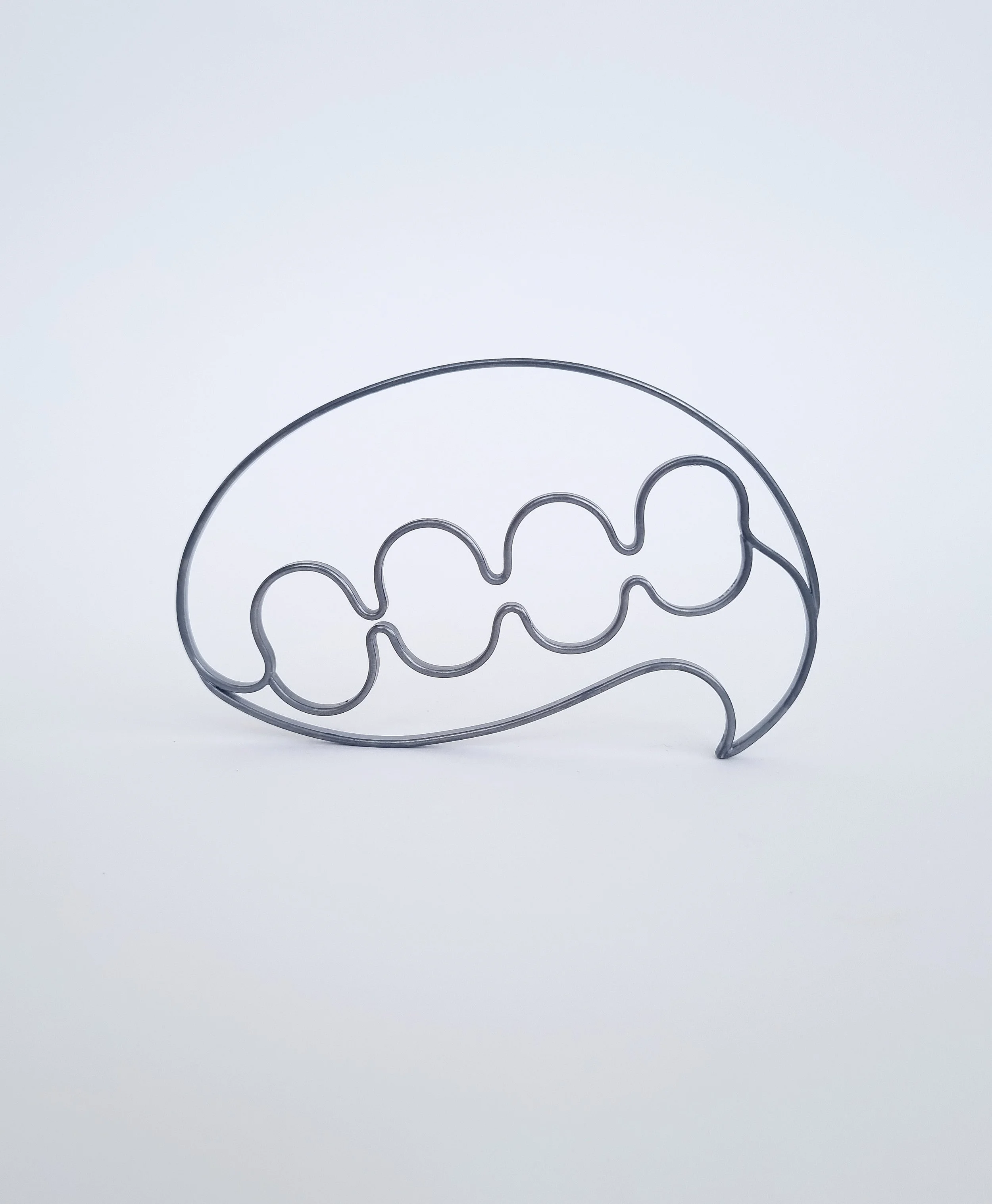
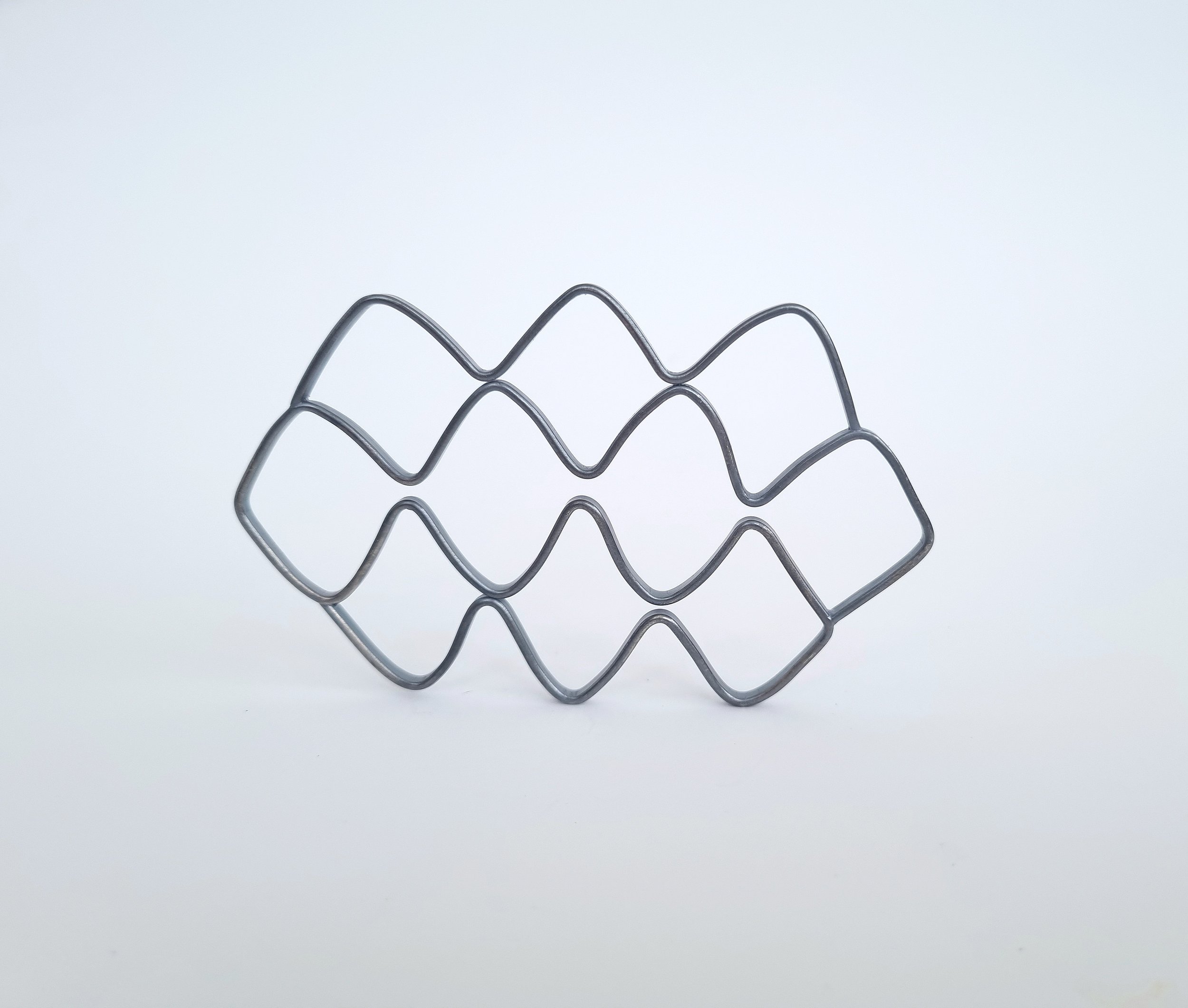
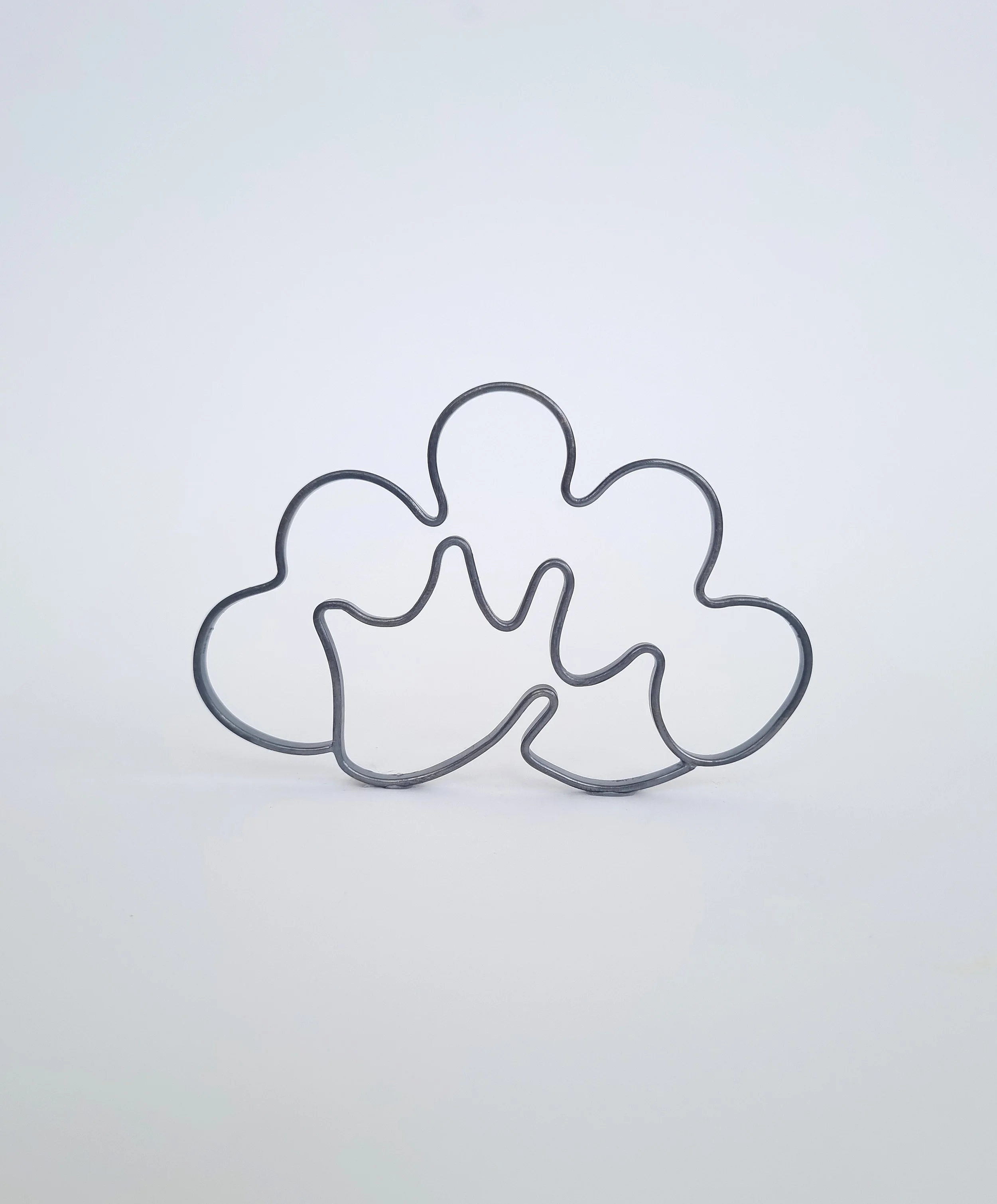
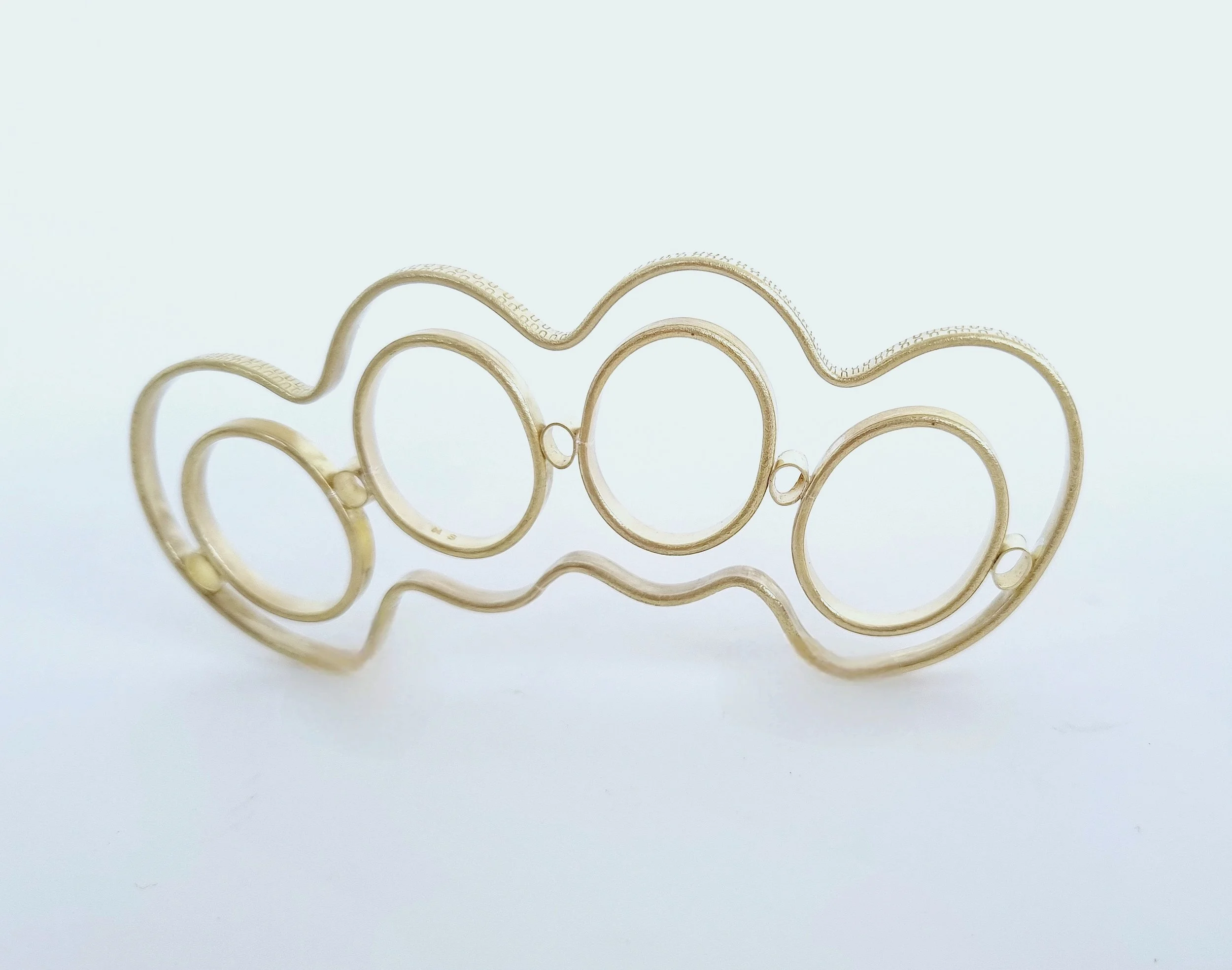
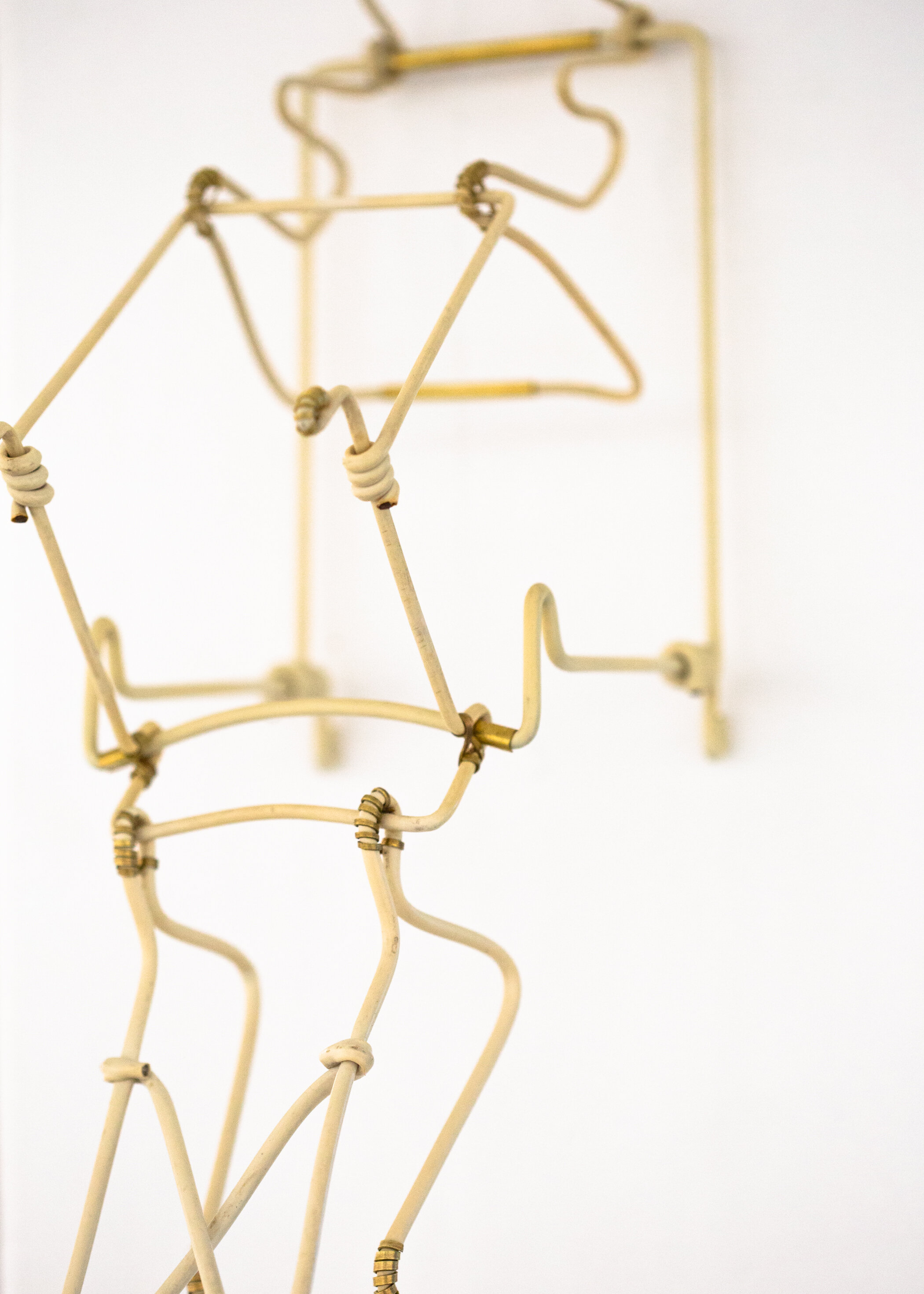
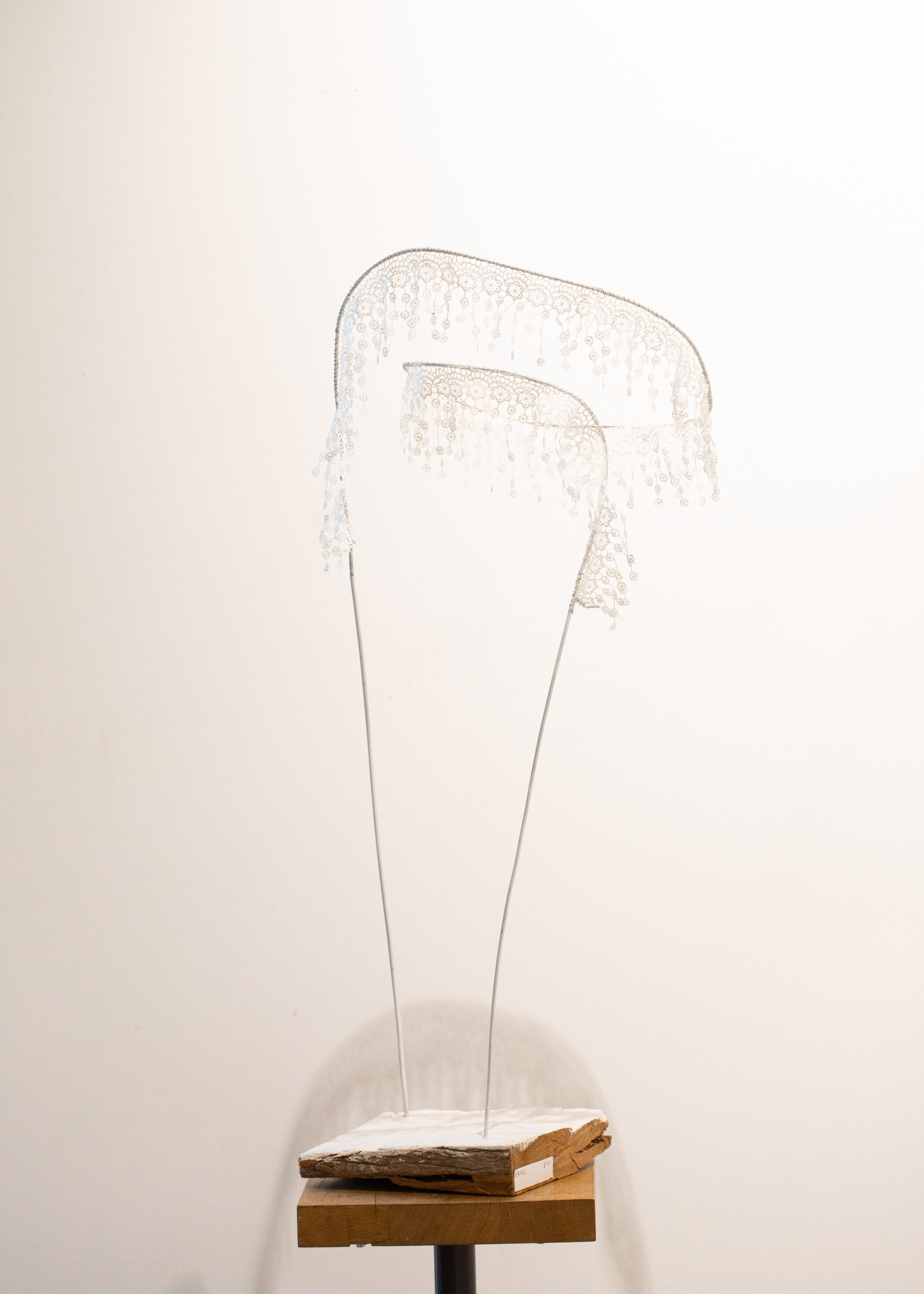
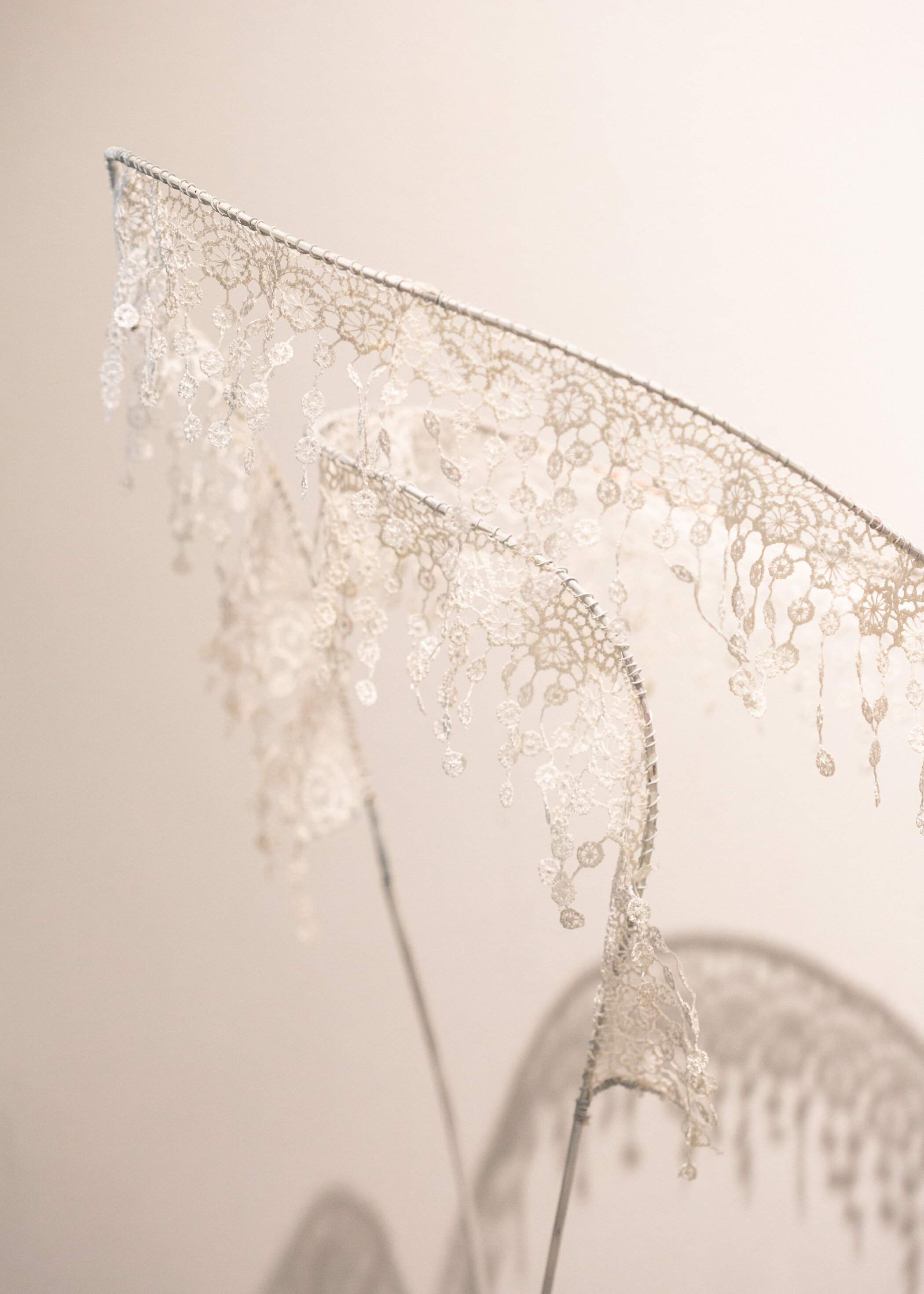
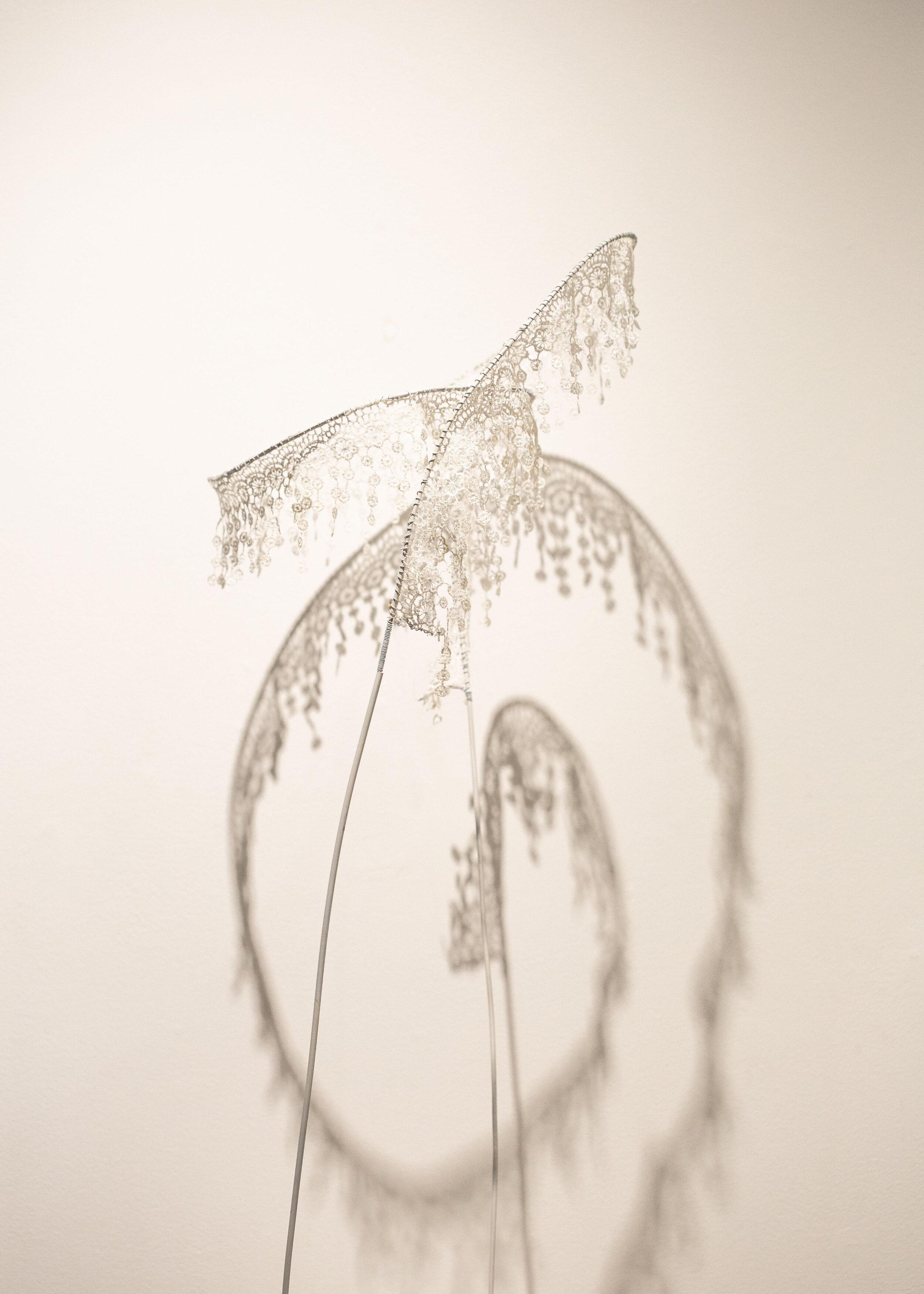
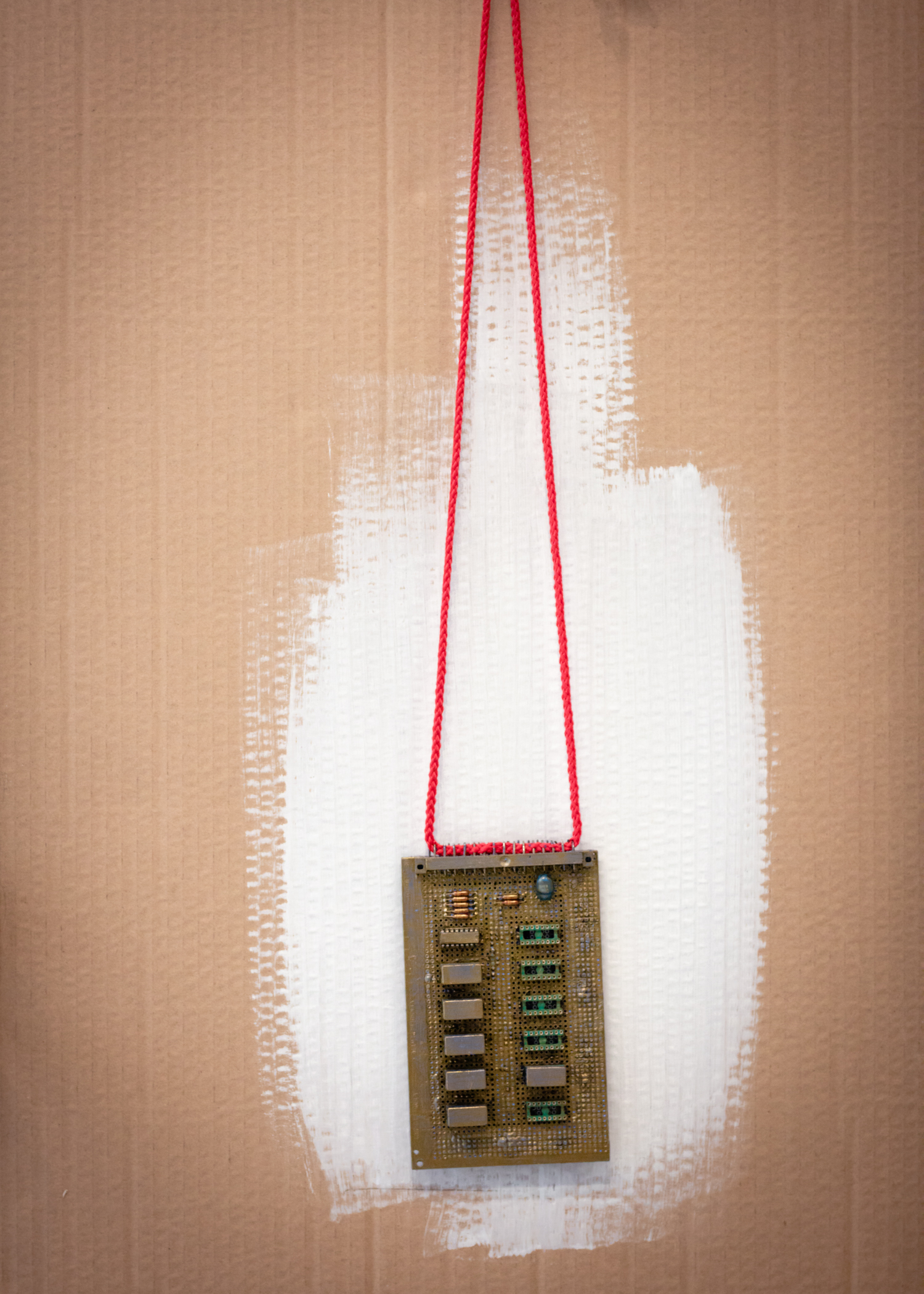
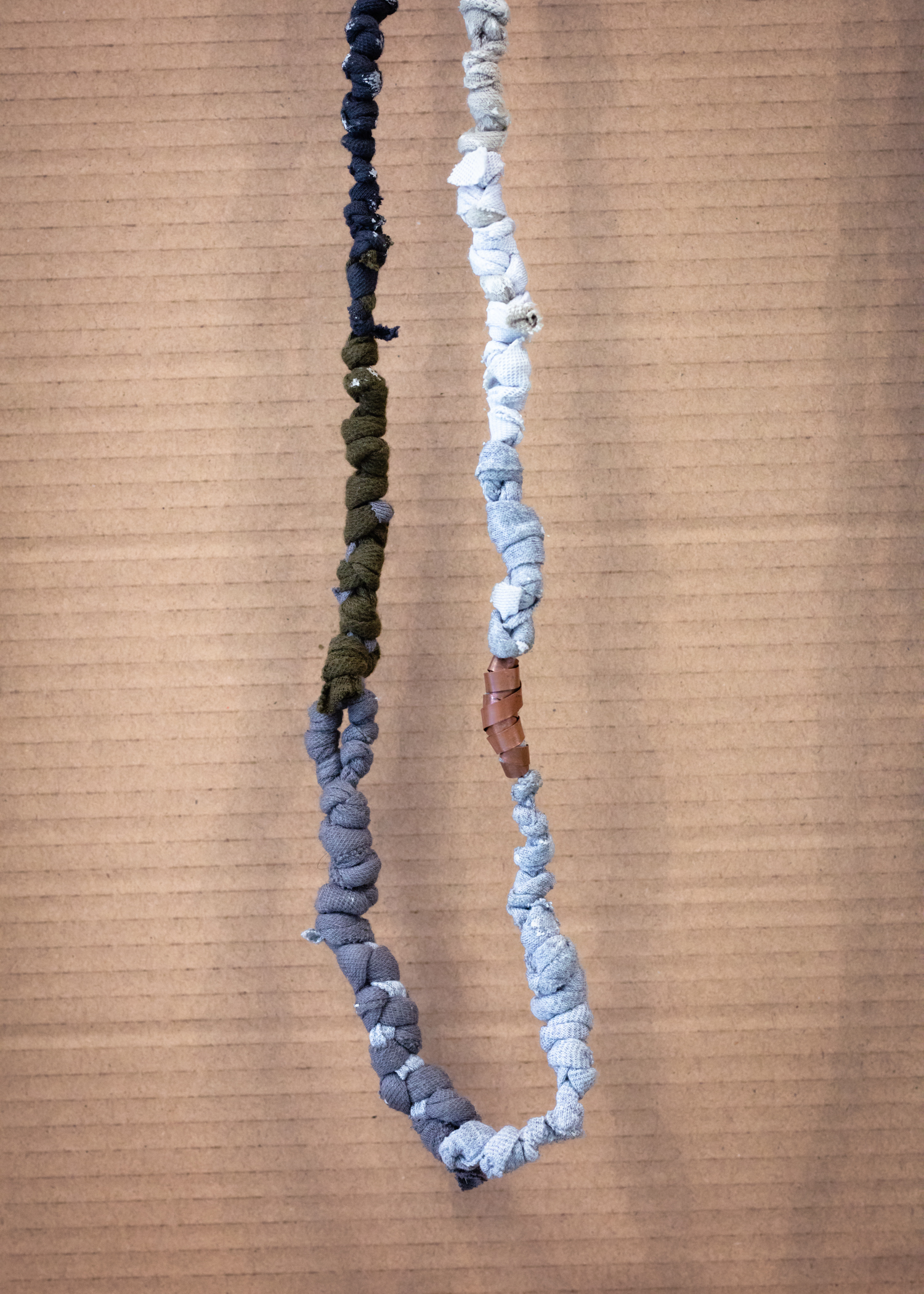
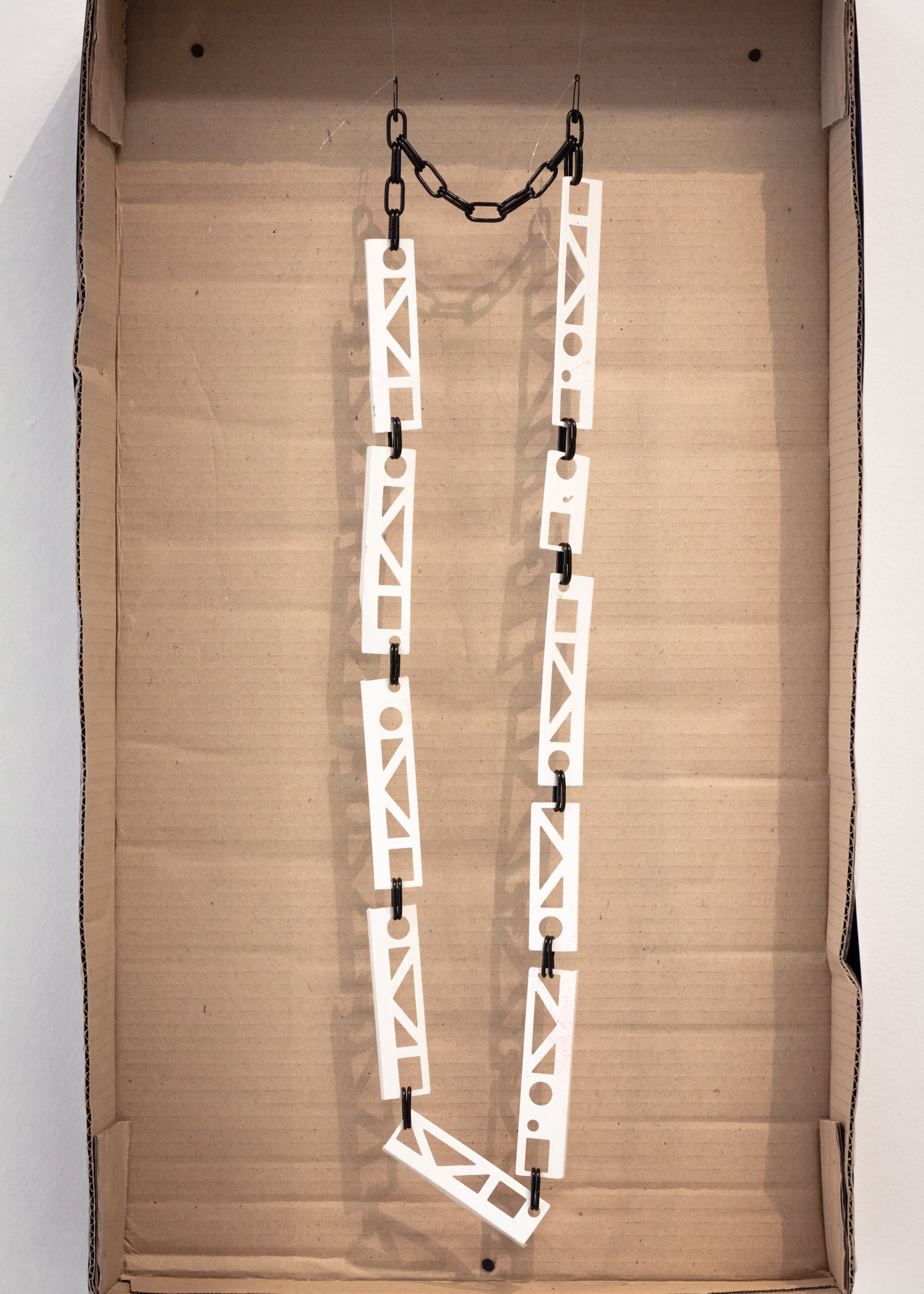
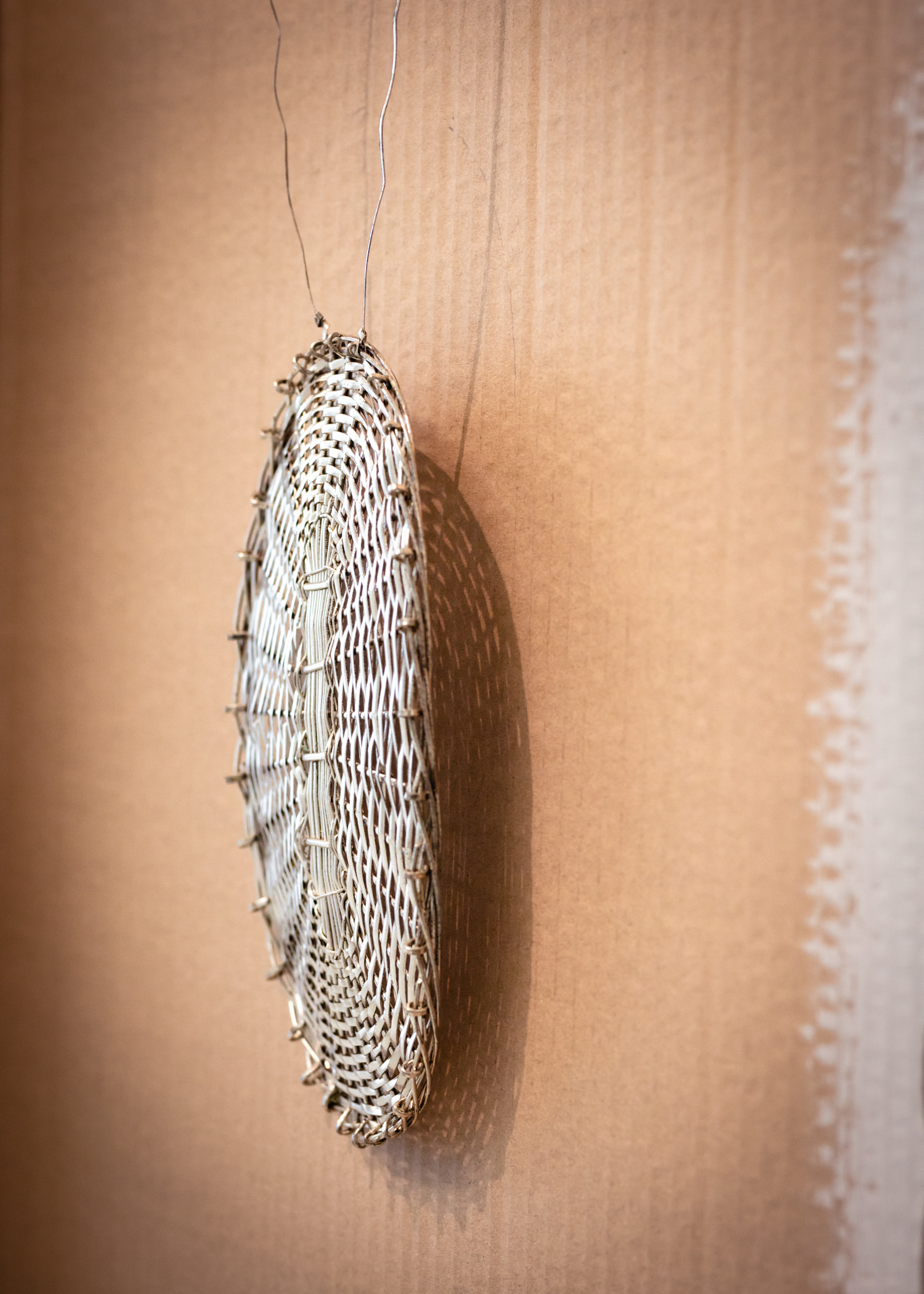
Minumental, Brunswick Street Gallery, Naarm - Melbourne, Radiant Pavilion 2024

by Mia Straka in ,


Life is built of a series of moments on moments, both conscious and unconscious, over time and space. MINUMENTAL brings together a group of 12 contemporary jewellers whose work tracks, maps, and documents gestures honouring the everyday.

The concept of MINUMENTAL explores the tension between monument and significance within the minutiae of everyday life. Moments, routines, gestures, repetitions of actions, which might ordinarily be deemed to hold little value, when highlighted can bear great significance — subconscious actions transformed by a conscious lens. Artists are all former members of the HANDSHAKE 6 jewellery mentoring programme (NZ) and have been working and exhibiting together since 2020. This project will build off the first iteration of MINUMENTAL, shown at Nelson Jewellery week (NZ) in 2023

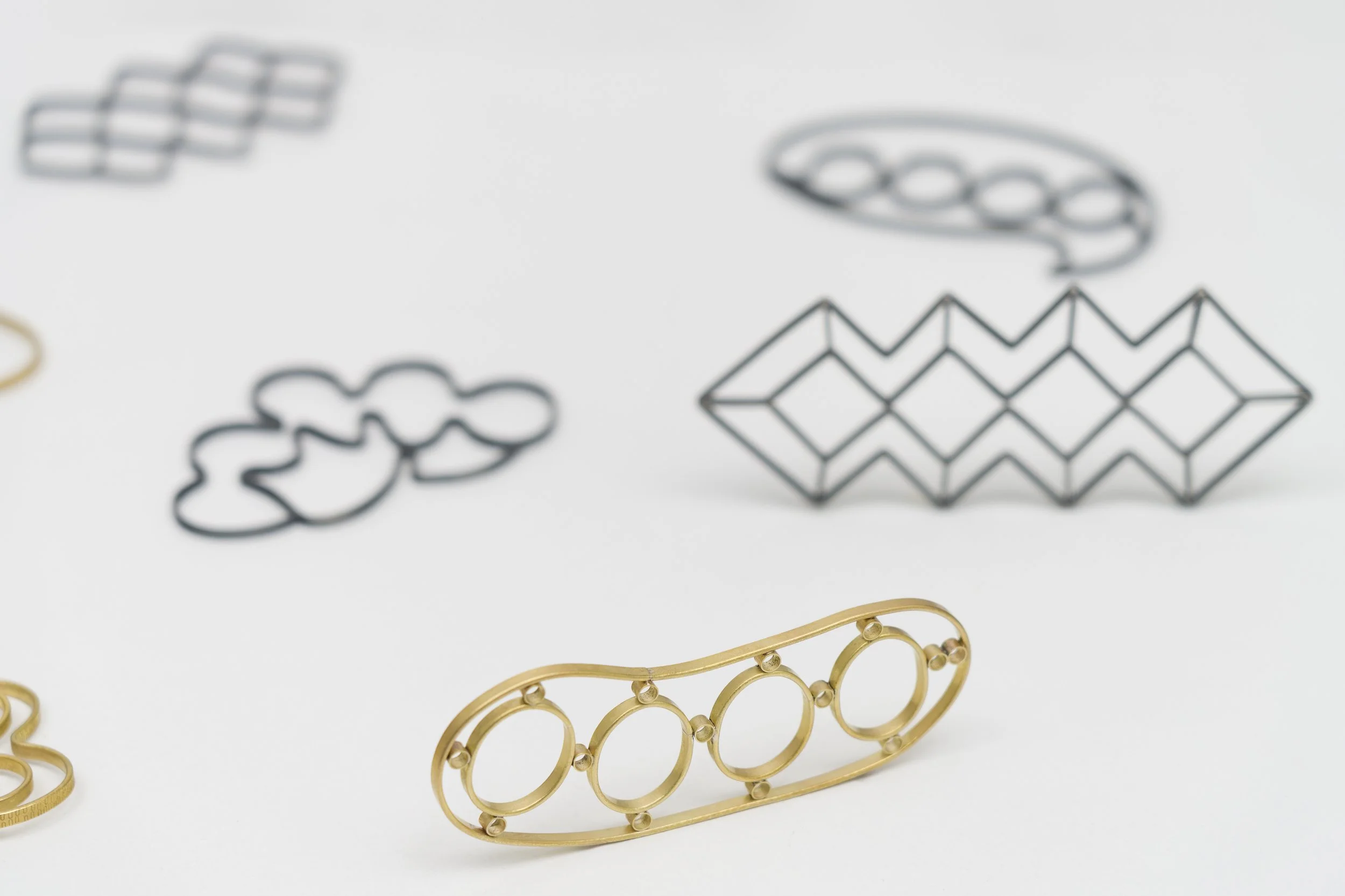
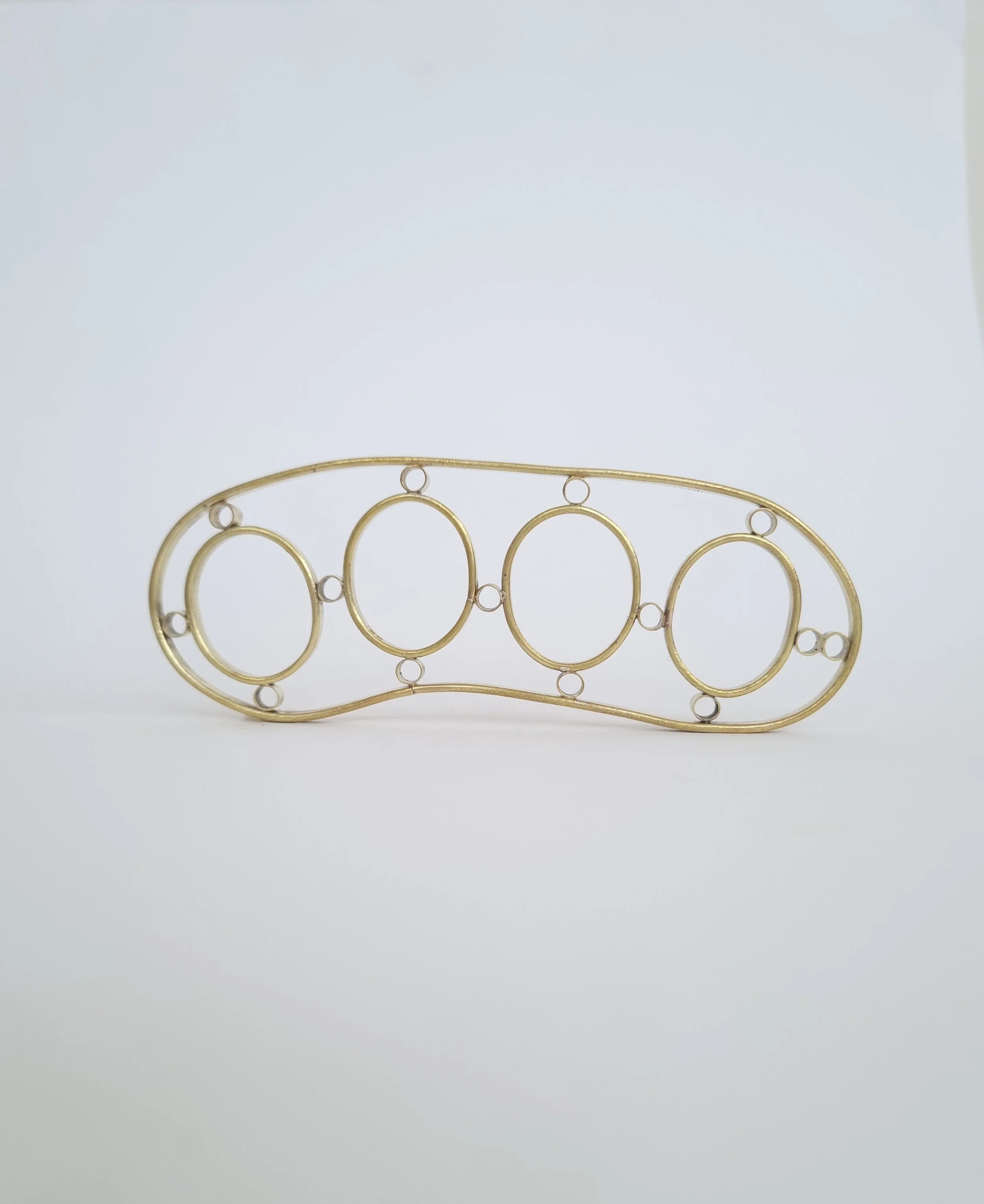
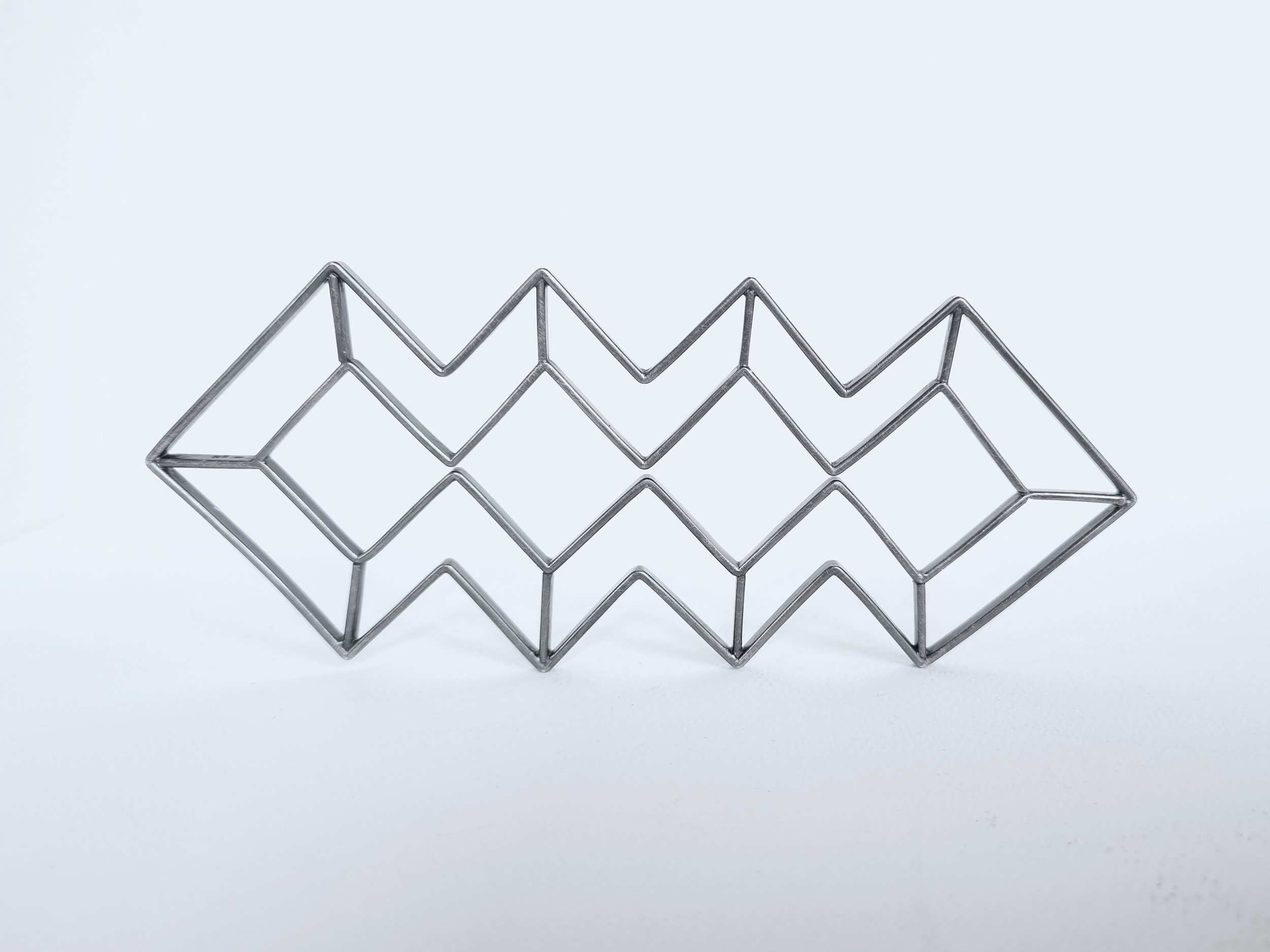
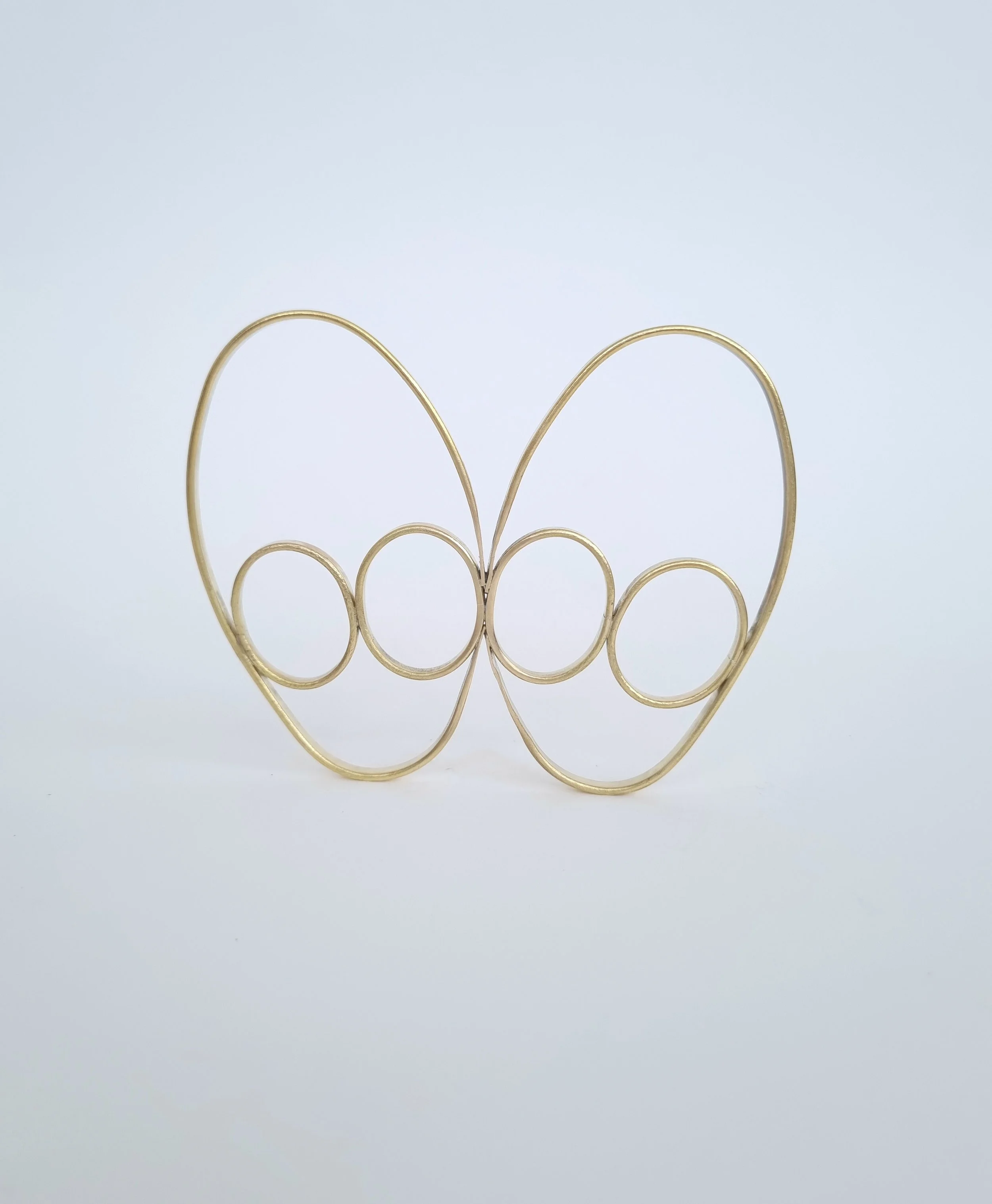
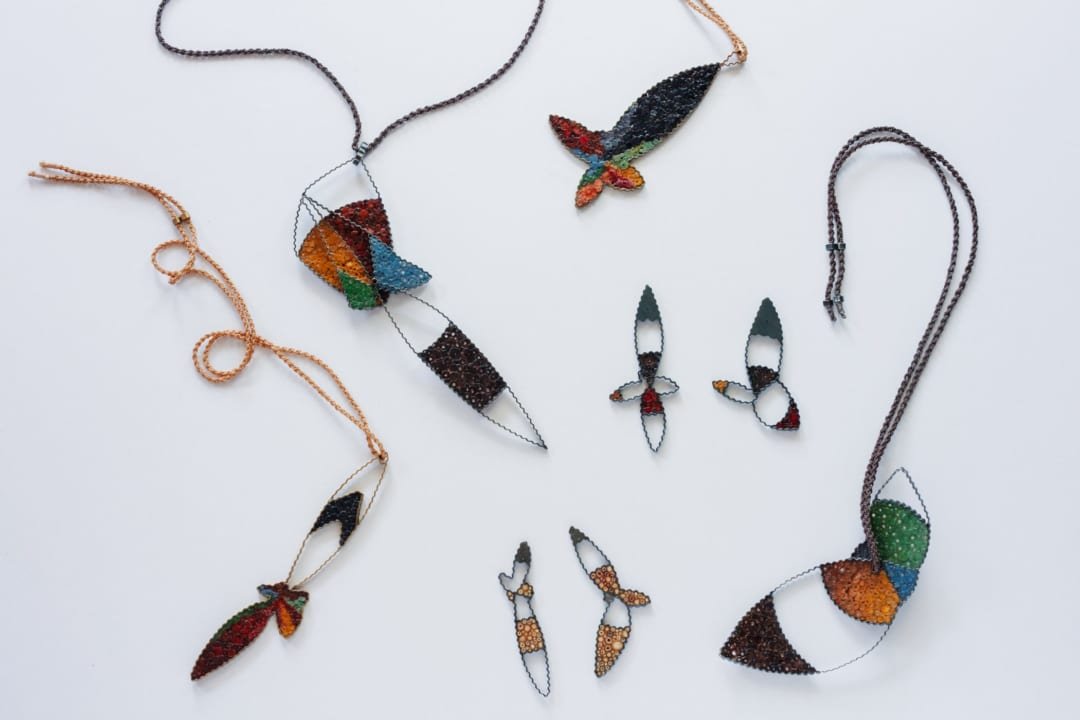
Mia Straka's collection zoom both out and in to address the theme of Minumental. 

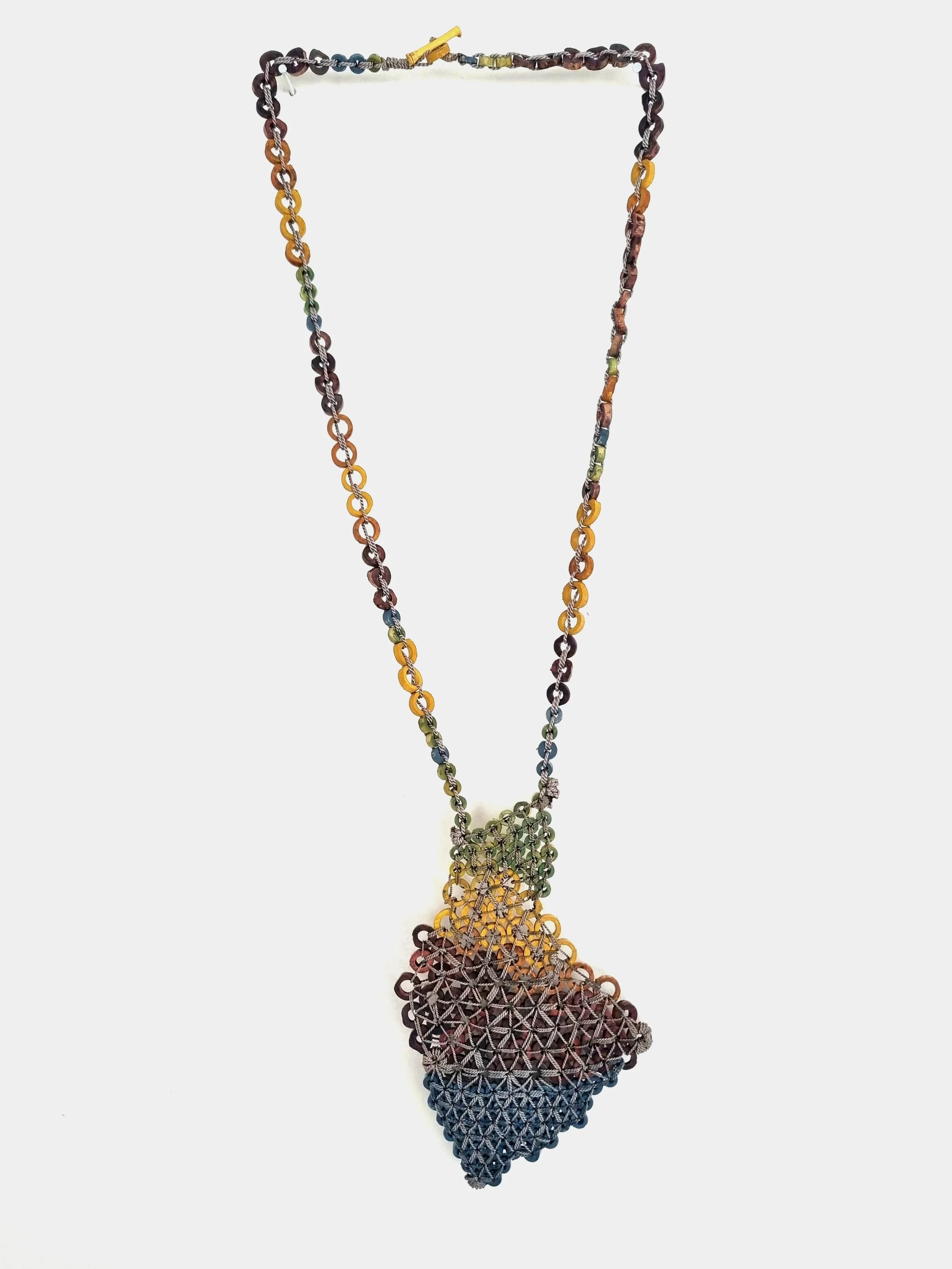
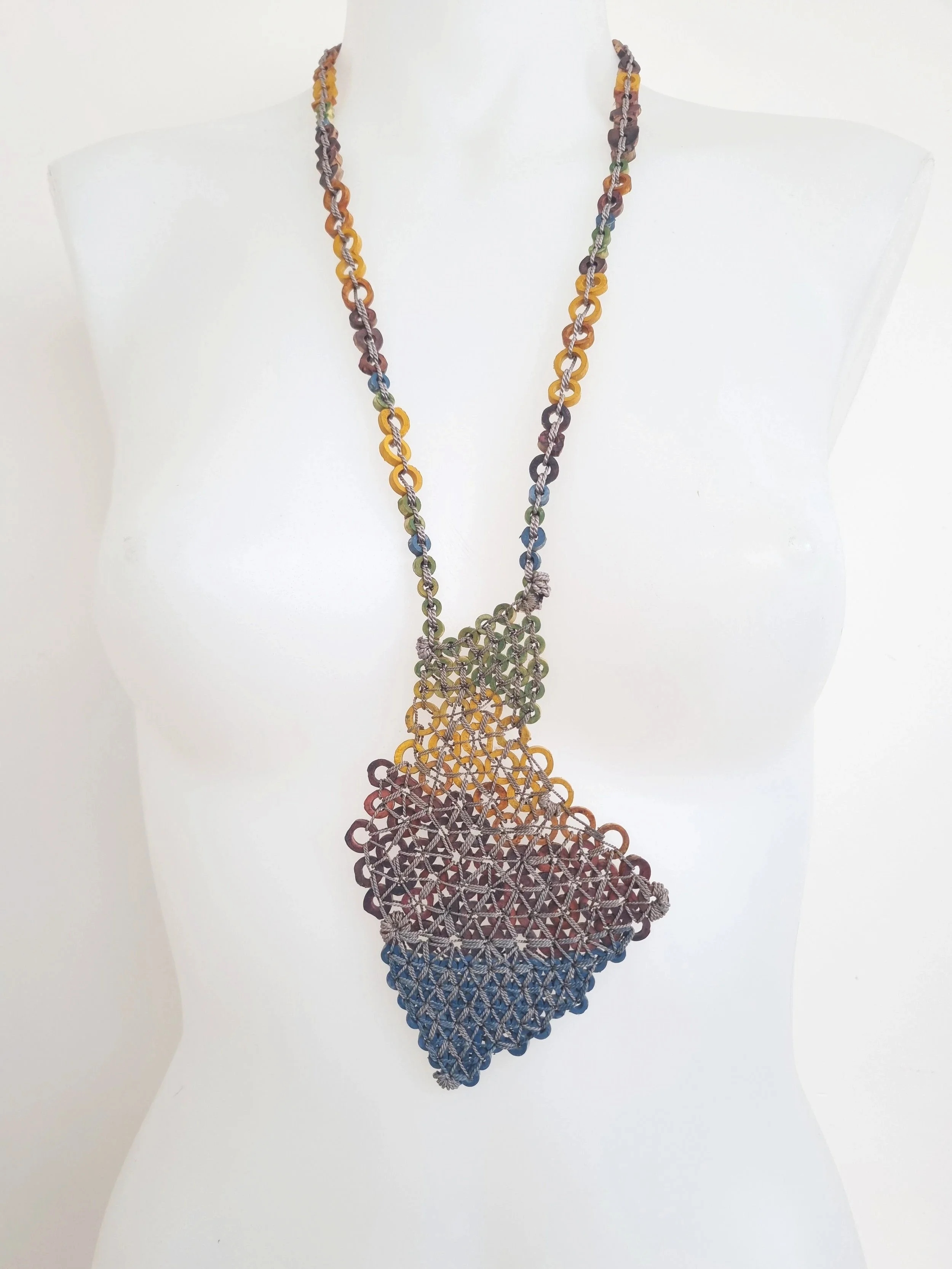
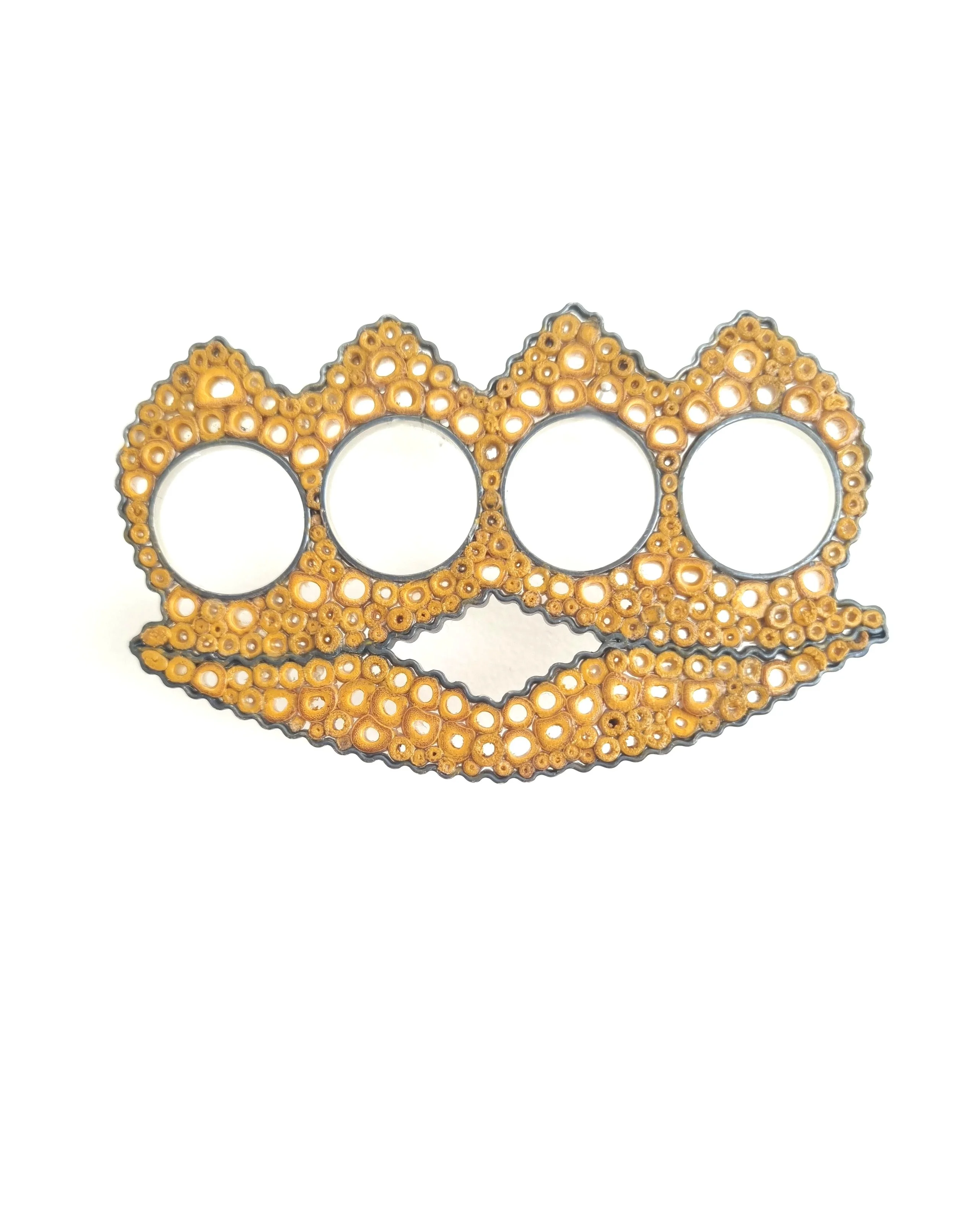
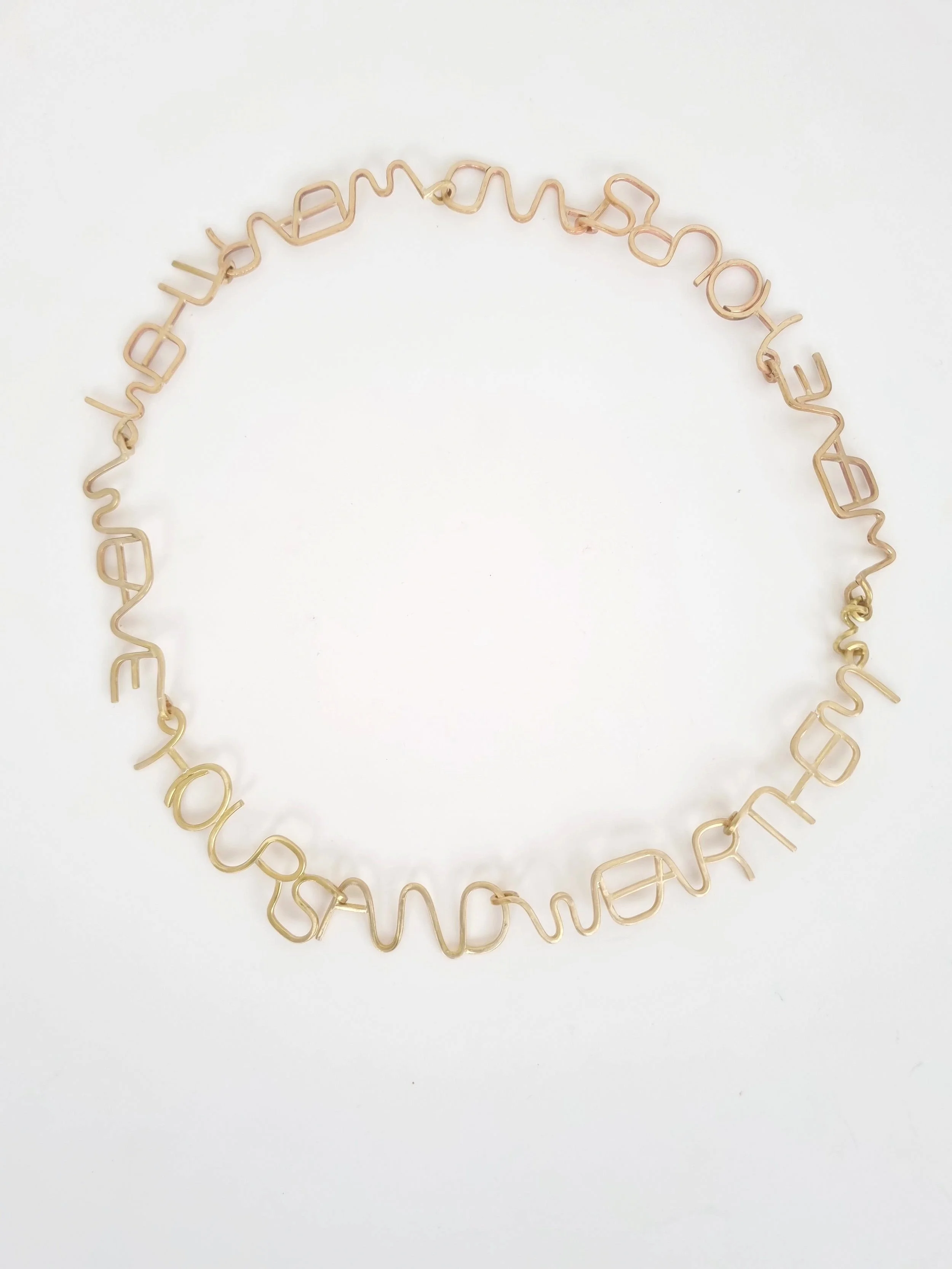
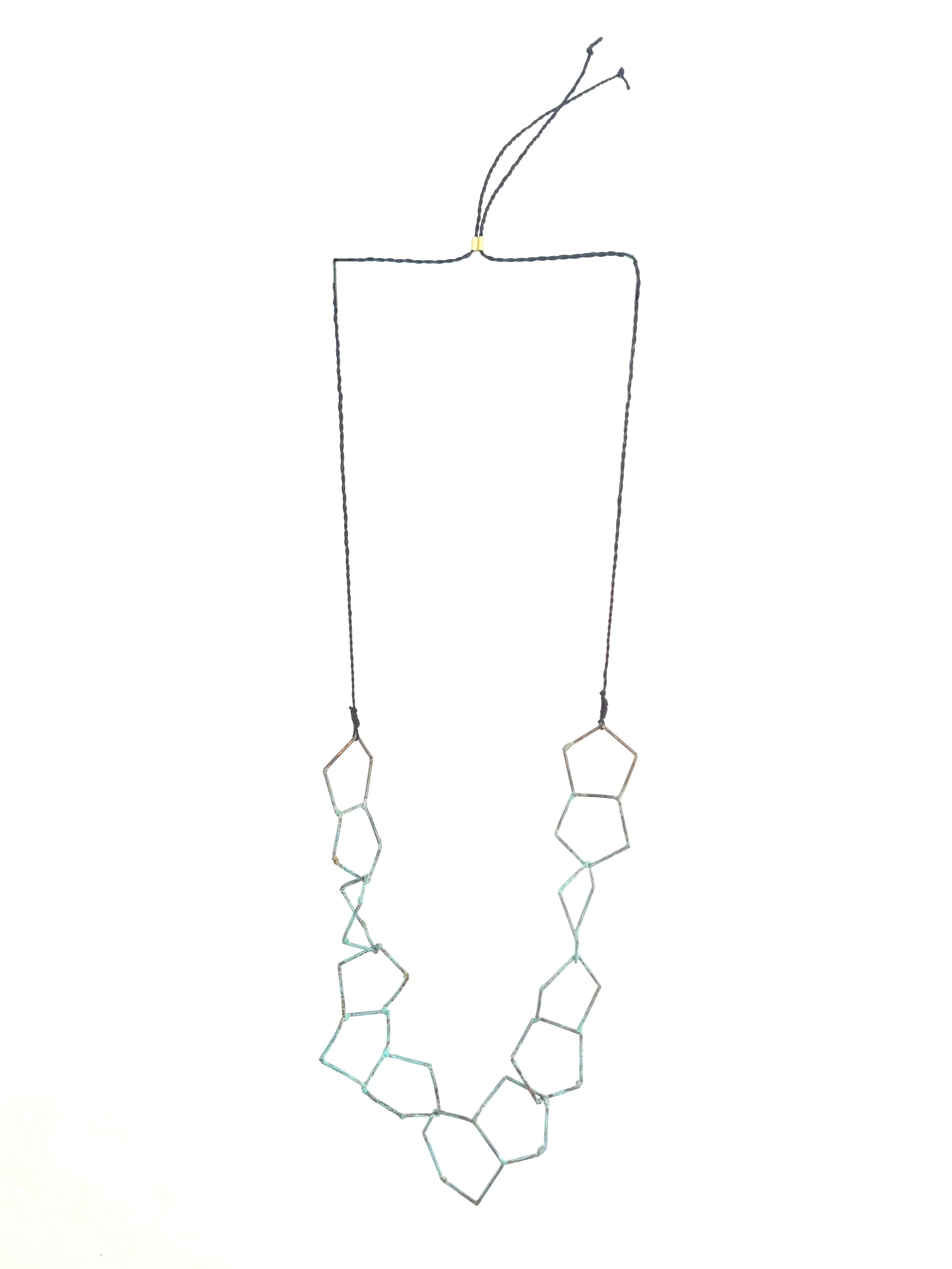
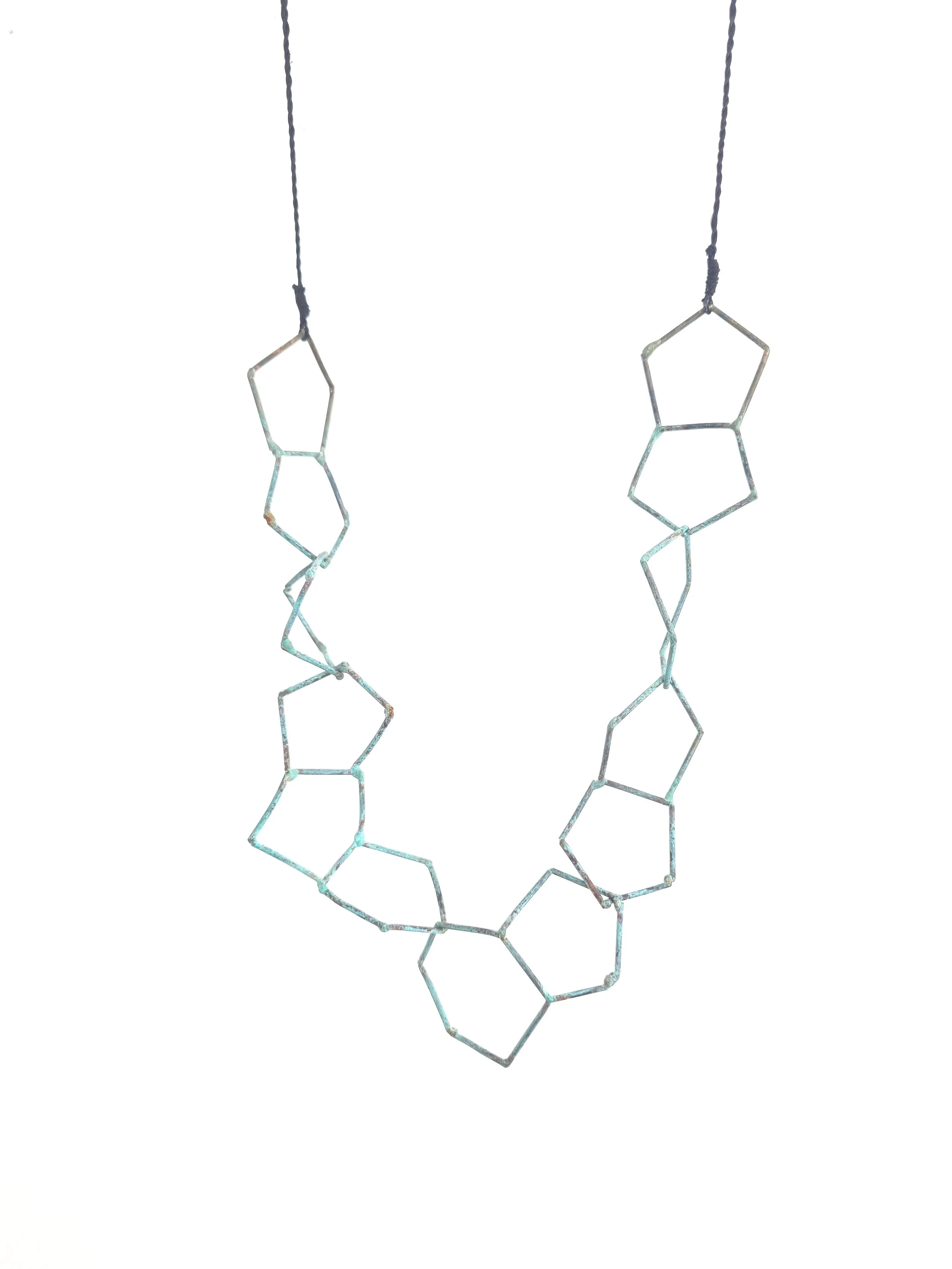
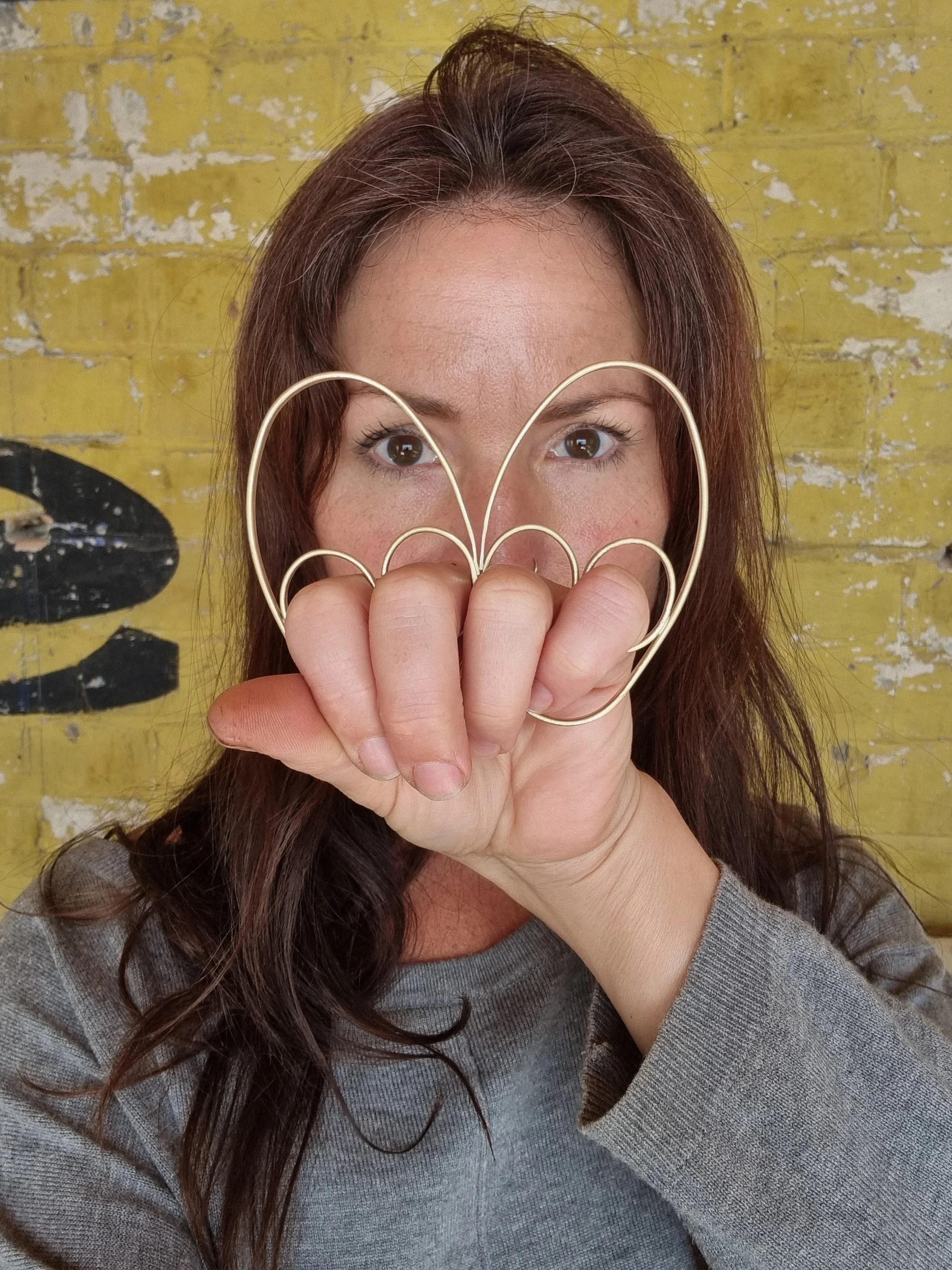
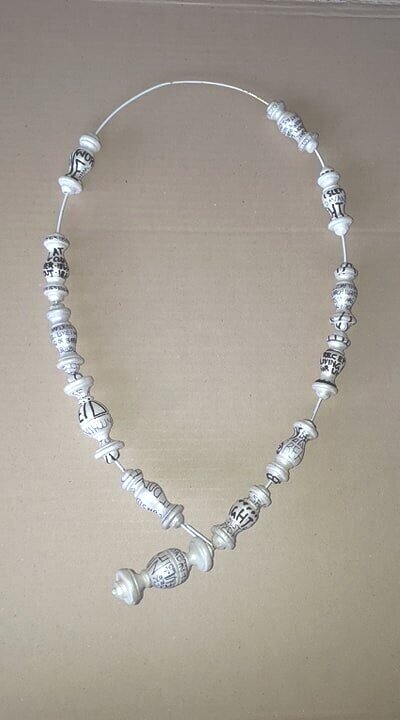
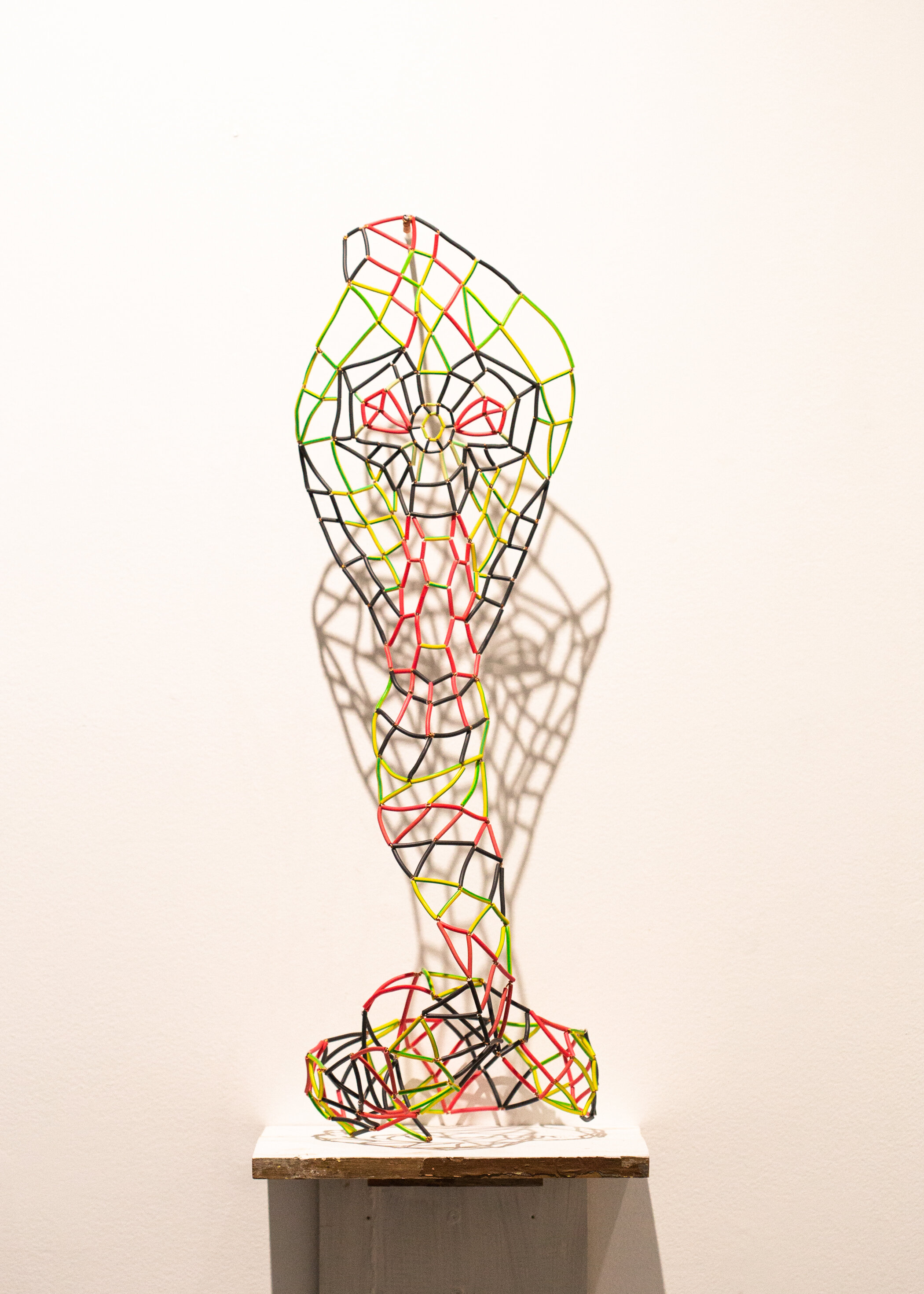
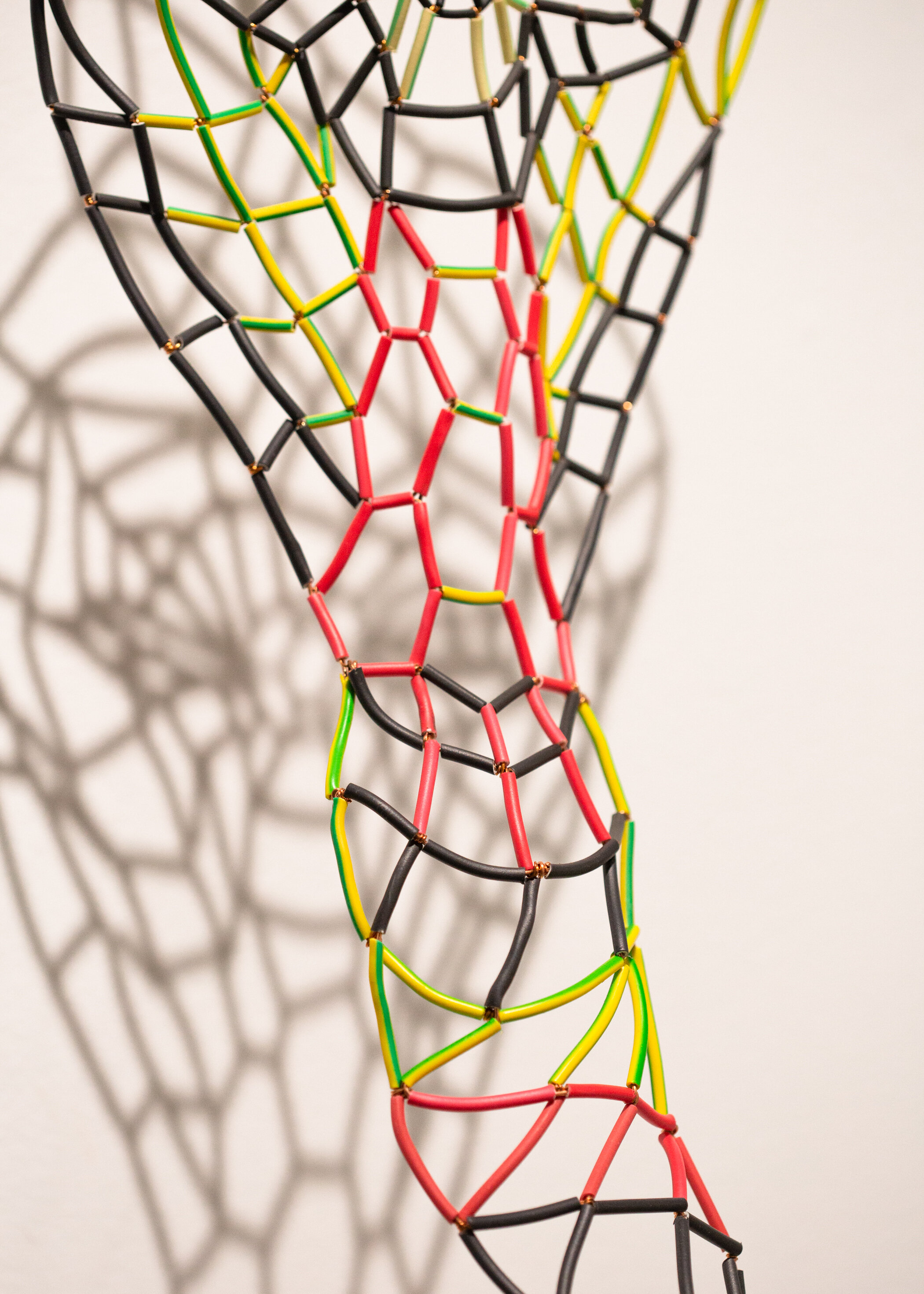
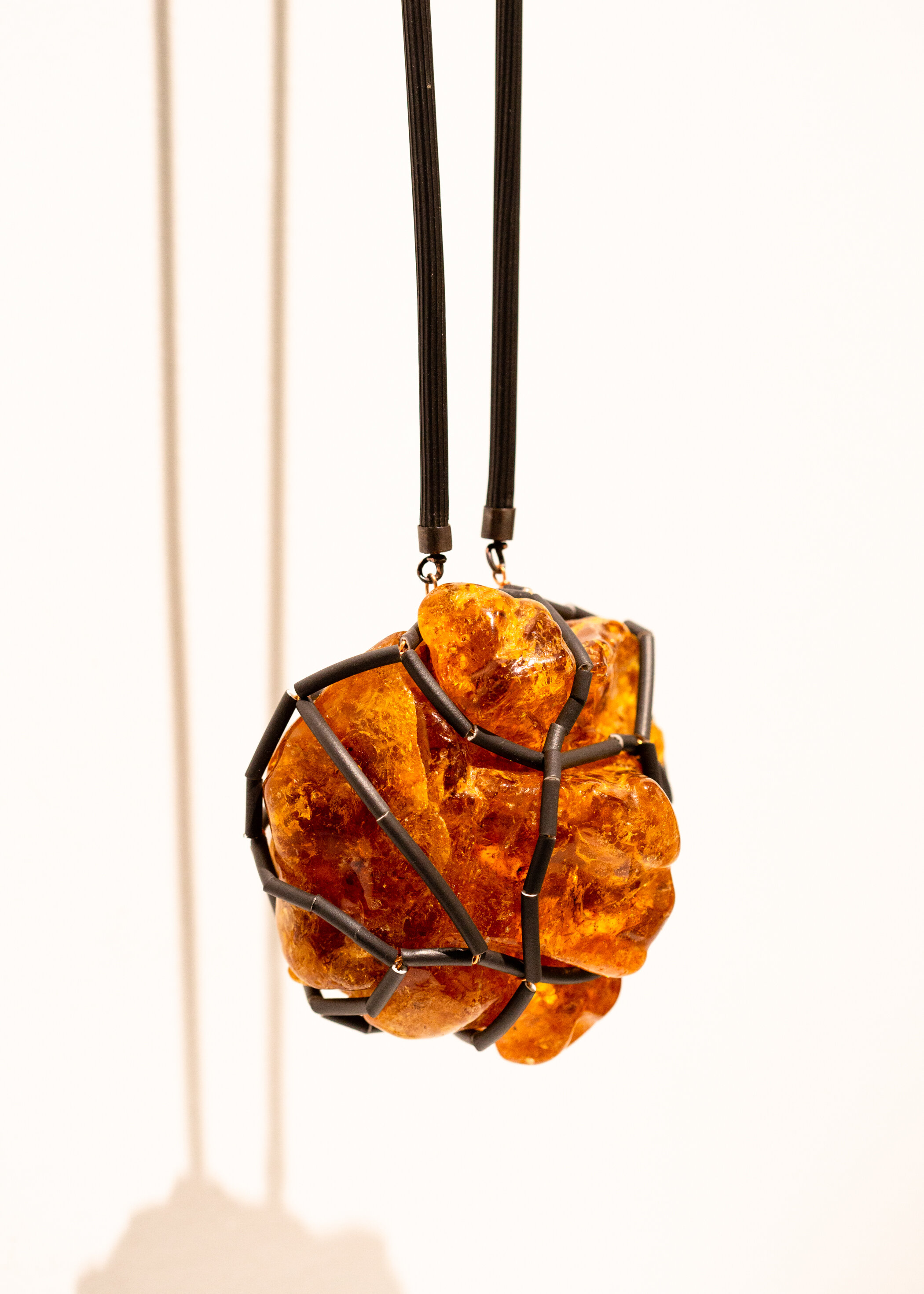
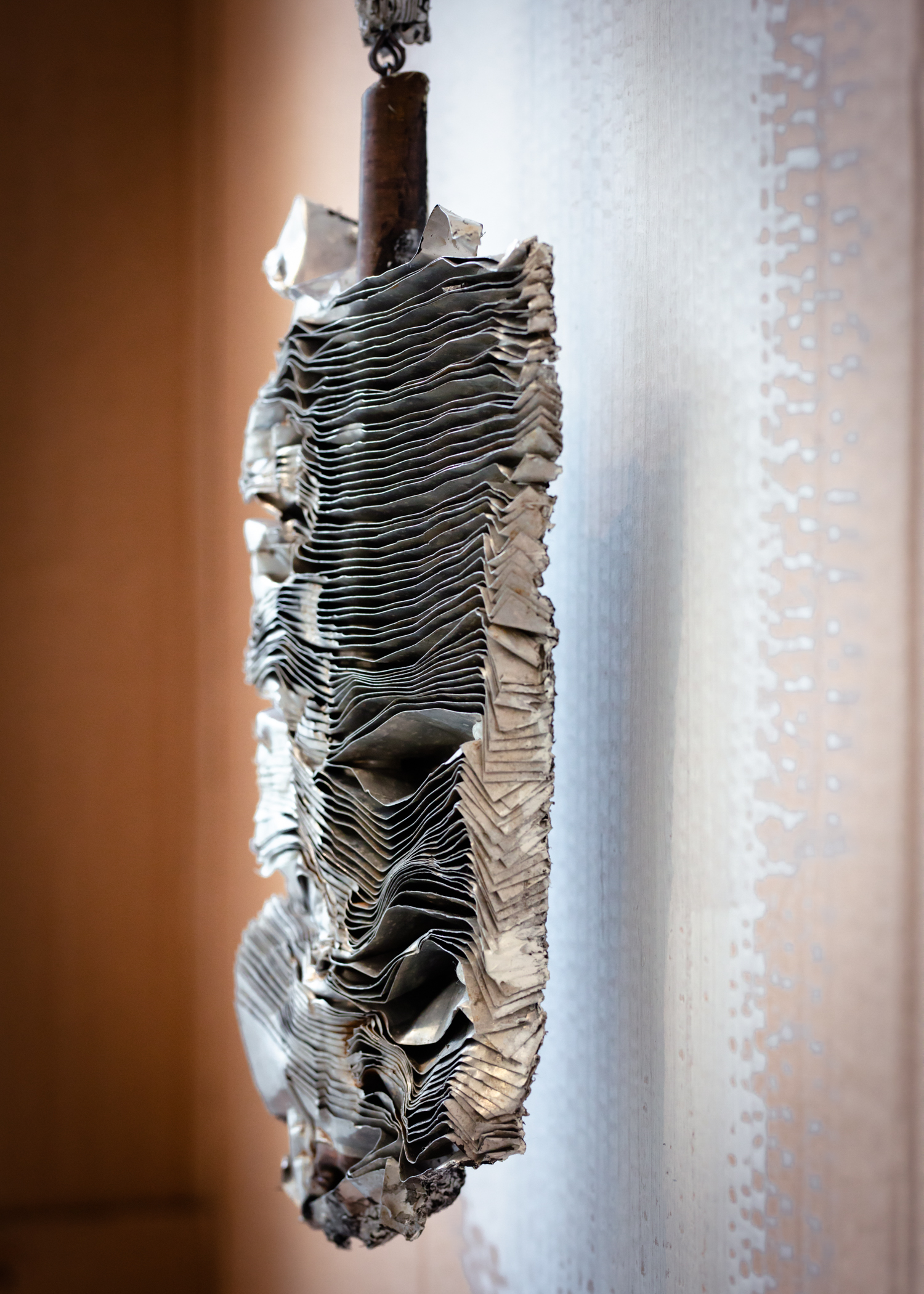
An Idyllic Summer's Day - MF was the starting point as the last piece made for Minumental '23, taking the form of a digitally rendered radar chart documenting an ideal day in the life of a fellow creative. The larger scale Helicoid and delicate geometry of Electronegativity draw on the micro forms of elemental structures that connect us all. Poet's Choker responds to the humanitarian crisis in Gaza with a phrase from a poem by Palestinian poet Rawan Hussin, Dawn - ‘weave hours and wear them’. The form of a knuckleduster is subverted in the finely crafted Quiet Revolution to communicate the power of personal action, which has the potential to be made monumental through critical mass.


PSITHURISM, Luma - Southern Light Project - Queenstown, 2024

by Mia Straka in ,


Sam Folkard Hodgson, Michael Hodgson, Mia Straka, Silo, Tim Buckley

PSITHURISM, the delicate whisper of wind through the foliage, an enchanting melody that reasonates deeply with or primal connection to nature.

Video by Sophia Bayly

Step into where the air is alive with gentle rustling and light filters through the canopy above. A breathing forest crafted from light and sound.

This installation was made possible with support from staysouth.com


67206 Days/2276 Full Moons, Stanley Street Gallery, Sydney, 2024

by Mia Straka in ,


The Quiet Revolution series considers the transformative potential of creativity and collectivity.

How do we stand up against violence and oppression through the act of making?

Through action I find agency and purpose, working through feelings of being powerless or hopeless. Using our hands and minds as creative practitioners we actively show strength and solidarity and share a fundamental sense of humanity, facilitating connection. 

These works are offered as catalysts. You the wearer animate and activate the work using your physicality in collaboration with your environment. The work then goes beyond any intention imbued by the individual to be an evolving, social mode of communication.

We tell stories through symbols, some recognised the world over. Graceful linearity follow the curves of the hand, suggestive of a speech bubble or the spiralling koru unfolding, signifying new life, hope for the future and renewal. A circle can be the first way we draw the sun, in Aboriginal art a circle or concentric circles can represent places that people come together. The fishnet pattern worn on Keffiyeh scarves has come to express Palestinian solidarity, originating from the connection between Palestinian fishermen and the sea, embodying abundance and grace.

As I write this, every 10 minutes in Gaza another child is killed. We are bearing witness to a genocide and the massive public outcry is yet unheeded by our Western governments. At home in Aotearoa, the newly elected coalition government’s Treaty Principles Bill seeks to undermine Māori rights as tangata whenua, prioritising individualism over collectivity. Last year’s referendum to give First Nations people a voice in Federal parliament was voted with a majority against in all six of Australia’s states.

These works provide space to explore the contradictions of living in post-colonial nations as we strive to acknowledge, empower and embrace the wisdom and culture of indigenous people and minority groups within the oscillations of our governing bodies. Navigating disappointment in our political systems to uphold justice and basic humanitarian values both at home and on a global scale; issues of power, violence, silence and inaction can only be balanced by building strong communities based on solidarity, collectivity and real-time action. 

A Quiet Revolution begins internally, challenging deeply embedded prejudices and disconnection, evolving externally to embrace diversity and recognise the power and beauty of interconnection. 

We hold the power in our hands.


Morph, Northart, Auckland

by Mia Straka


‘MORPH’ represents the final body of work created by the twelve artists of Handshake 6.

MORPH refers to transformation, this exhibition seeks to demonstrate that quality through the development of each participant’s practice that came together with both the engagement of their mentors and each other.

Morph derives from the Greek morphē, meaning ‘form’, ‘shape’, or ‘structure’- all key attributes of the jewellery practice.

catalogue

exhibition images

artsdiary coverage


ON-E, online exhibition

by Mia Straka


CHECK out HS6 ‘online exhibition’, which attempts to contextualise (jewellery) ideas and processes. HS6 did a series of Zoom workshops between April – October about online exhibiting called

ON-E by: Estela Saez Vilanova (CAT-ES)

This special masterclass with Estela Saez workshops how an online presence could break away from all known presentation methods (on the body or displayed). This digital gateway invited the HS6 artists to come up with innovative ideas and experiments. 


Chain Reaction, Refinery Art Space, Nelson

by Mia Straka in ,


Many hands make light work | Know like the back of your hand | Put your hands together | Cold hands warm heart | Show of hands | Dab hand | First Hand | Hand in hand | Hands on | Heavy handed | Old hand | Out of hand | Under hand | Change hands | Hand over | Hands full | Hands tied | In safe hands | Try your hand | Hands down | Second hand | In good hands | Helping hand | On hand | Get your hands dirty | Hand over fist | On the other hand | In your hands

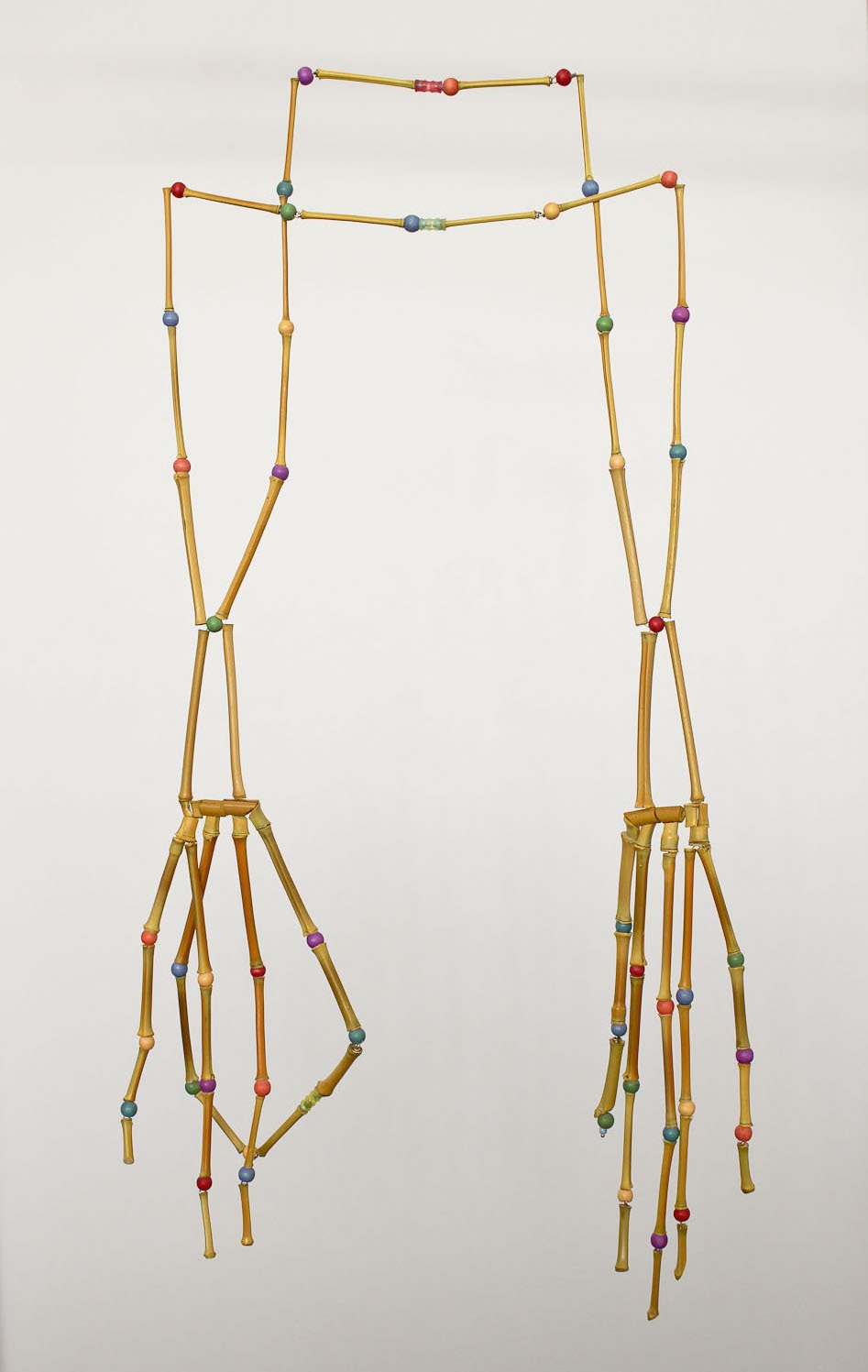
 The brief for CHAINreaction was to make a chain which would connect into a series of 49 chains, celebrating 10 years of the Handshake project and artists involved, each of us was responsible for the linking connection to our righthand neighbouring chain. This was a timely invitation to step back into making work that could function both as adornment or object. 

Key concepts I wanted to express included interconnectivity, collectivity and a desire to celebrate the precious impermanence of life in these weird times. In response to being part of the HandShake6 team I was drawn to exploring the form of the hand as our tools for making, medium for touch, sign and gesture. 

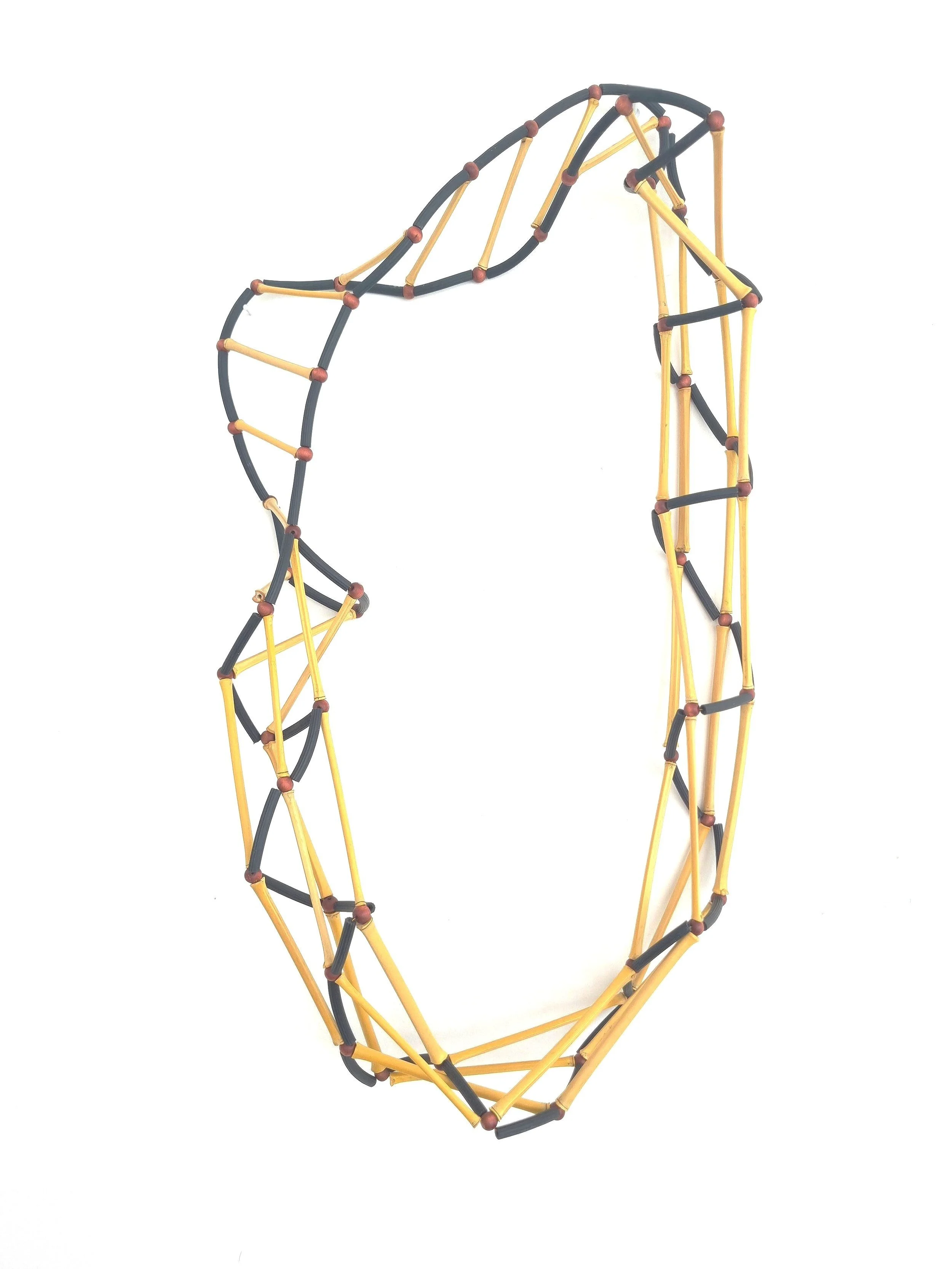
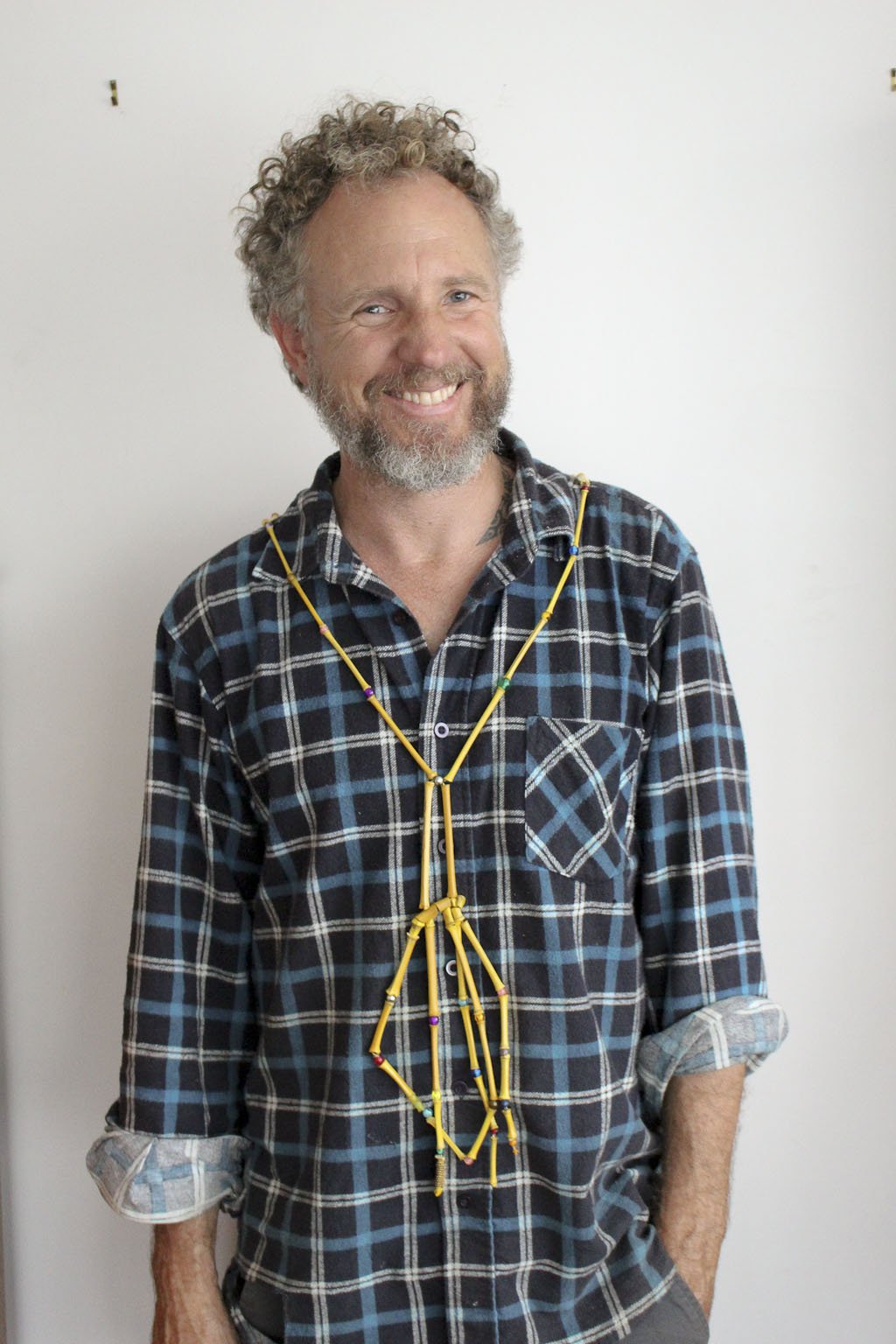
I made two of these bamboo ‘hands’ which connect together as a chain, with a hand at each end and can be worn or configured in multiple ways. Bamboo attracted me for it’s plentiful weedy growth, bony form and tubular structure. The movement of the joints was an important element to me. To invoke a sense of jointed fingers rather than being too floppy I burred out concave curves in the bamboo ends to accommodate the round beads and strung the work on braided steel wire rather for some additional flex.

Review

Exhibition images


Signing In, Te Auaha, Wellington

by Mia Straka in ,


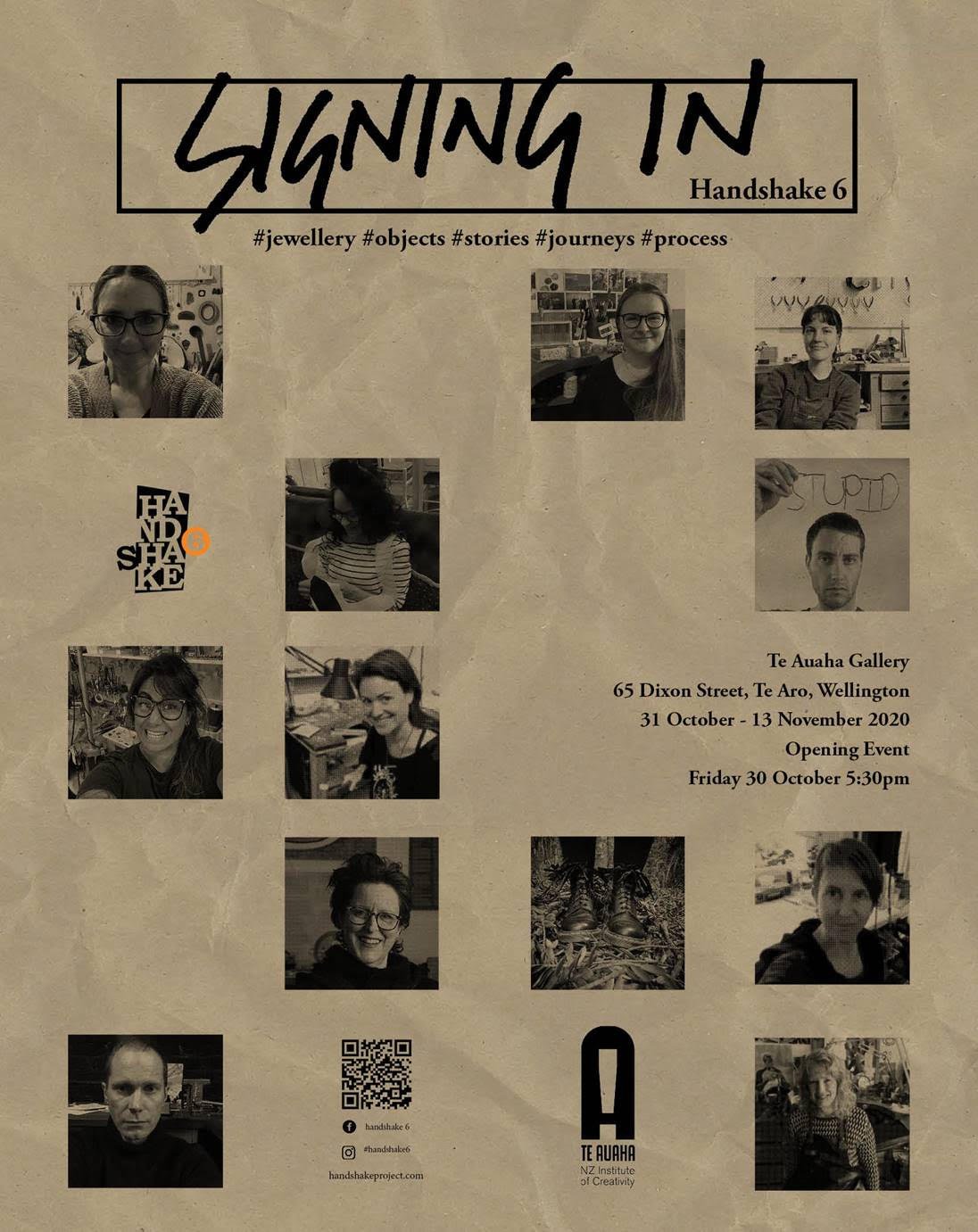
SIGNING IN reflects the participants’ work as a group since the start of their HS6 mentorship and marks the halfway point of their two-year journey.

Here you will see an emphasis on process as much as ‘finished’ work, an opportunity to catch a glimpse of ideas in their nascent phase, with many options and opportunities yet to emerge.

Reflections and install images.


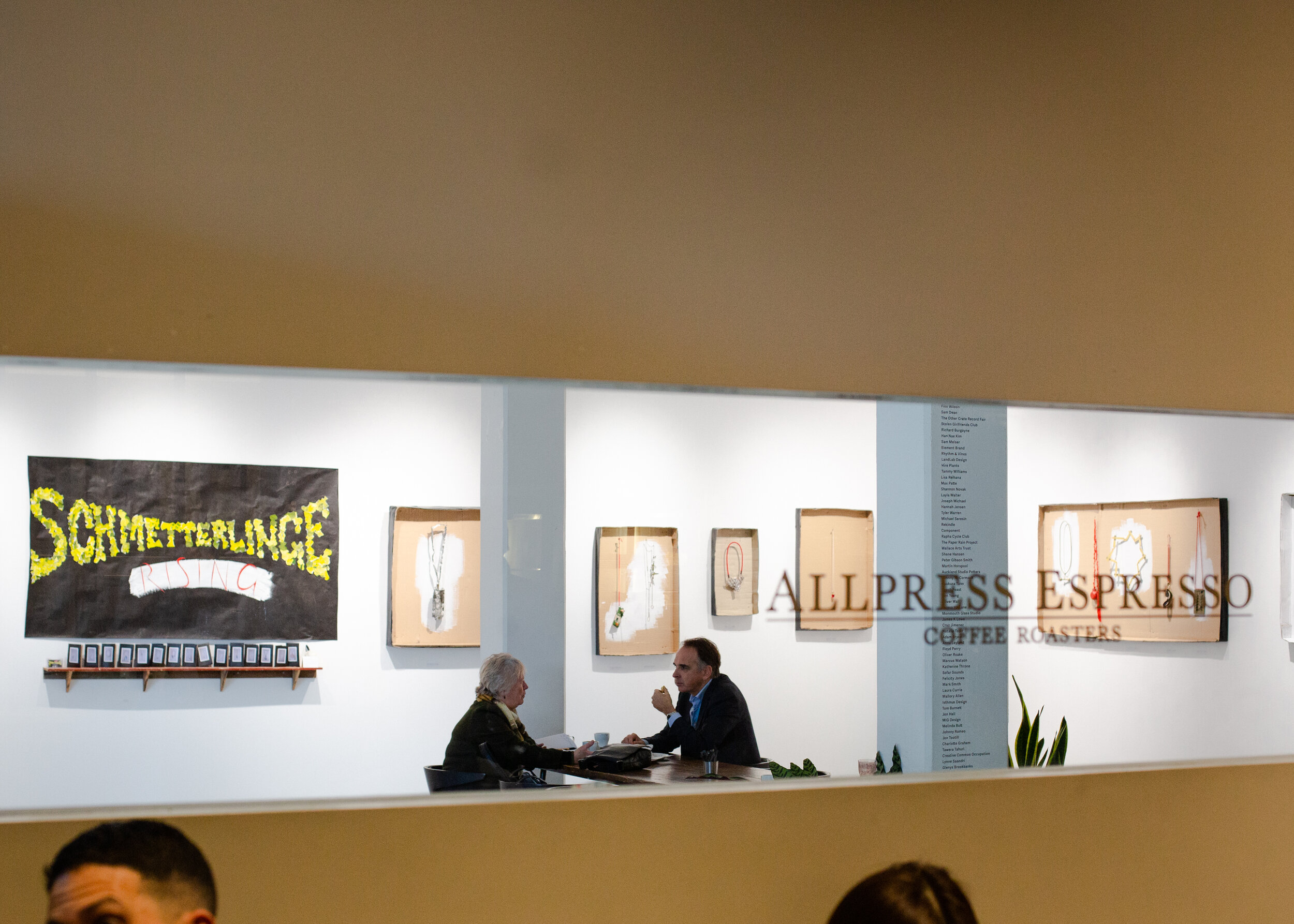
Schmetterlinge Rising, Allpress studio, Auckland

by Mia Straka in


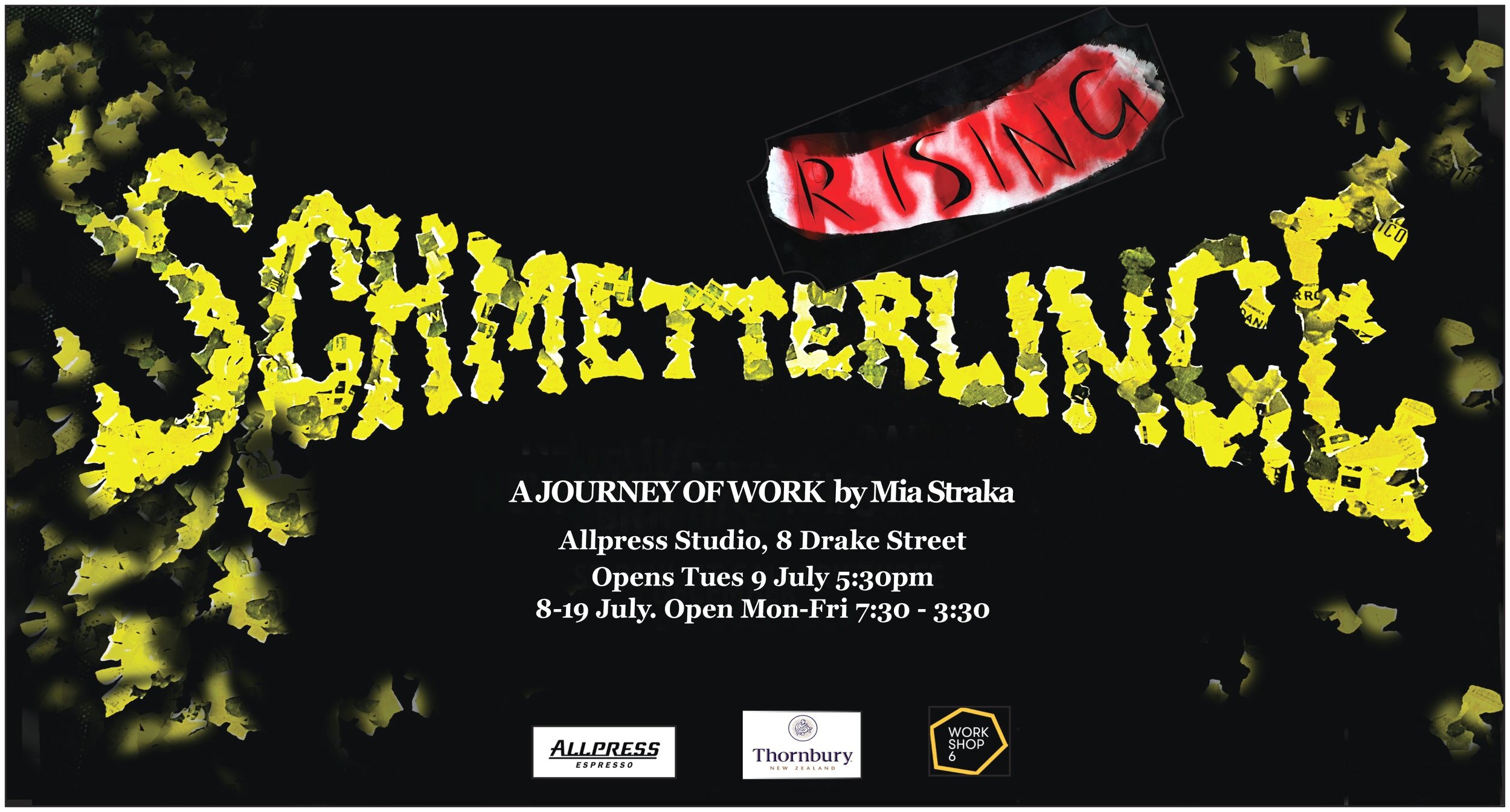
New solo show in Auckland City 8-19 July, opening night 9 July 5:30-7:30pm all welcome!

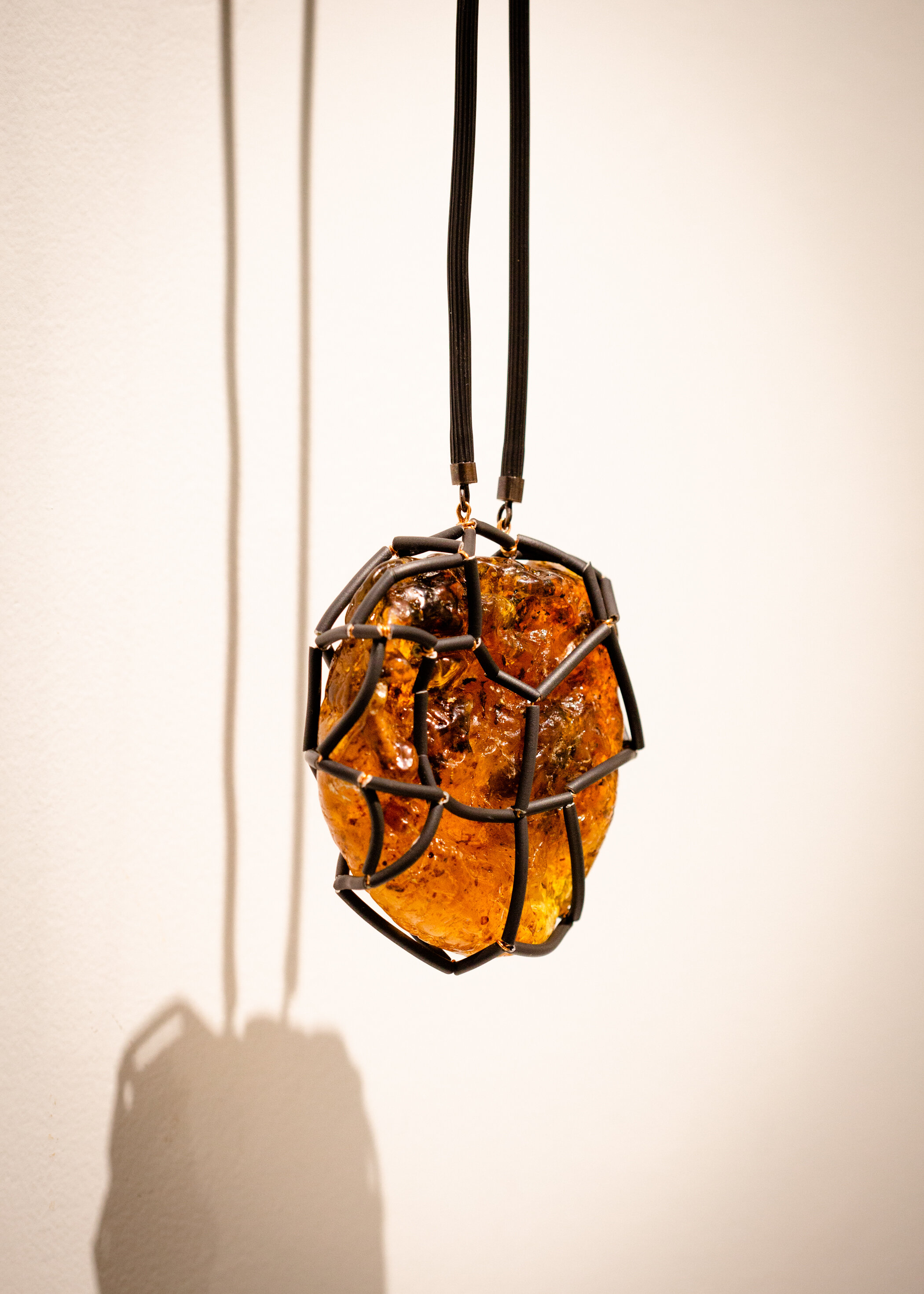
This exhibition is led by ideas of transformation, reusing/reconstructing waste materials and disused objects to create adornment for the Anthropocene. Jewellery and objects made during last year’s artist residency in Berlin are juxtaposed with work…

This exhibition is led by ideas of transformation, reusing/reconstructing waste materials and disused objects to create adornment for the Anthropocene. Jewellery and objects made during last year’s artist residency in Berlin are juxtaposed with work made with the same ethos back in NZ, informed by an intuitive response to environment and personal experience.

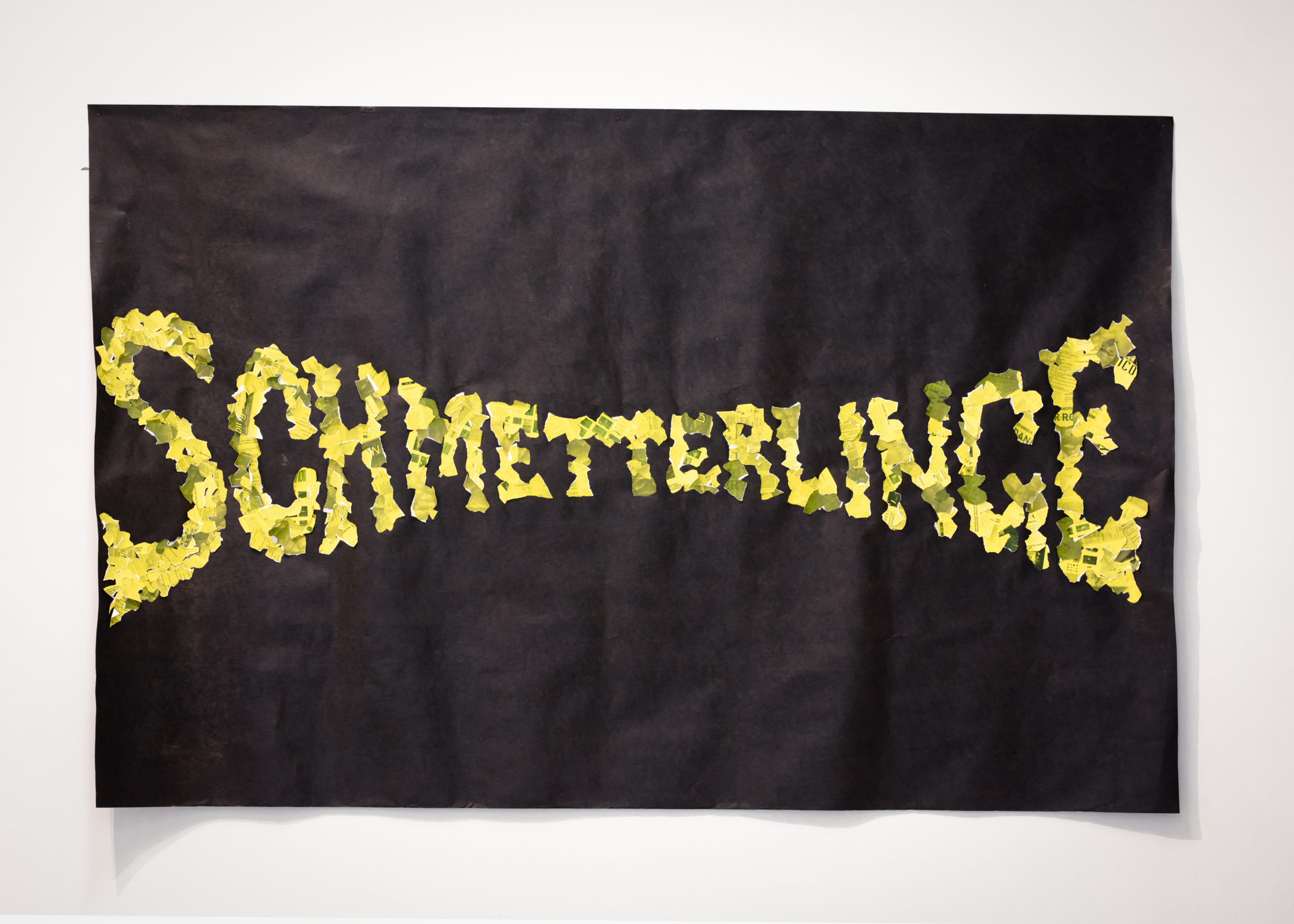
Schmetterlinge translates as butterflies, referring to the massive changes required imminently as a global community moving towards environmental sustainability, adapting to mass population movements and climate change.

Despite the heaviness of both historical context and our current precipitous position, the work displays a wry sense of humour and colourful outbursts, finding my own ways to move forward with joy and wonder at life and the power of nature to overcome, one way or the other.

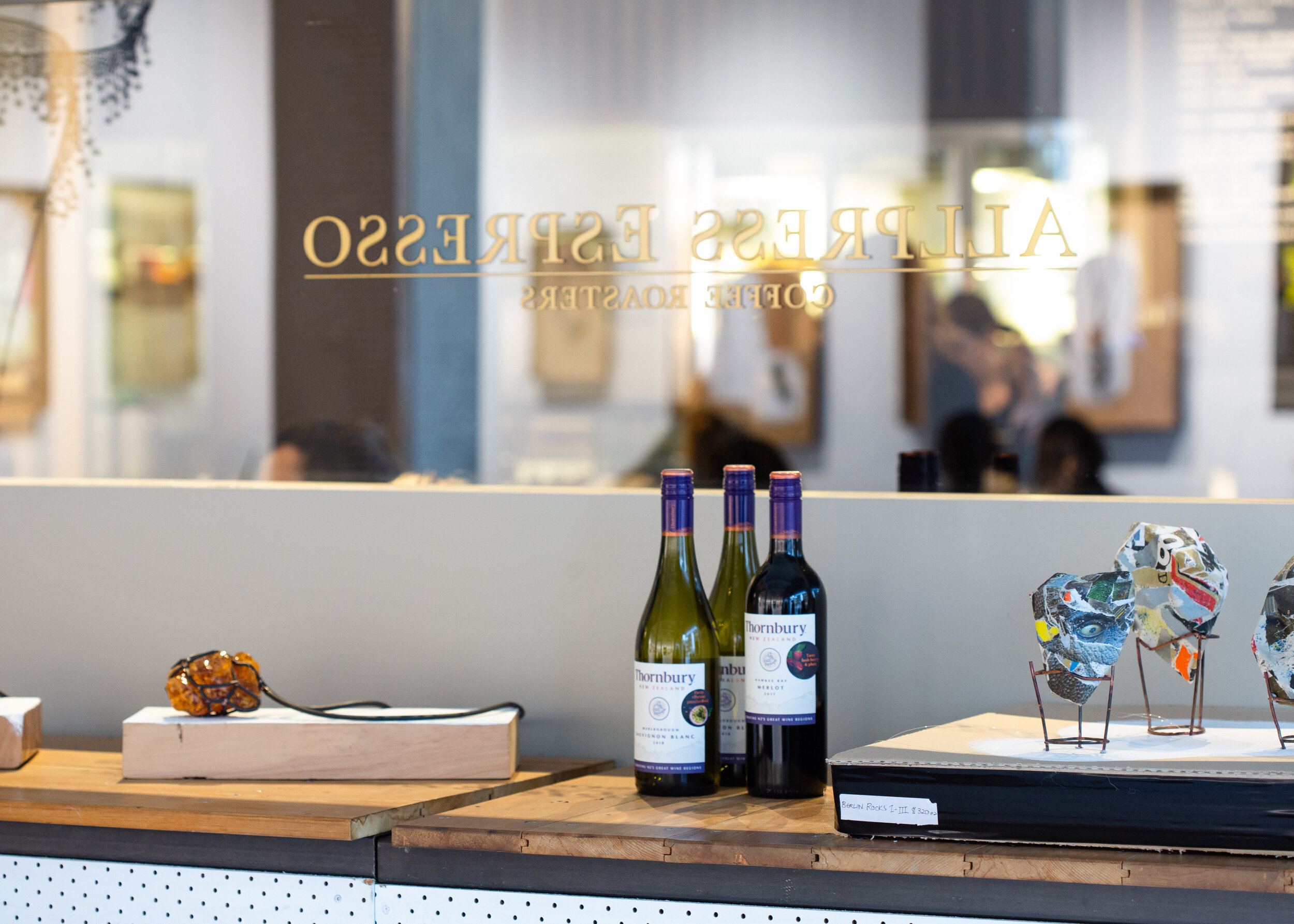
Thanks to Allpress Press Studio, Thornbury Wines and Workshop6 for your wonderful support.

Images thanks to Liz Clarkson Photography


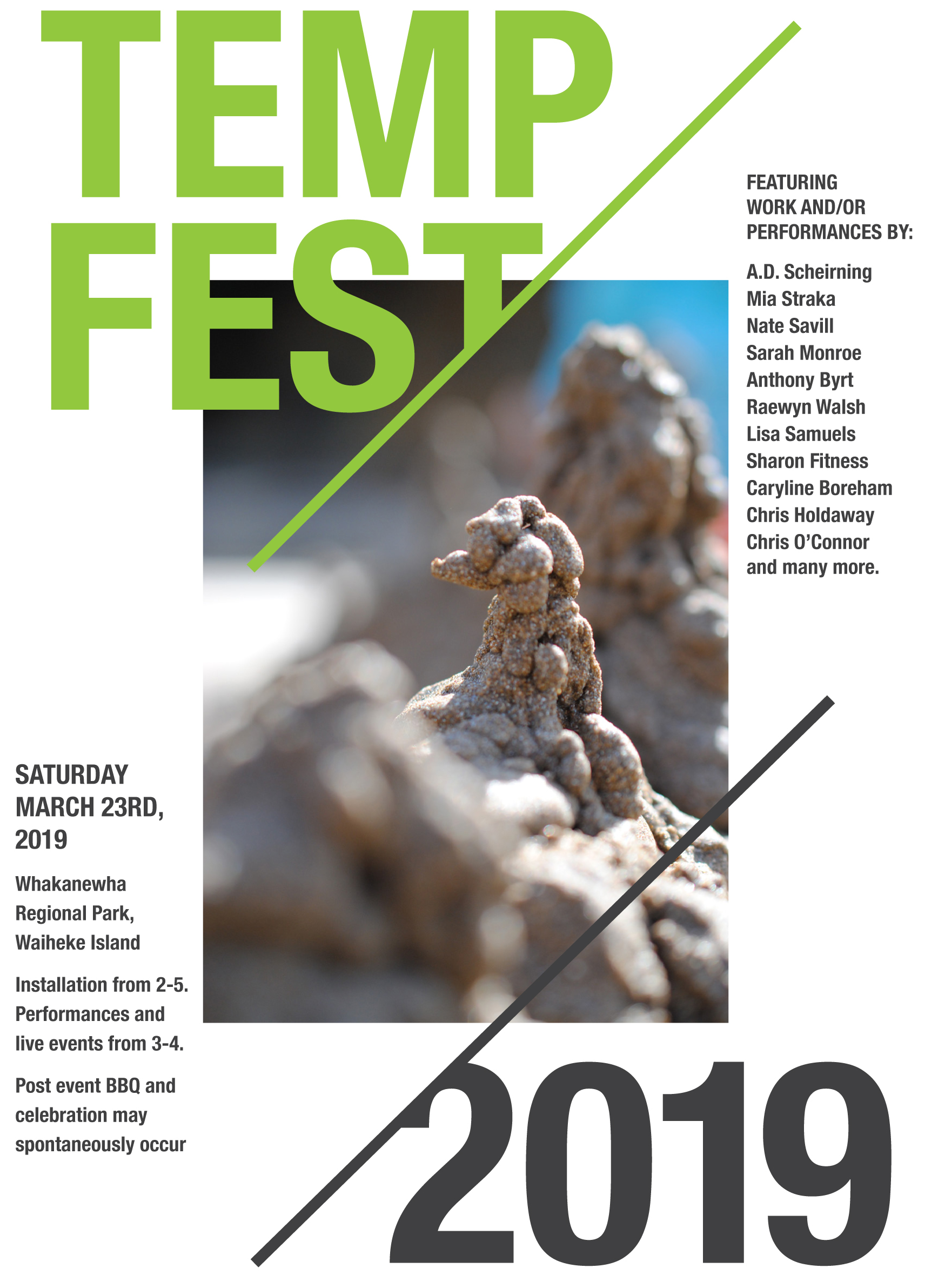
TempFest - Whakanewha Regional Park, Waiheke

by Mia Straka in


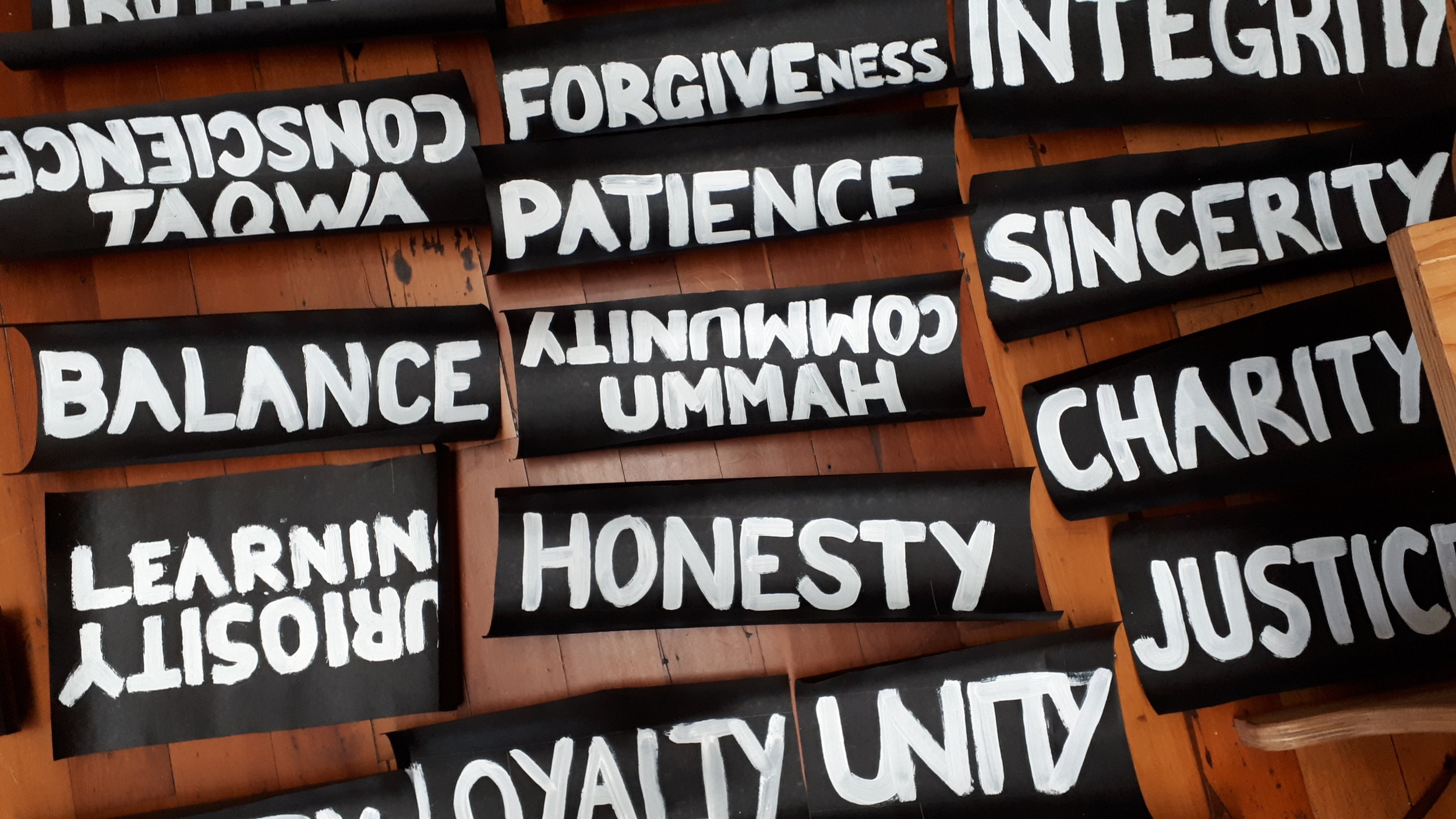
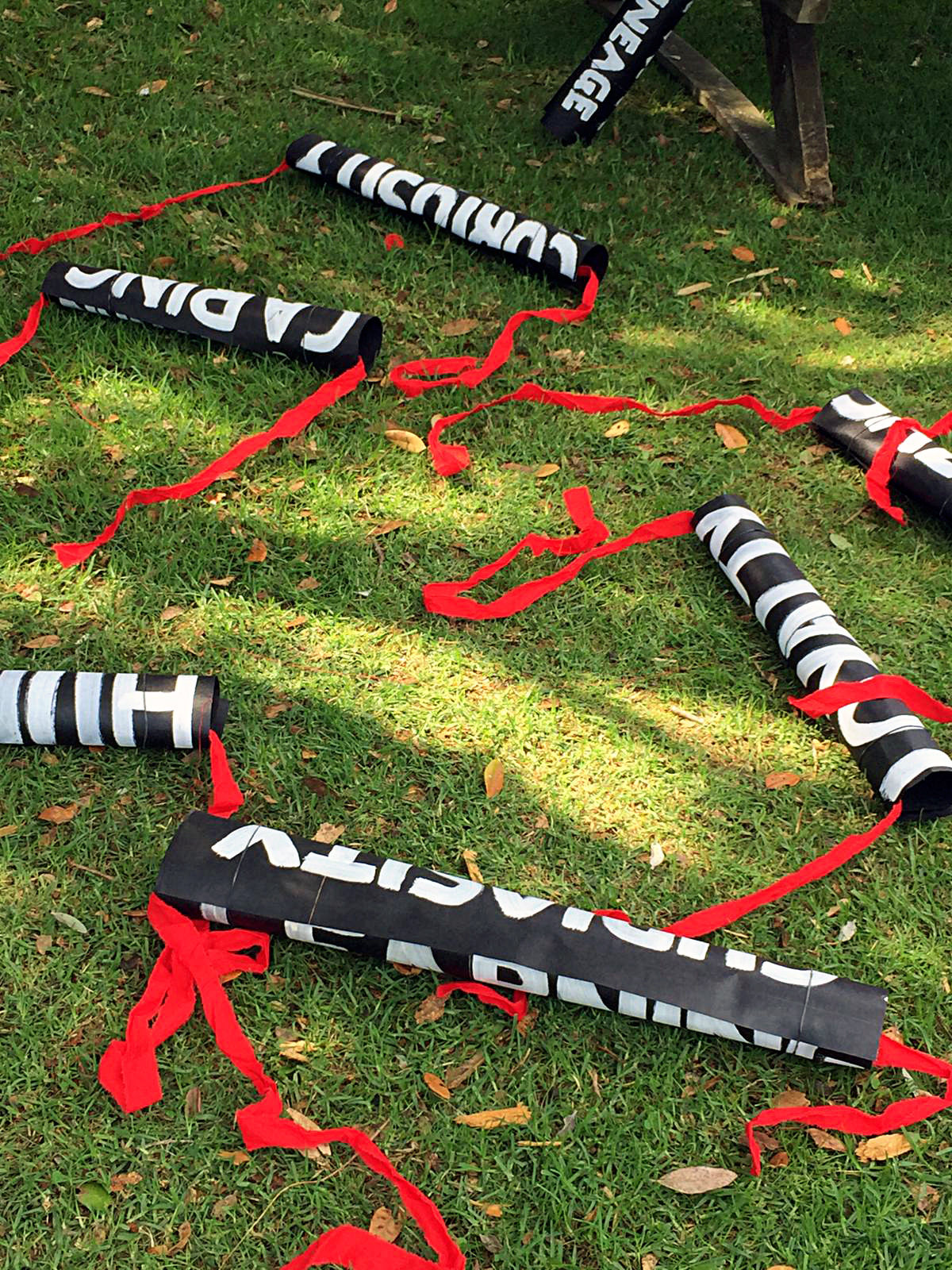
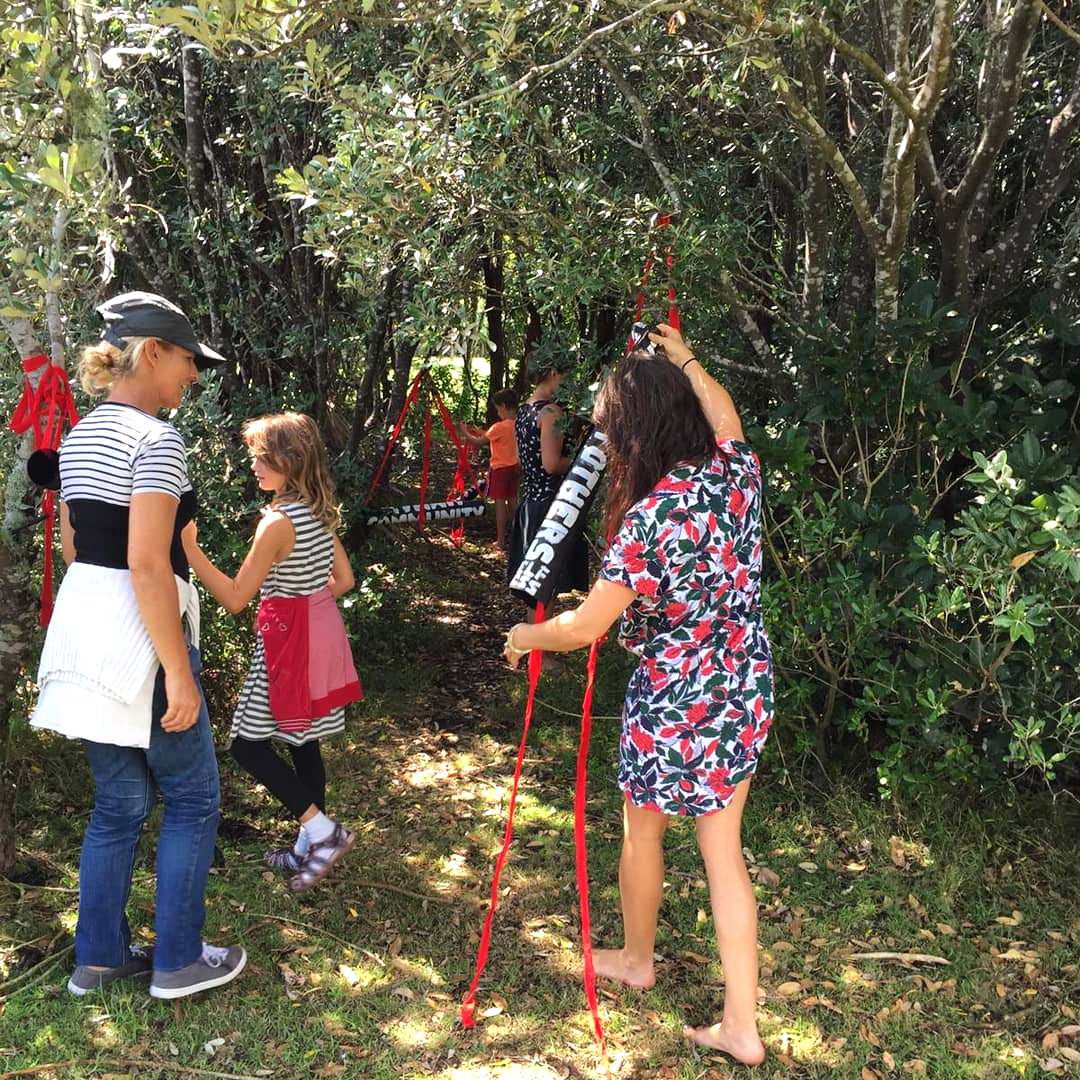
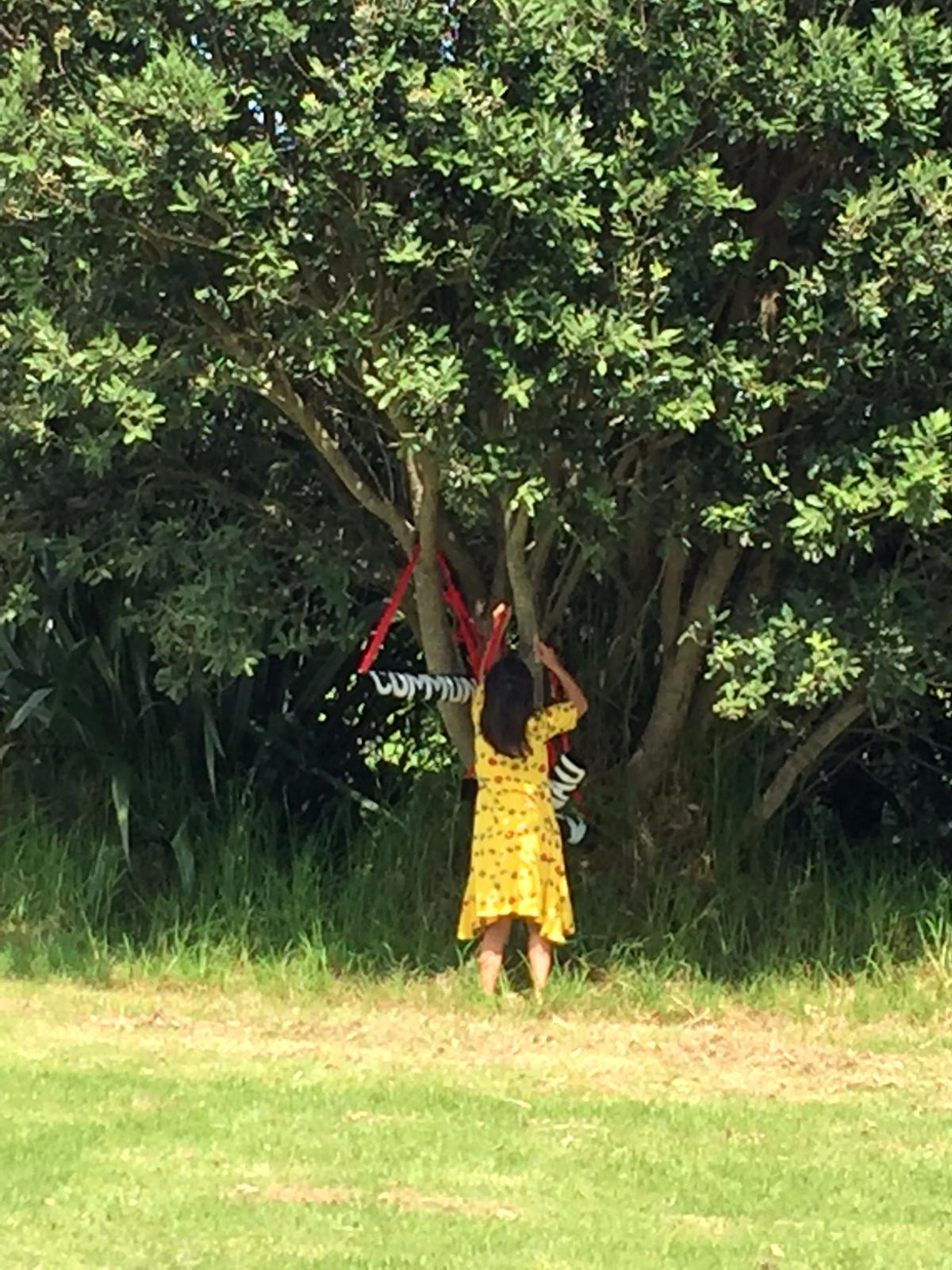
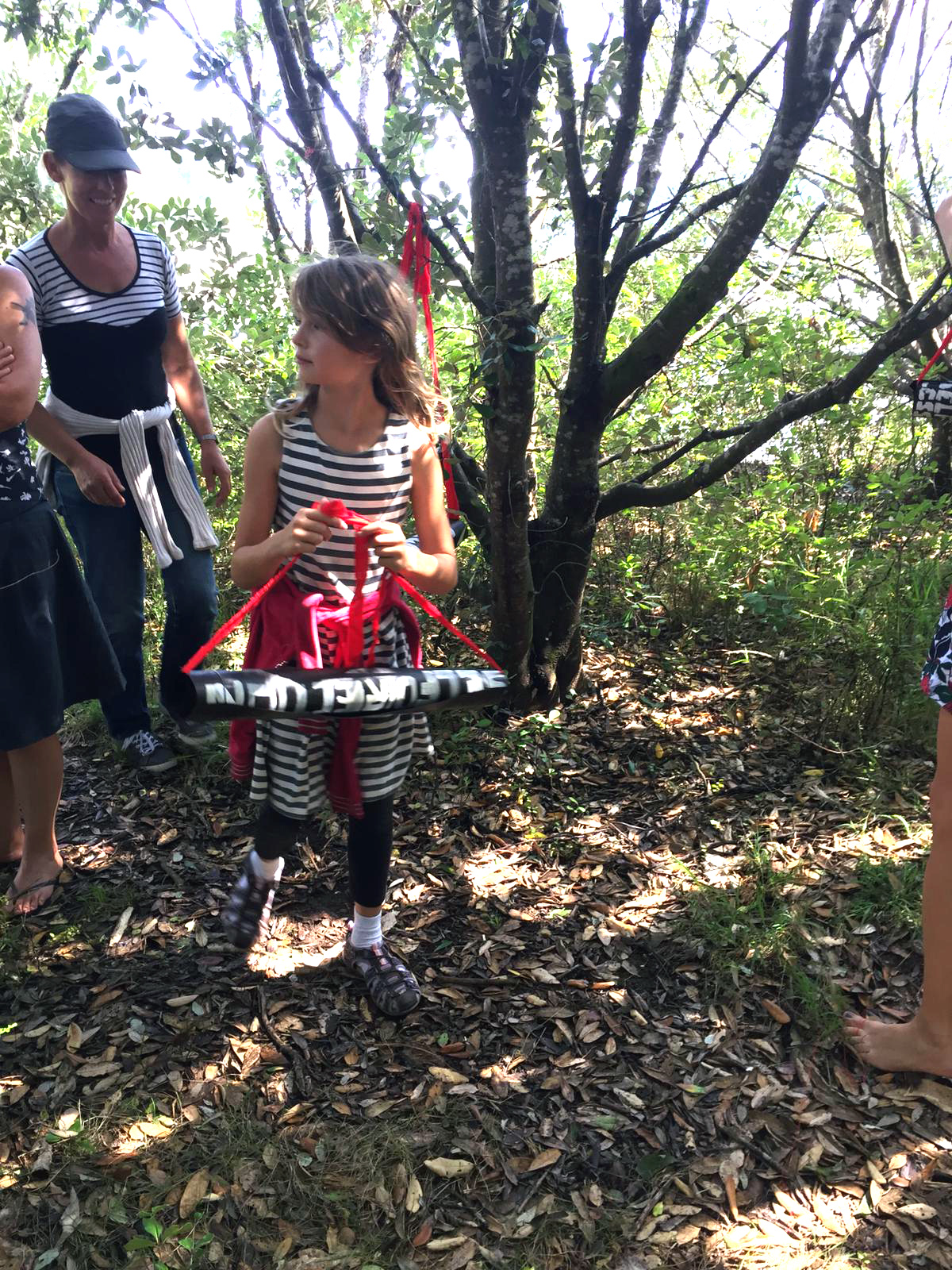
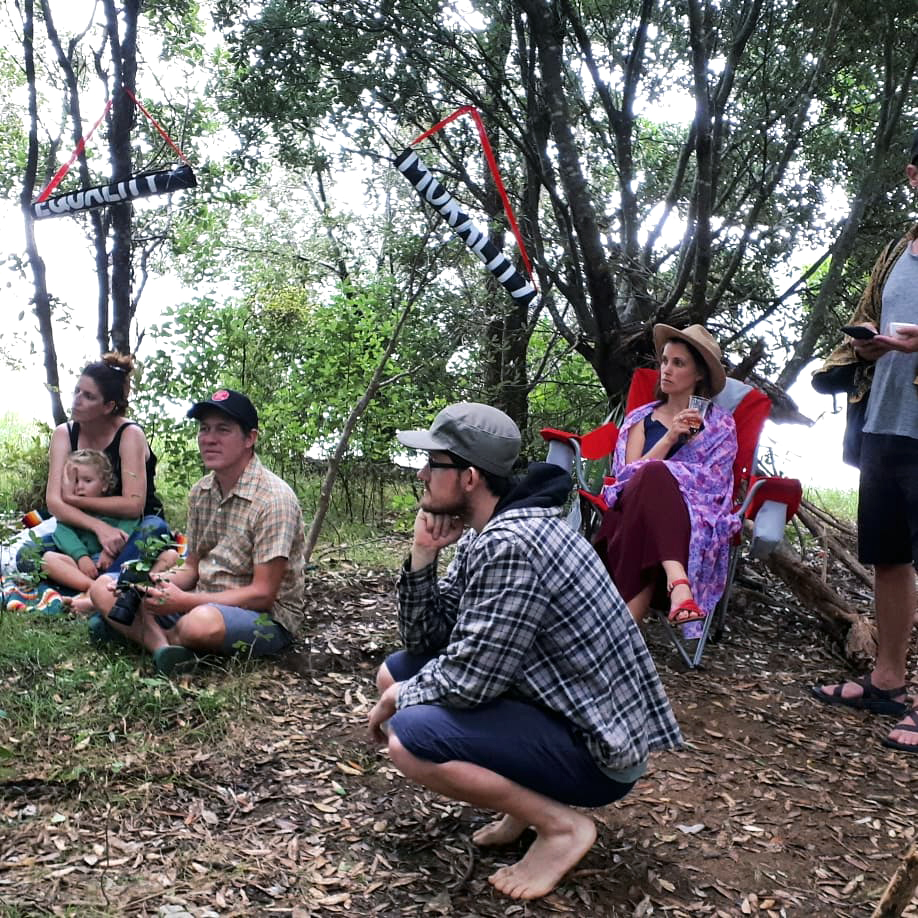
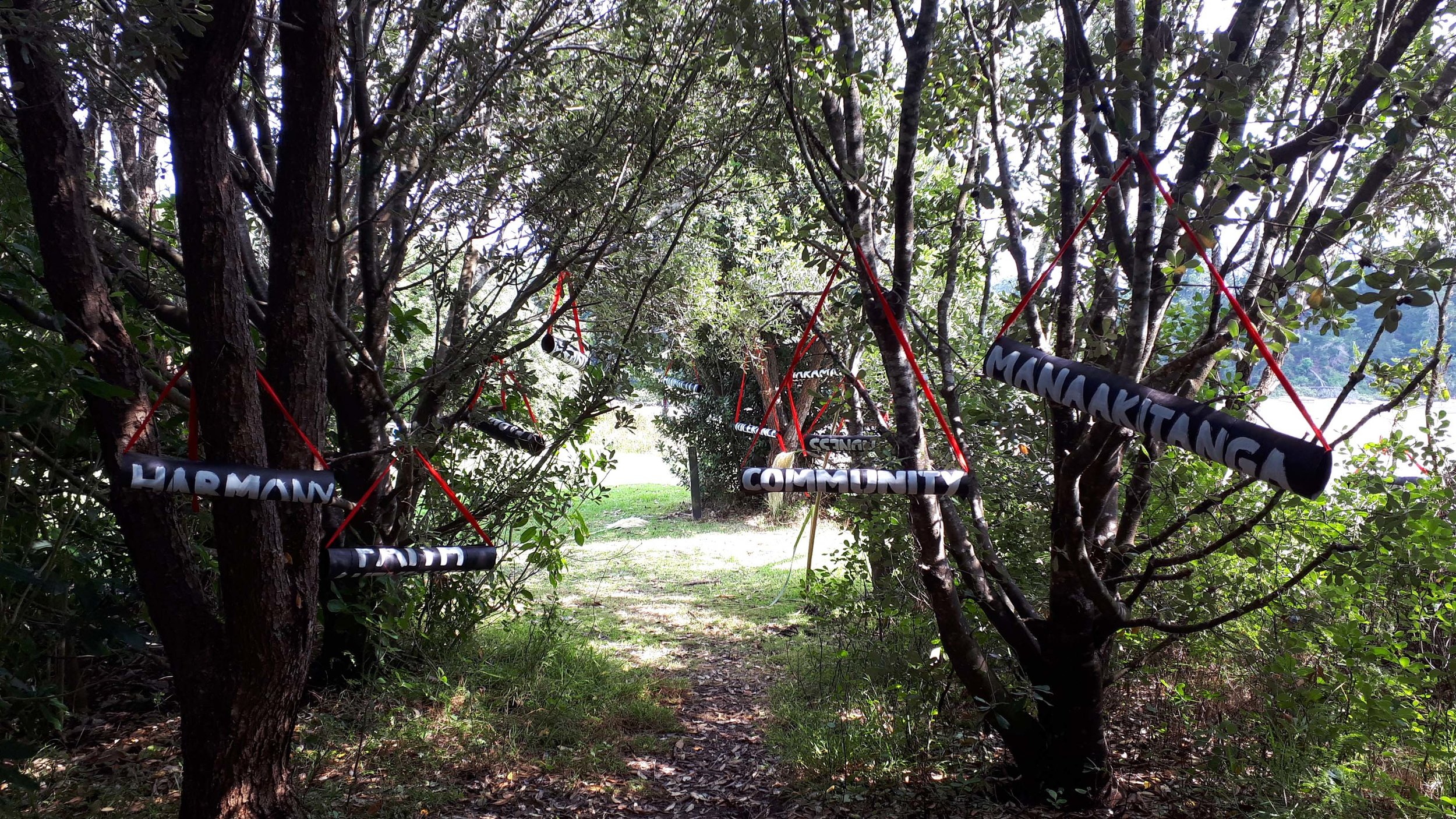
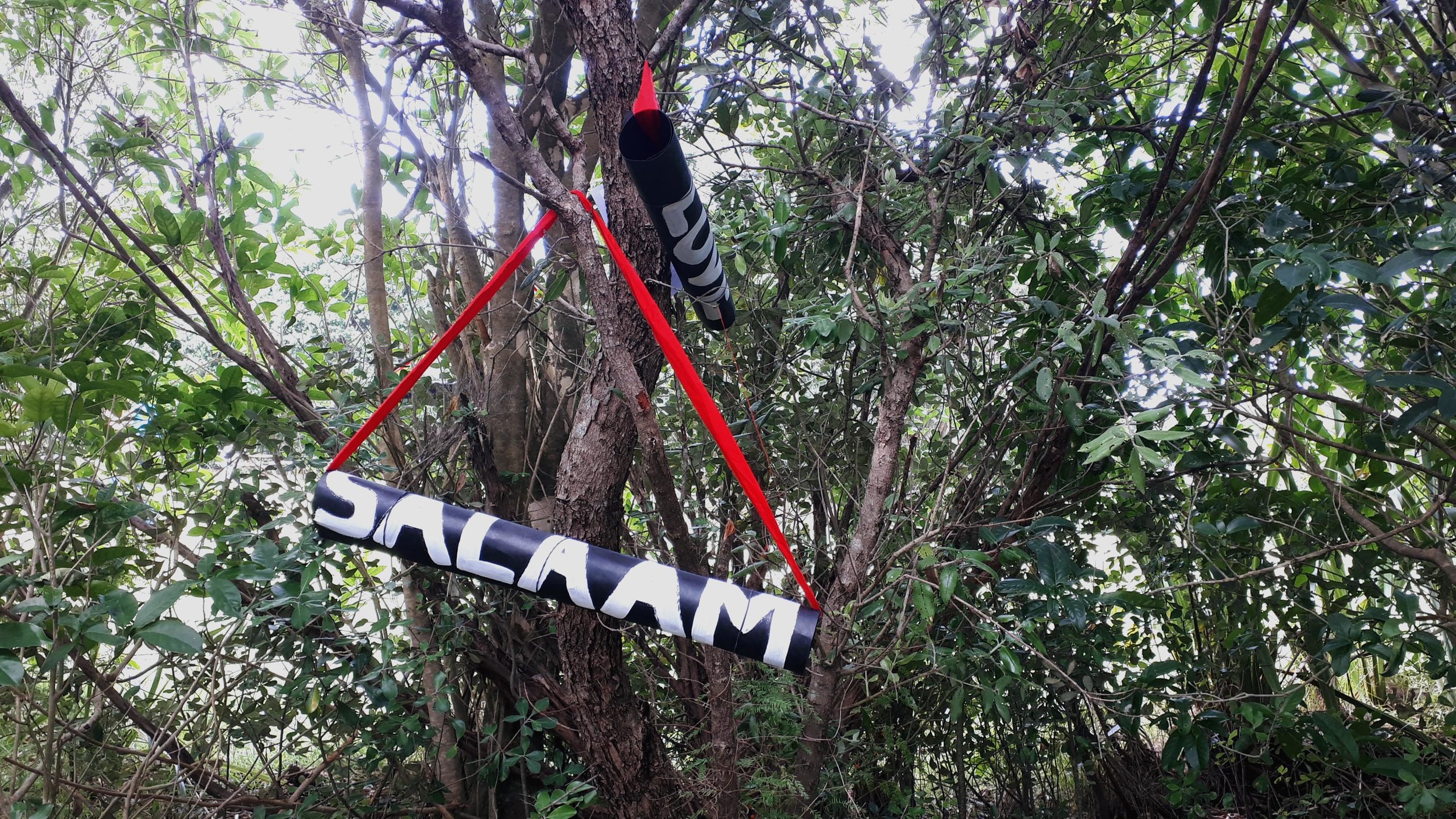
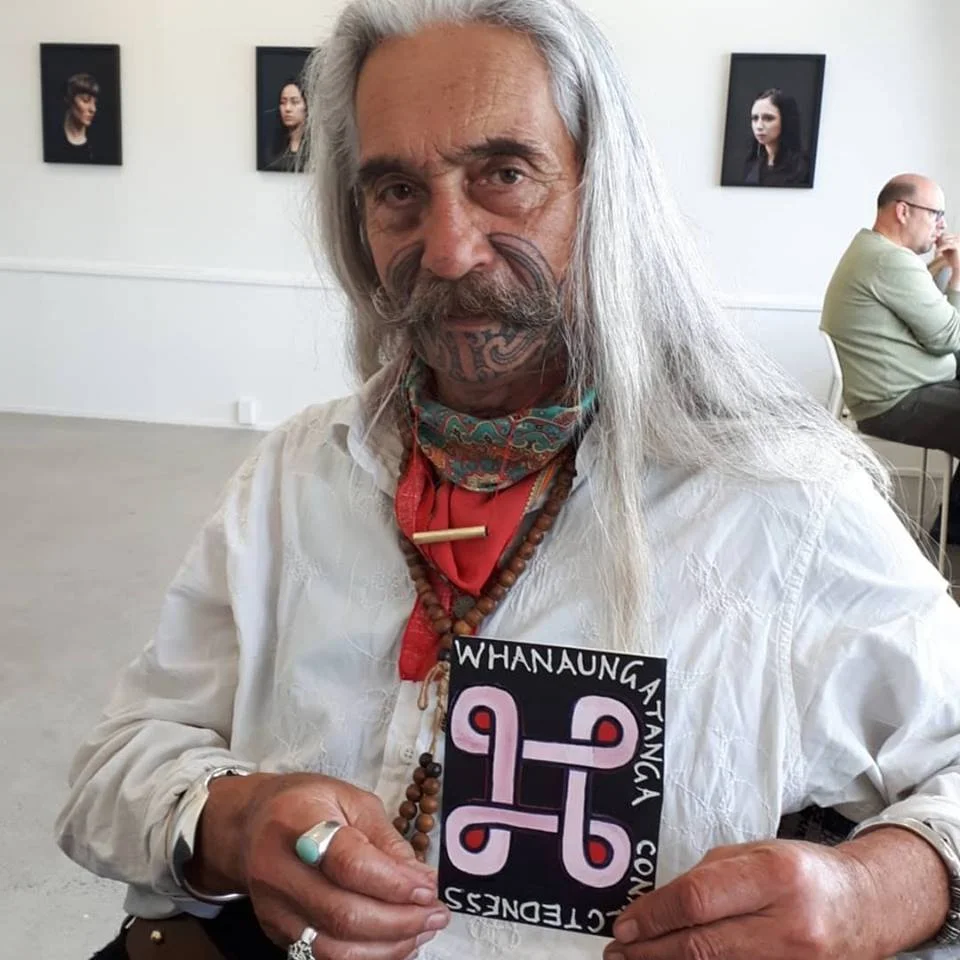
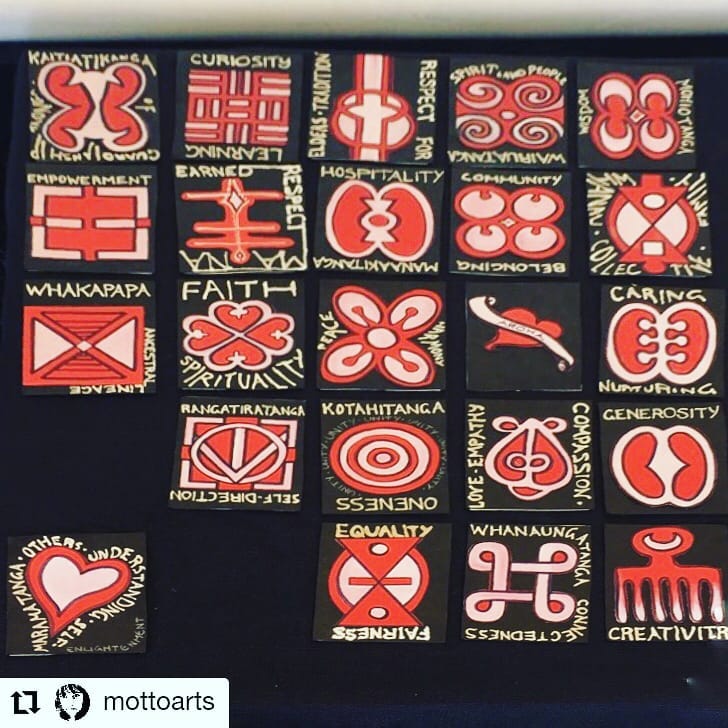
TempFest took place on Waiheke Island on Sat March 23, organised by Craig Folz and Kristin D’Agostino. The idea was to create temporary, interesting, informal, fun works or happenings. As a creative writer Craig organised performances by poets and Kristin the installations, including visual artists, a tea ceremony, tidal poetry and drawing, plus interactive art experiences. The crowd was a mix of people, families camping and day visitors. I made a Talisman3 installation, adding to the mix of tikanga Māori and global values words with some Arabic words derived from Islamic tradition. Together with those present at Tempfest we hung 50 banners in the trees at Whakanewha park, a small gesture in acknowledgement of the 50 lives lost in the Christchurch mosque attacks on March 15th. and to express solidarity with all those affected. As-Salaam- Alaikum.


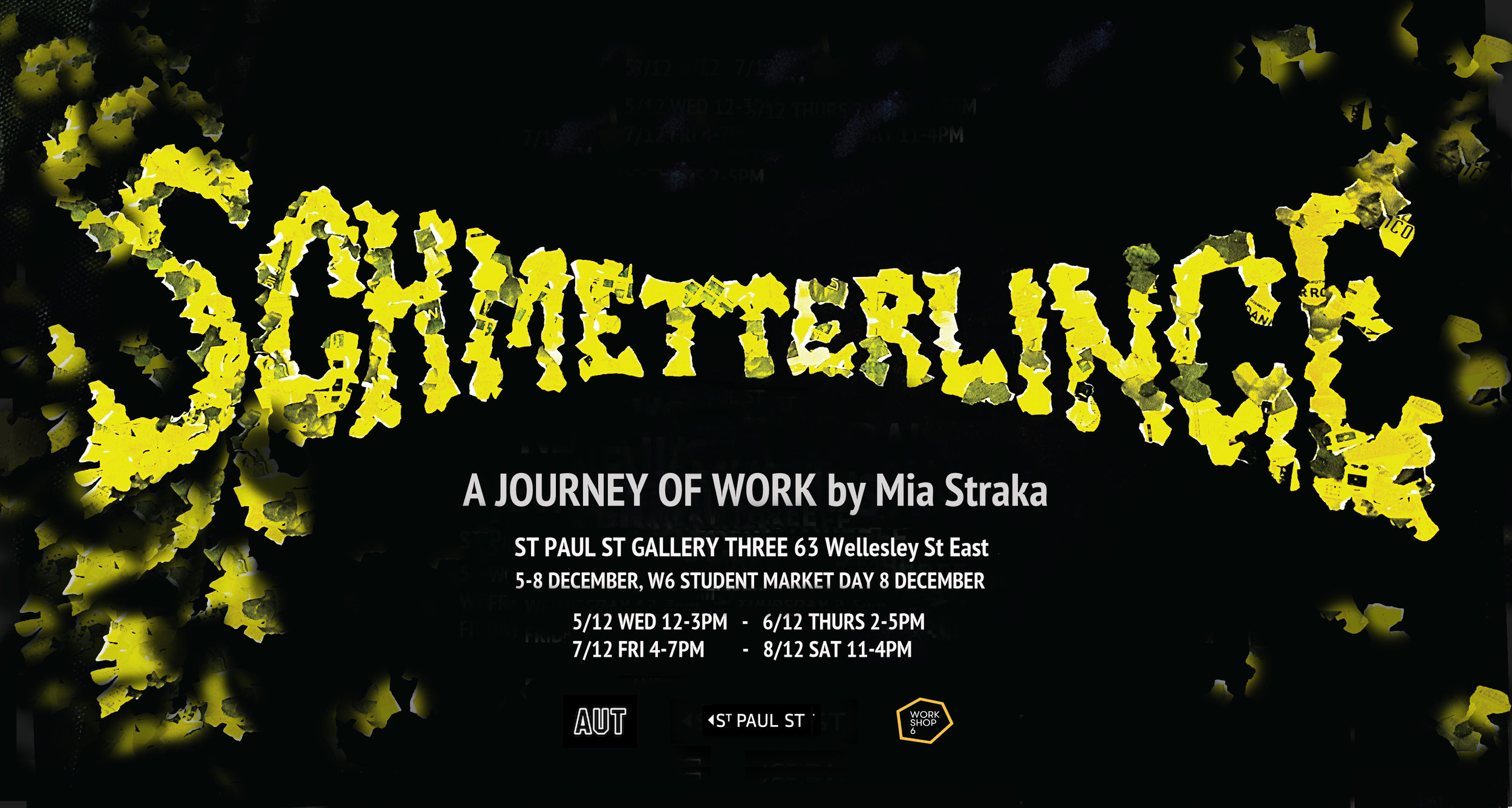
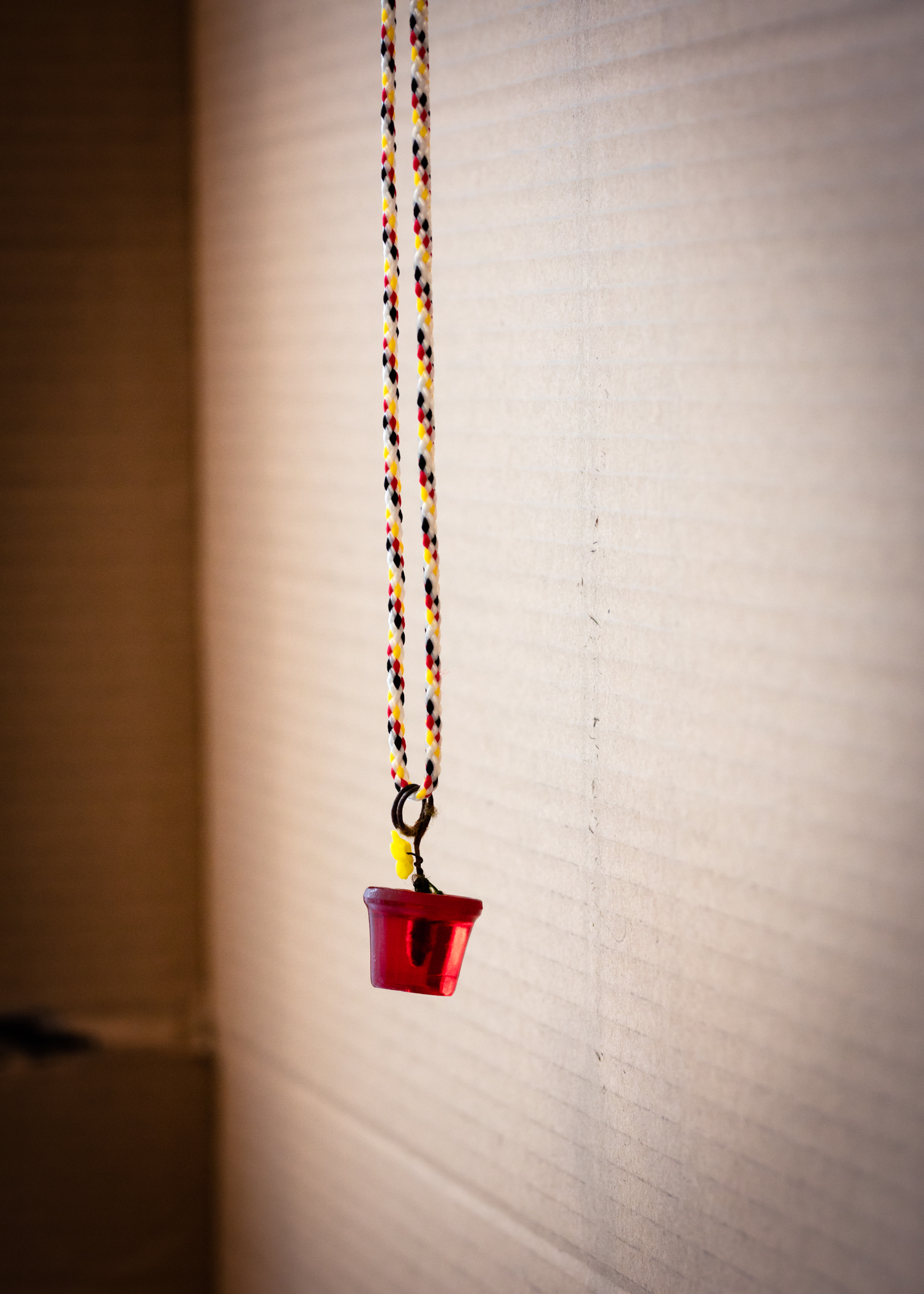
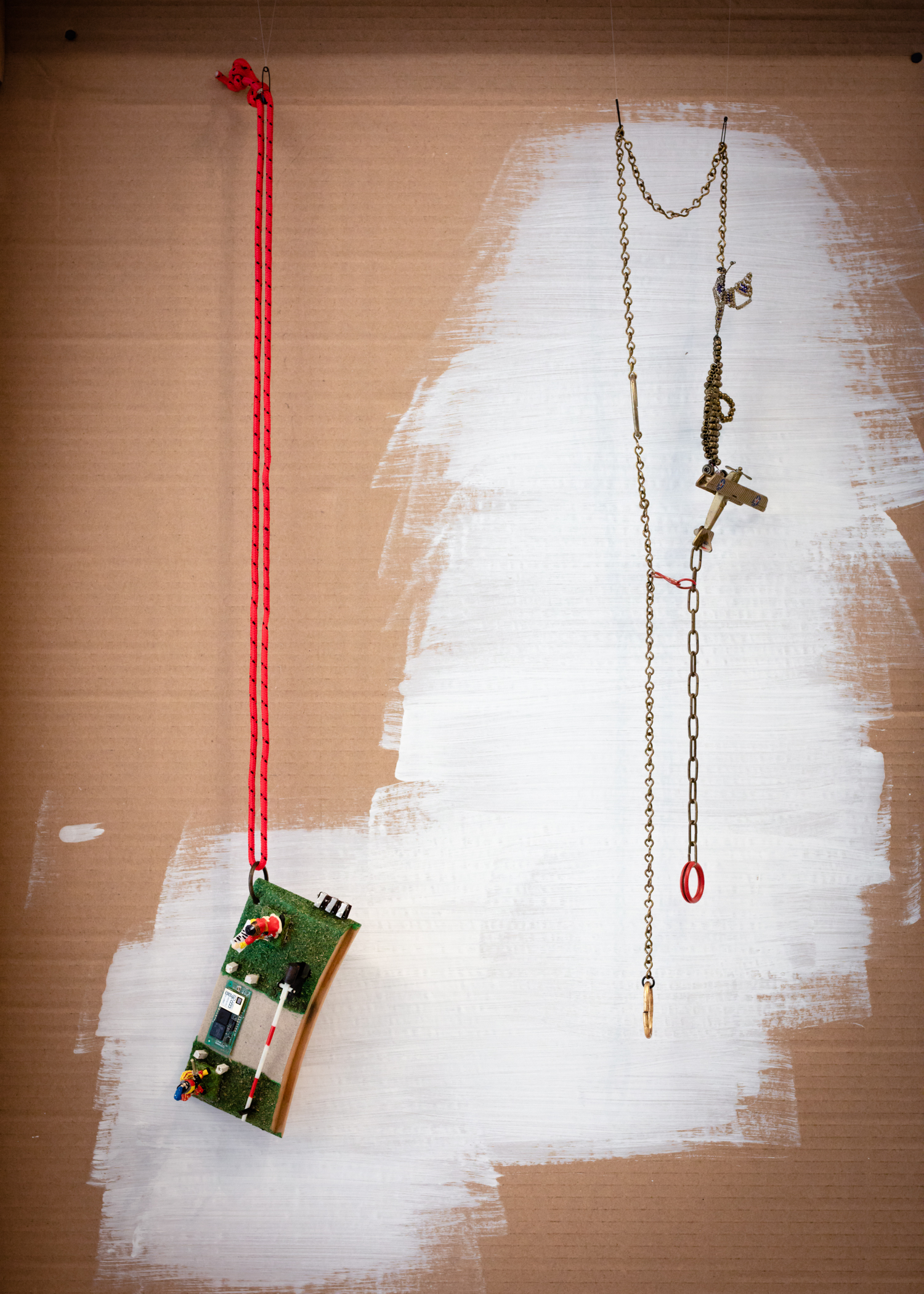
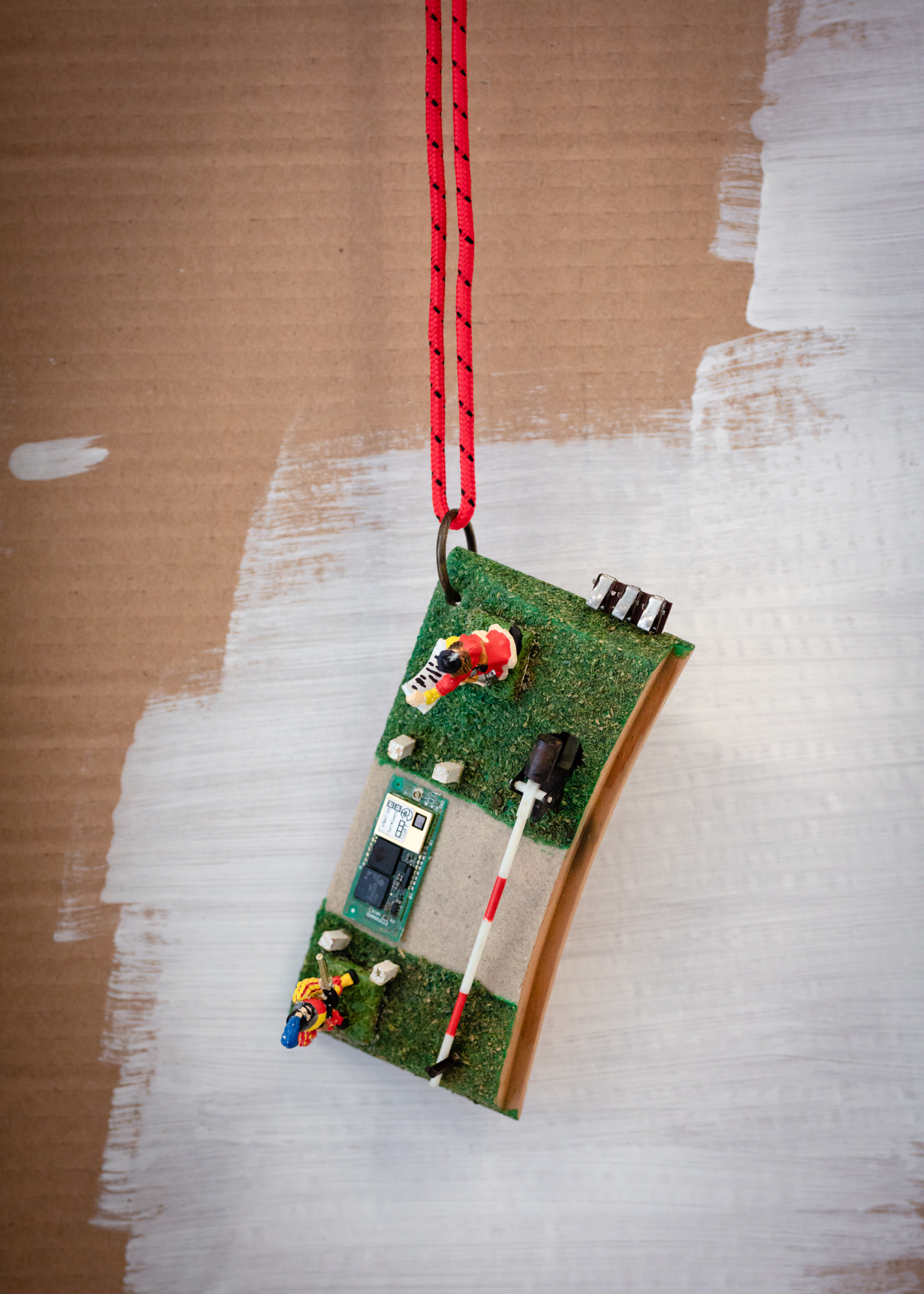
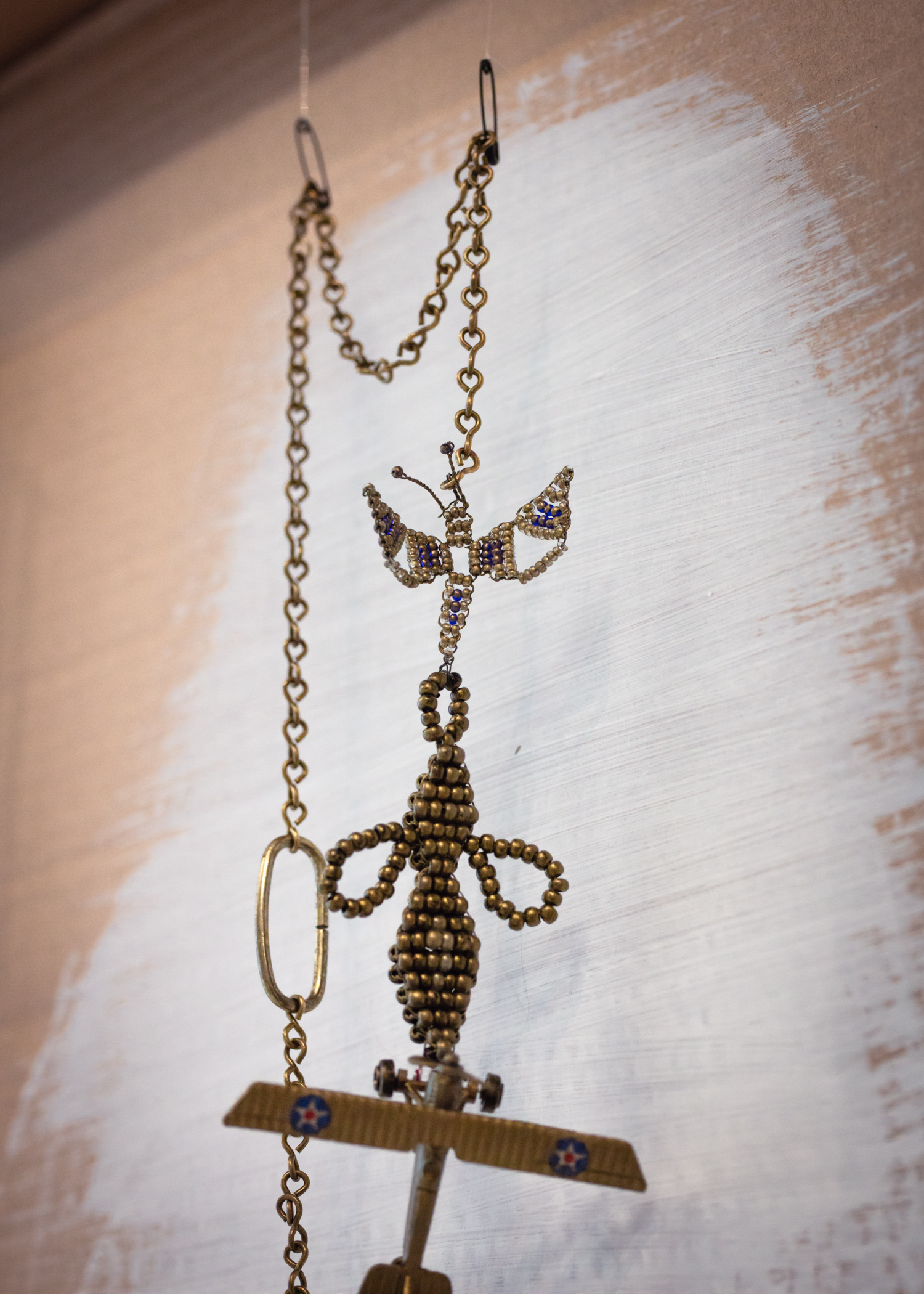
Schmetterlinge - a journey of work by Mia Straka

by Mia Straka


Solo exhibition at St Paul St G3, Auckland 5 - 9 December 2019 resulting from a month long art residency in Berlin with Das Institut für Alles Mögliche -The Department of Anything is Possible.

Image credits: Liz Clarkson Photography

Schmetterlinge: (pl) Butterflies.

Working with limited tools and equipment during a month long residency in April 2018, exploring the creative hub of Berlin, liberated me from the usual parameters in my jewellery making.

Mornings and afternoons were spent exploring and collecting. Cast off materials and flea market finds were deconstructed and reassembled over long Spring nights under the fluorescent lights. Working with materials I perceived as symbolic of the German vernacular, I was excited to create something new out of these now superfluous objects and parts. I let myself be led by the materials, intuitively responding to my environment. In this work I hope to give the materials fresh life and new potential.

While not wanting to eschew wearability entirely, the work is not overly concerned with standing up to everyday wear and tear or personal comfort, it was made quickly and held together with filler, glue, and wire sourced from local hardware and art supply stores.

Drawing impressions from wanderings around my work/live space at the Hauptstadtstudio in Friedrichshain, I gathered materials and visited sites that seemed emblematic of the city to me, often sites with a violent history that subsequently metamorphosed into vibrant community spaces. The Schmetterlinge works are responses to Berlin’s layers of history and transformation at the hands of what I perceived as communally empowered inhabitants.

The residency programme Das Institut für Alles Mögliche supported me by organising meet ups with other practitioners under their custodianship around the city and a group collaborative exhibition at the end of my residency period, as well as enabling all area access to the wonderful Teufelsberg. Relationships built up as a result connected me to an international network of creatives in practices ranging from painting/mixed media, experimental film and performance art, sculpture, installation and music.

Although only four weeks, the residency allowed me the time and space to rediscover the pure joy in making and gain focus for my practice with a lack of everyday distractions and duties. The result was over 20 experimental works produced during the month and has brought new energy, knowledge and direction to my work.

Since April I've continued to resolve some of the jewellery pieces and objects, alongside embarking on a second generation of work. Extending beyond the specifically Berlin context, these new works link the ideas and material knowledge gained with my existing practice. I’ve sourced waste materials and am using these to work in a sustainable manner, viable for both larger sculptural and smaller wearable works, exploring themes that reach throughout my practice and including more techniques such as knotting, weaving and wrapping.

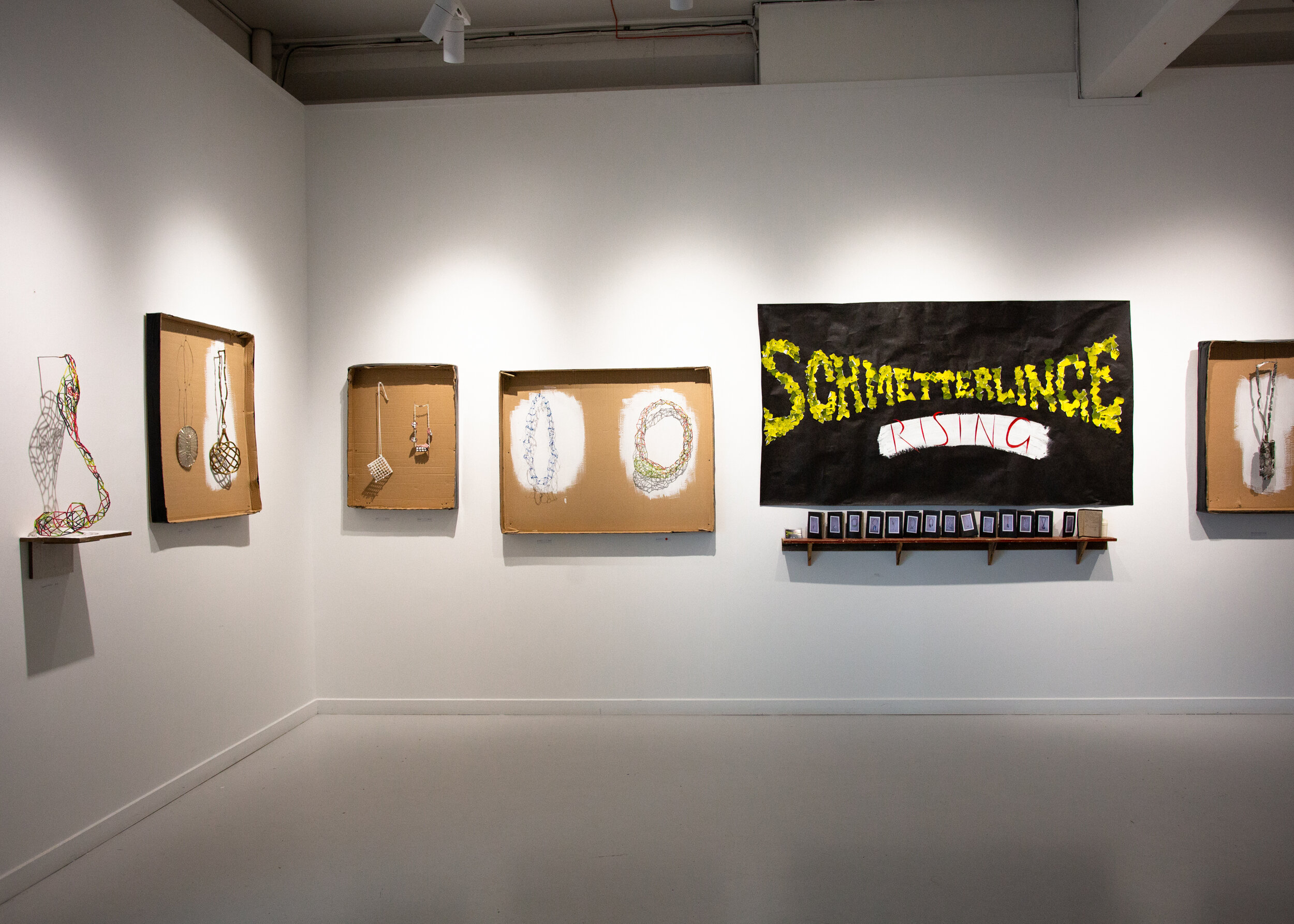
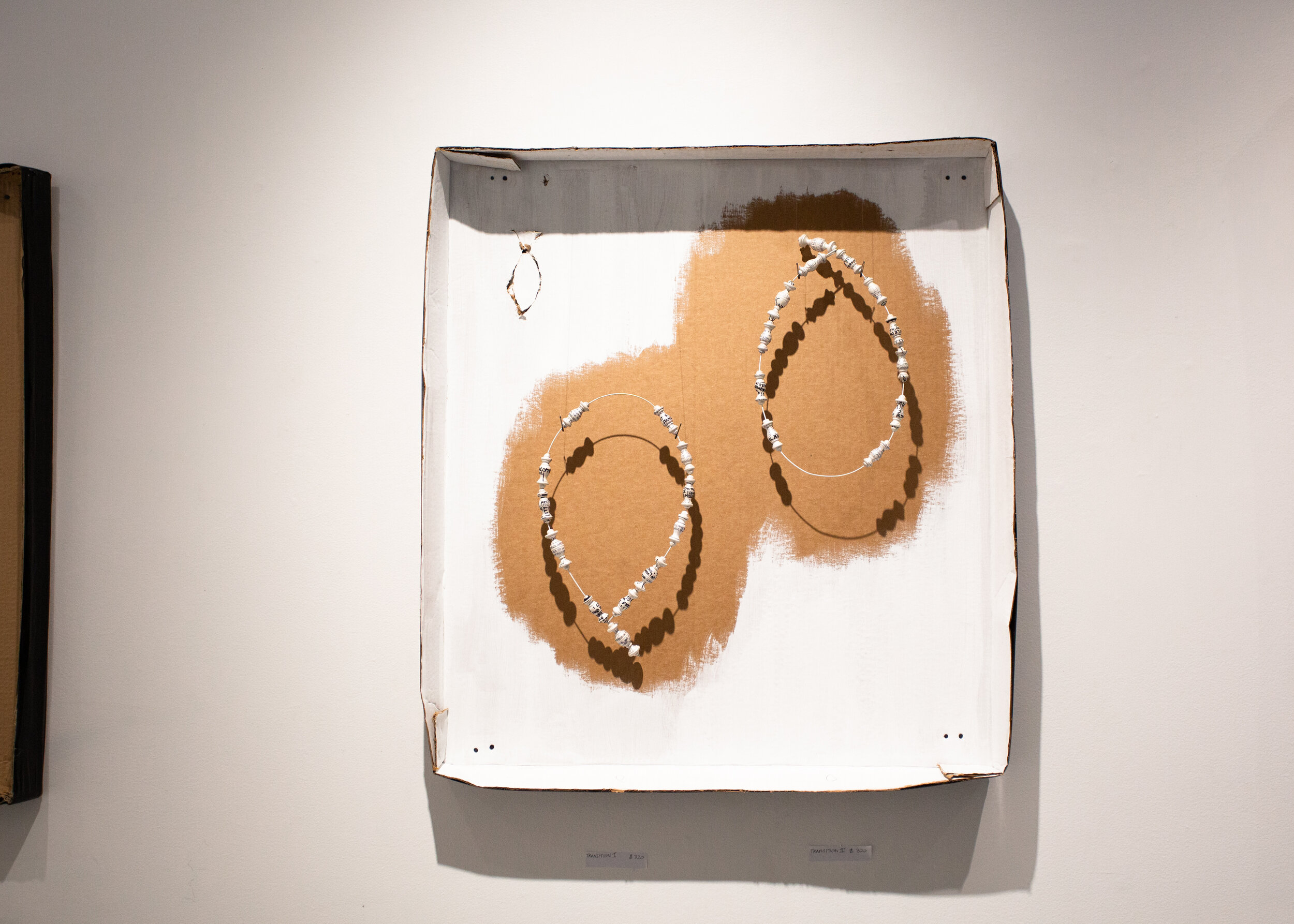
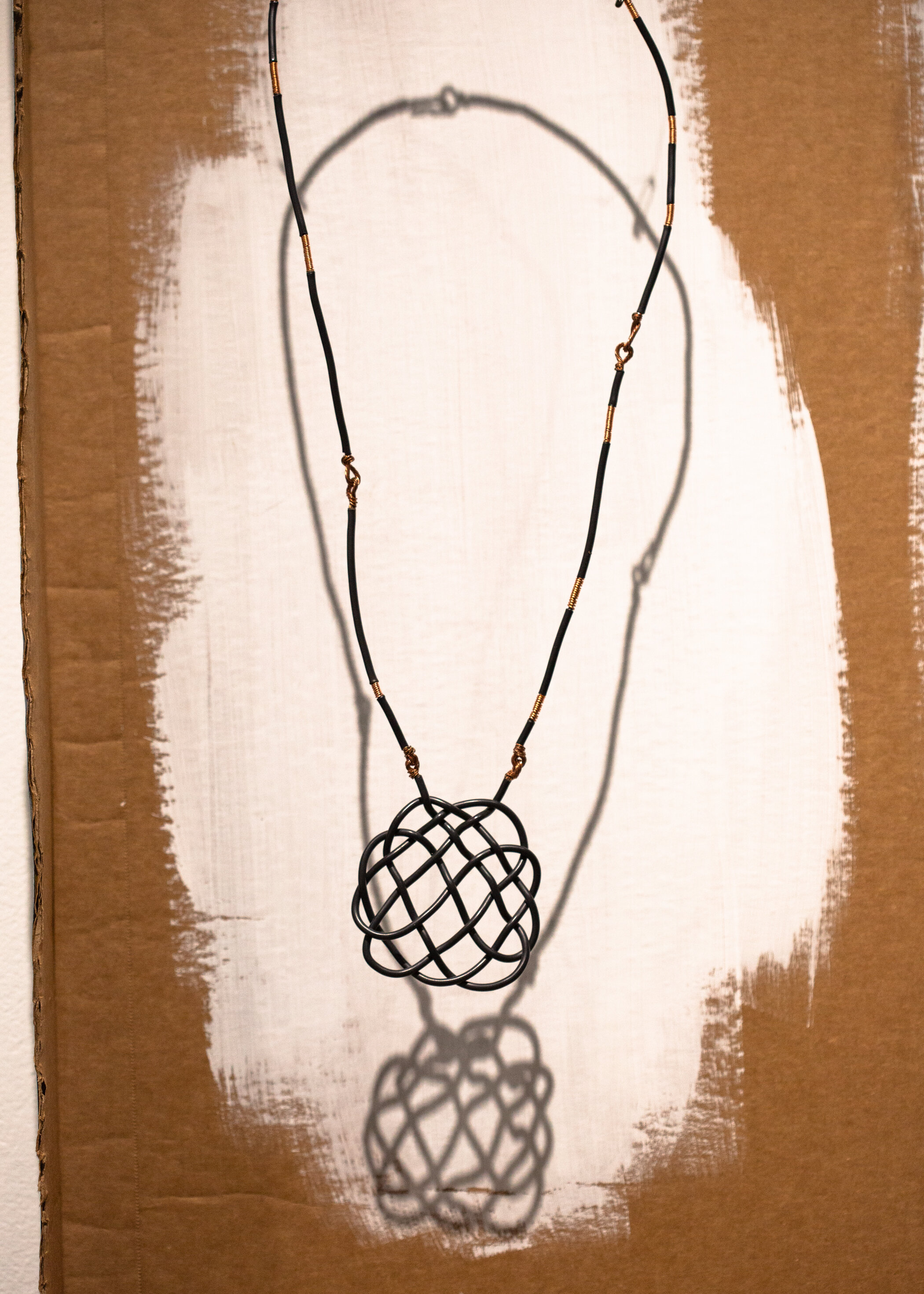
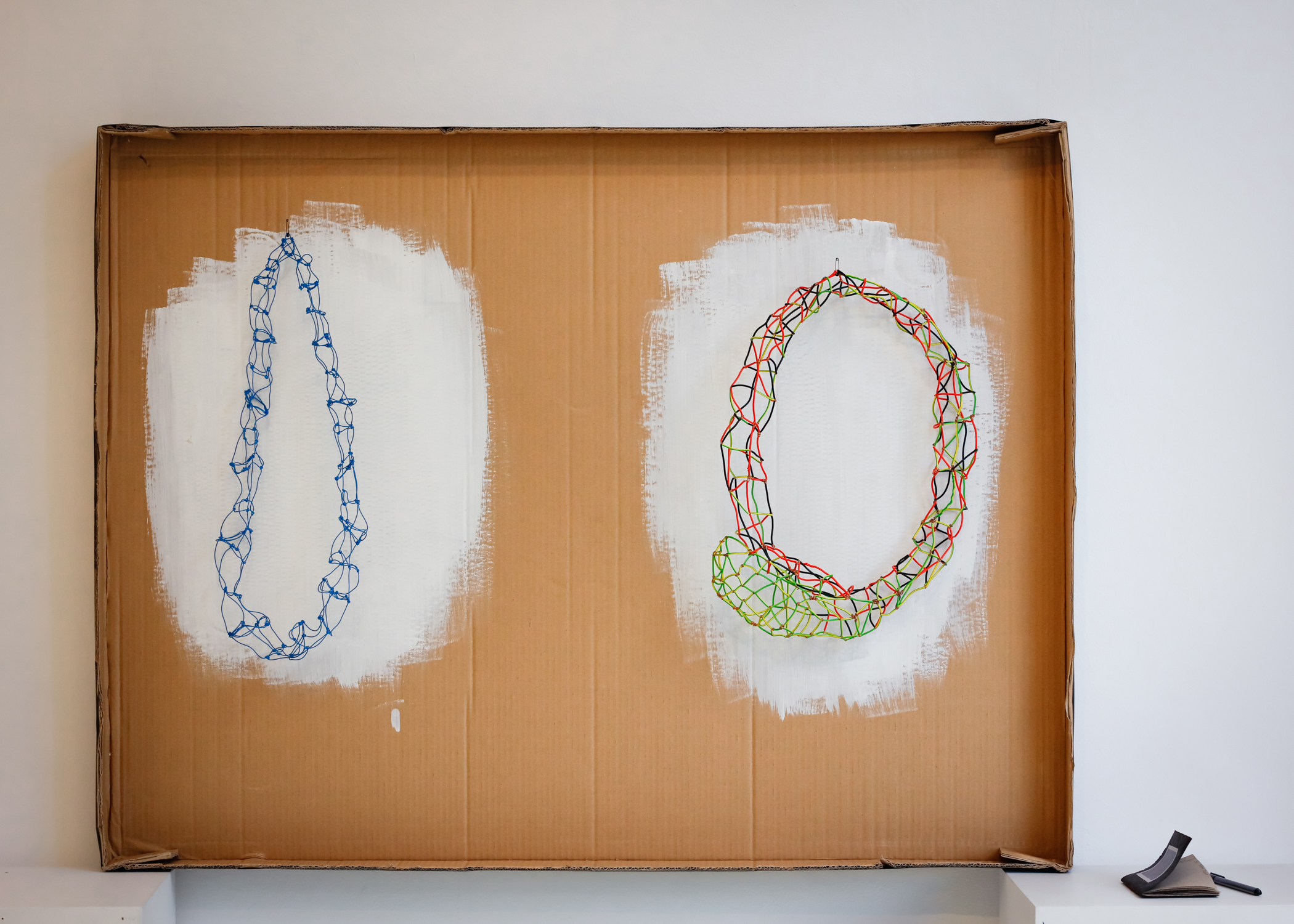
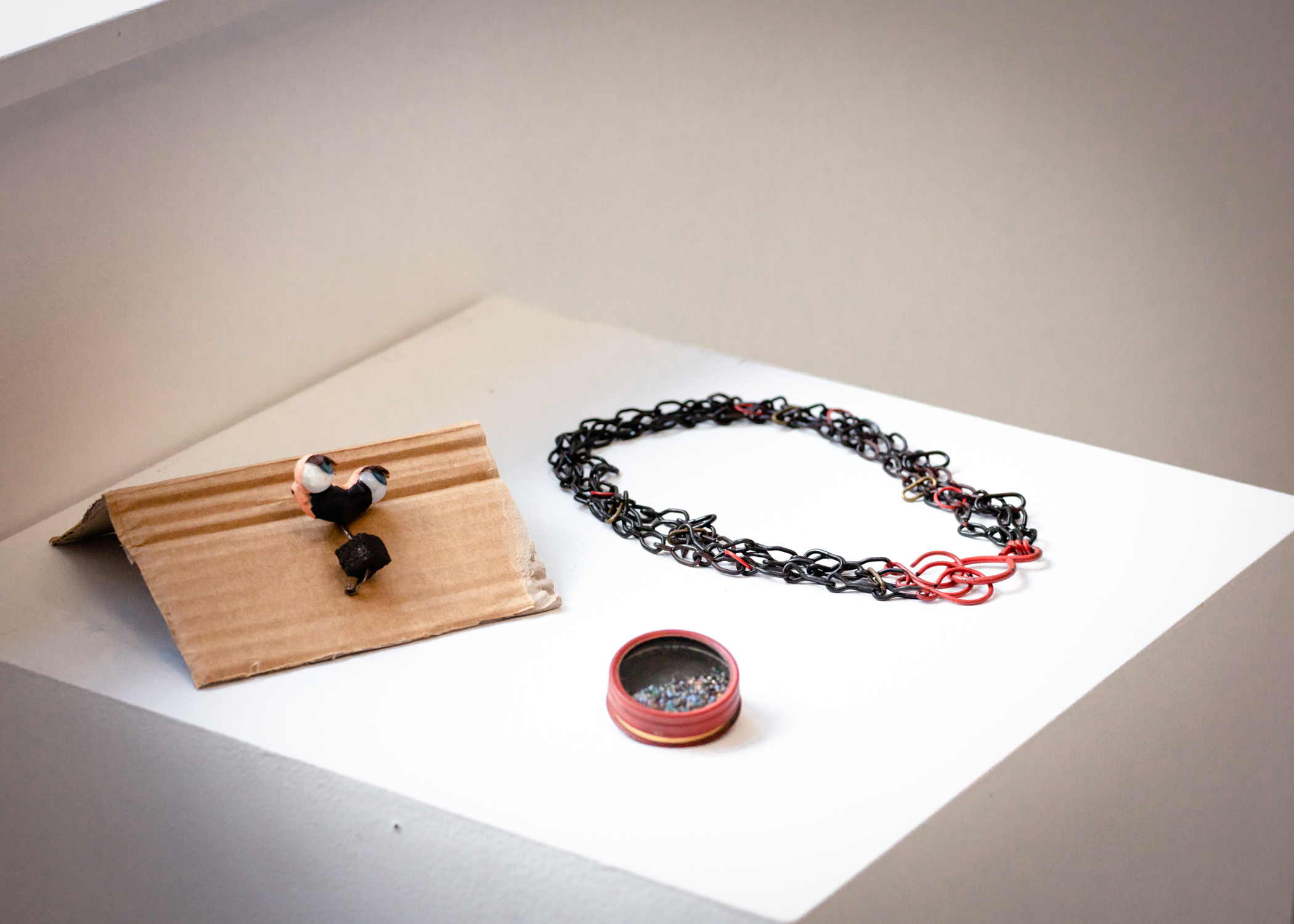
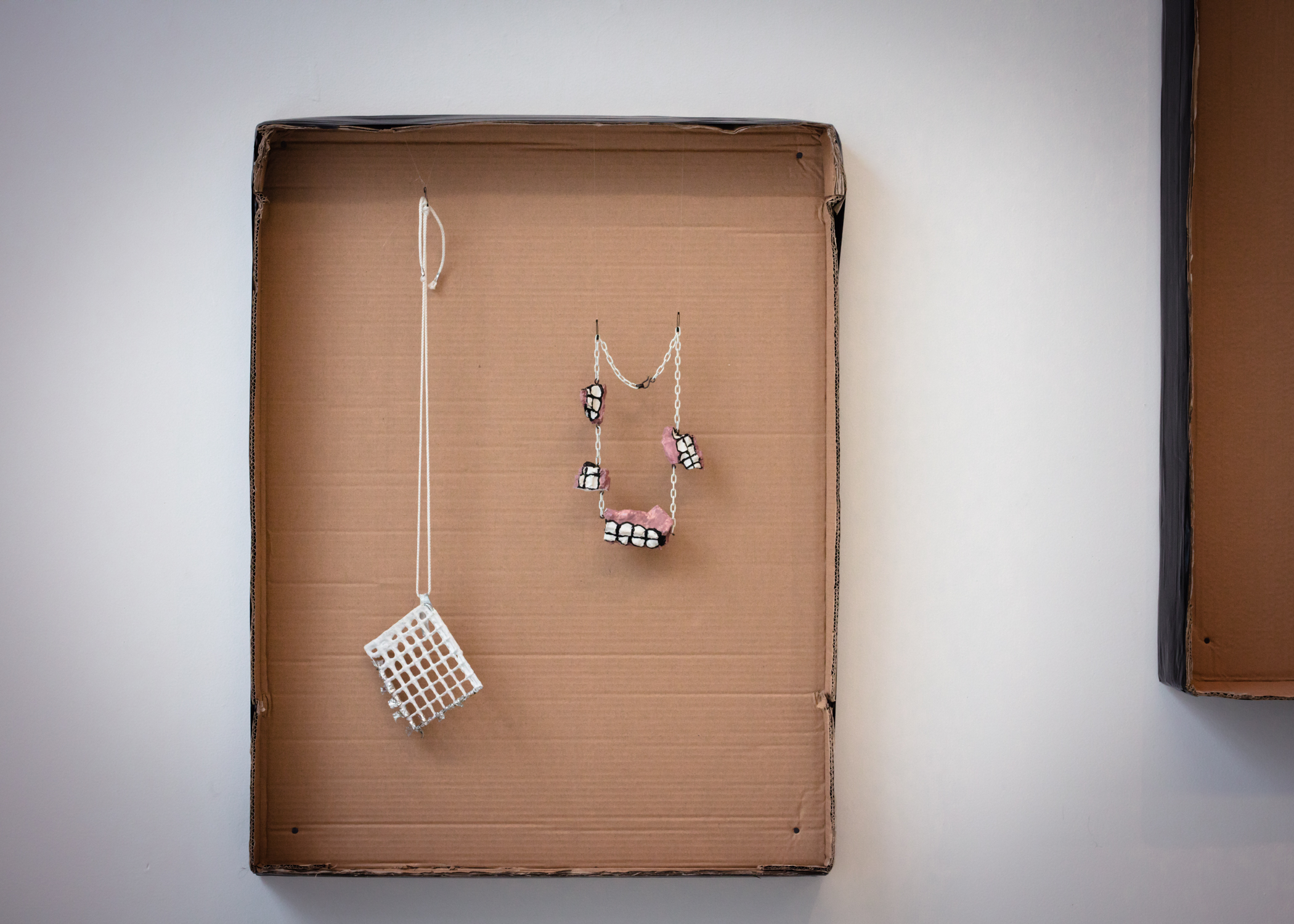
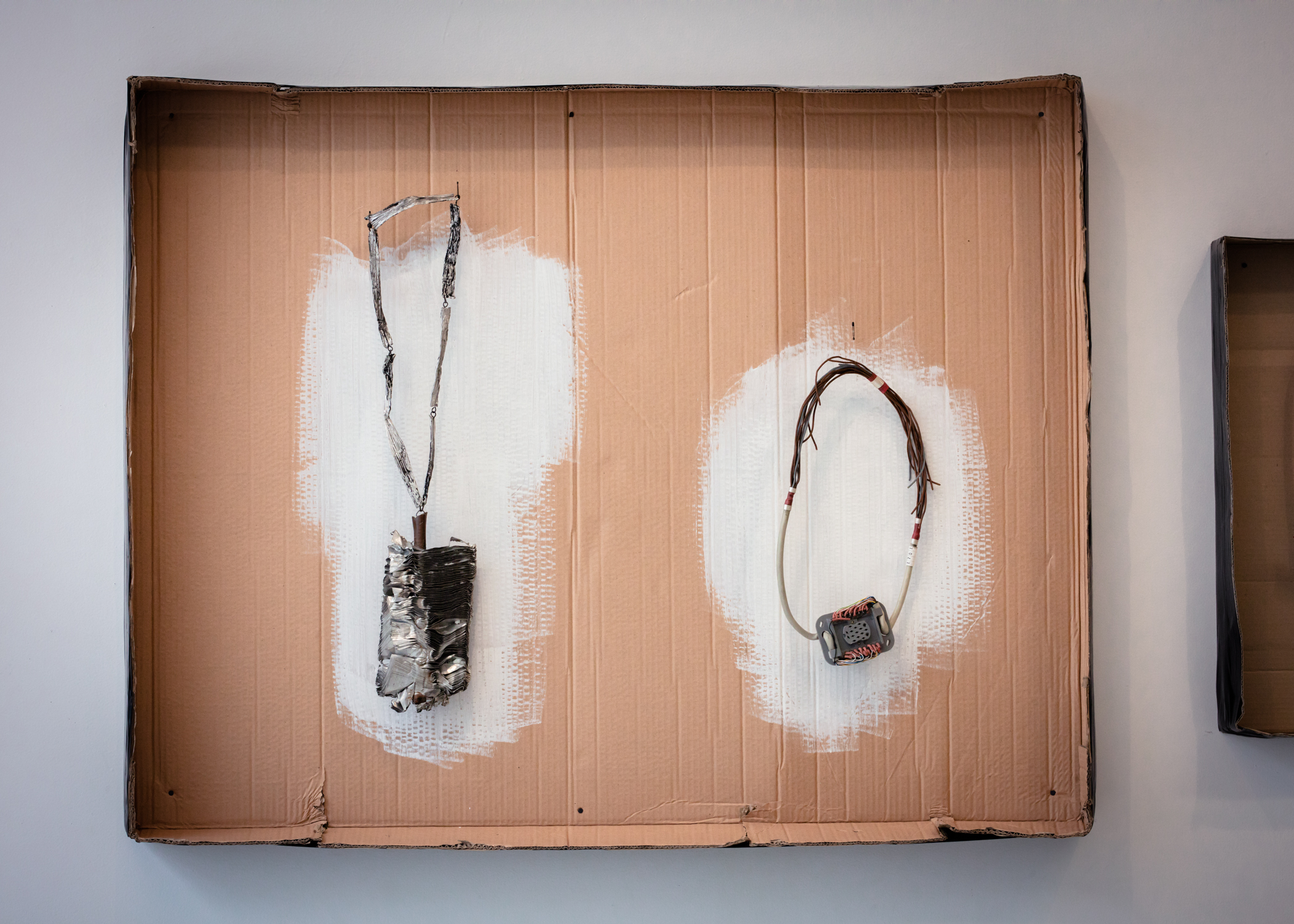
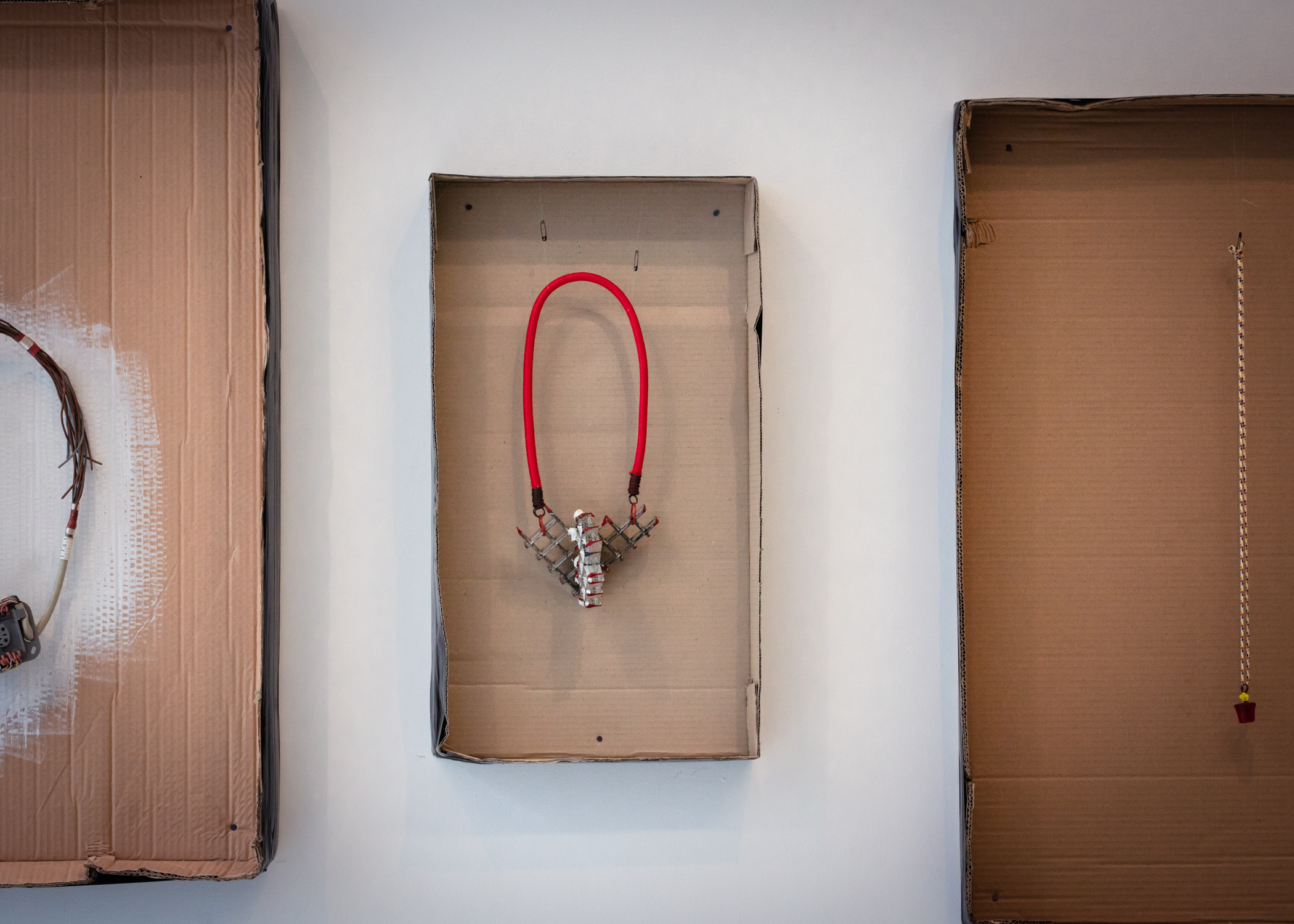
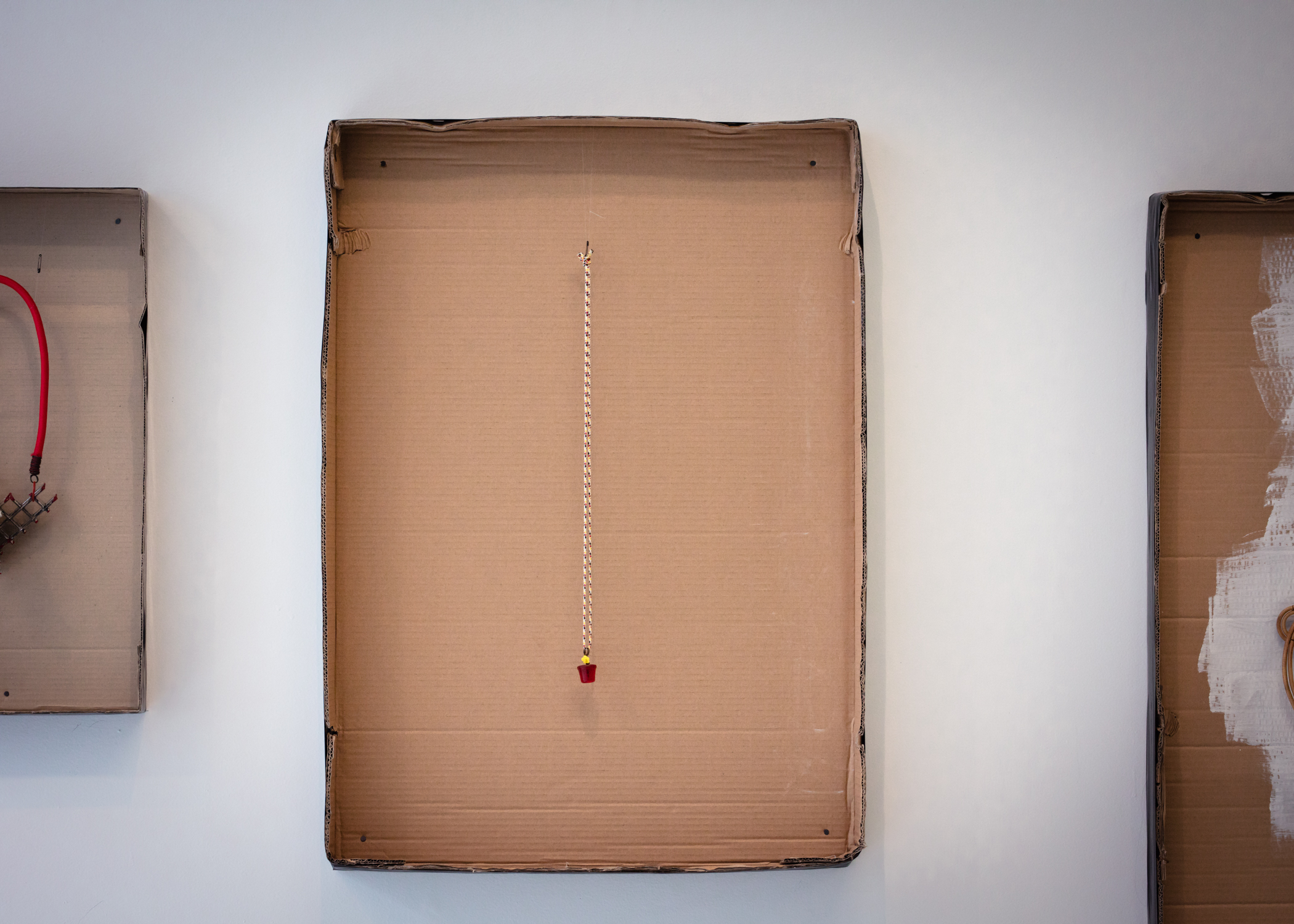
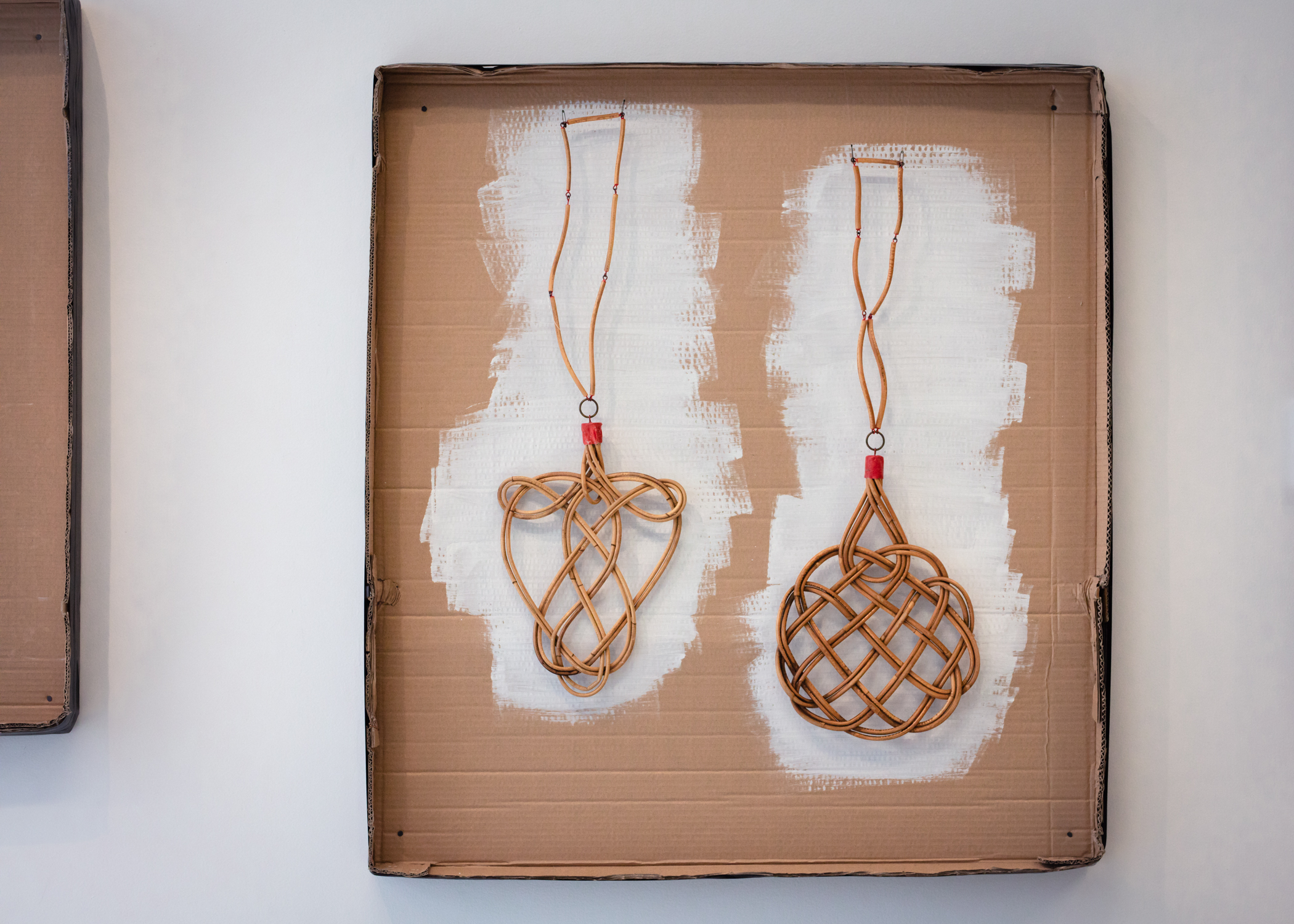
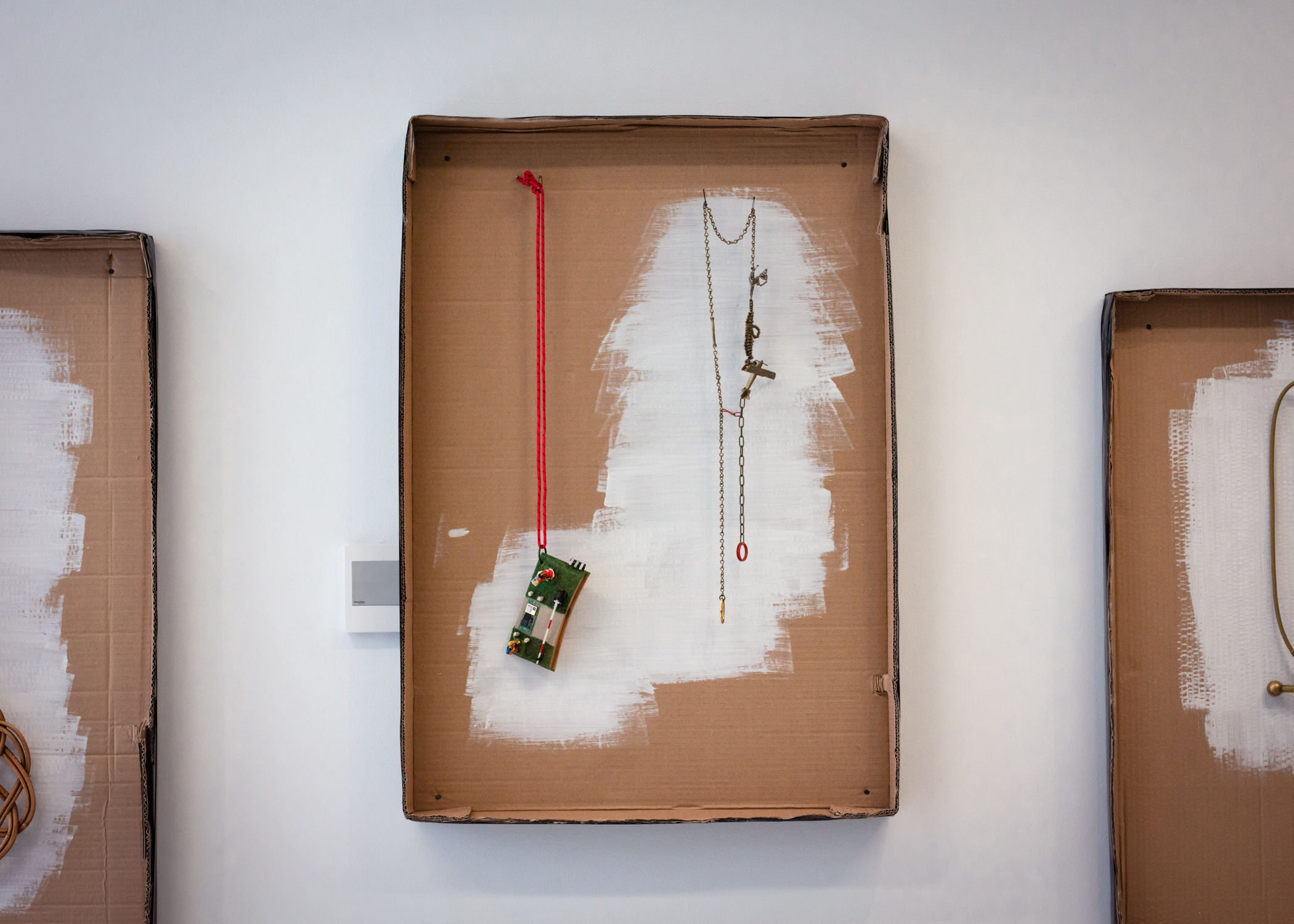
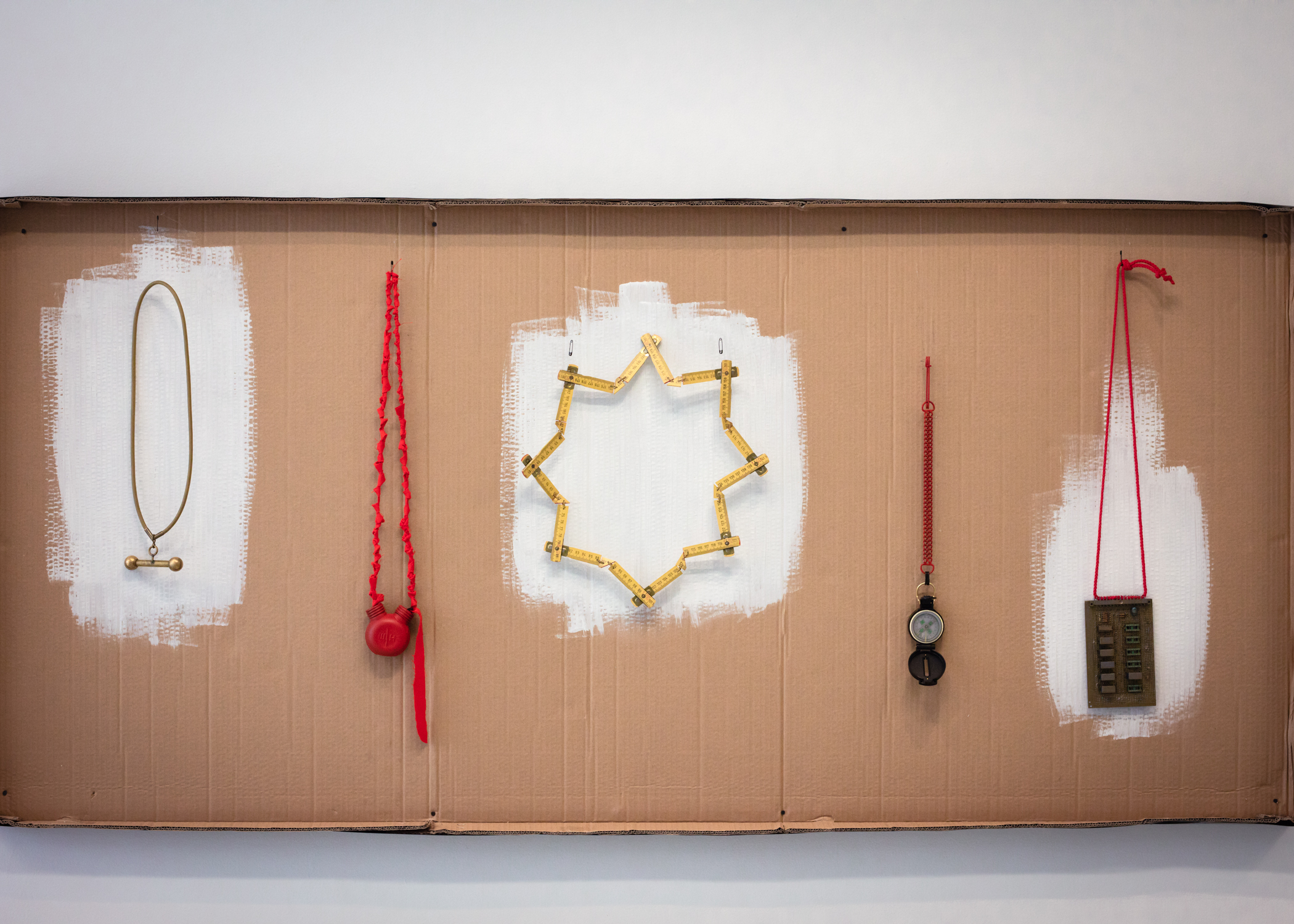
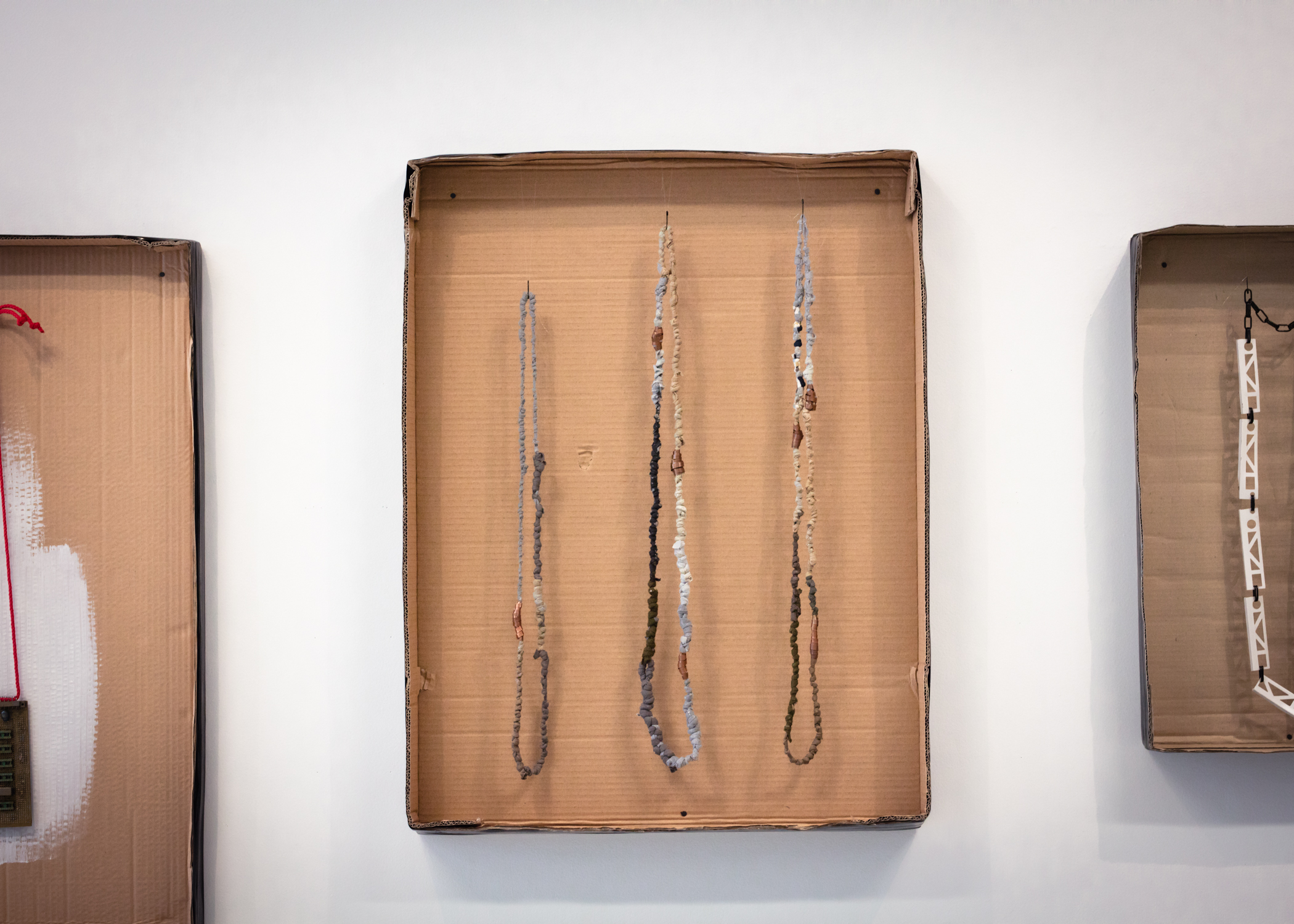
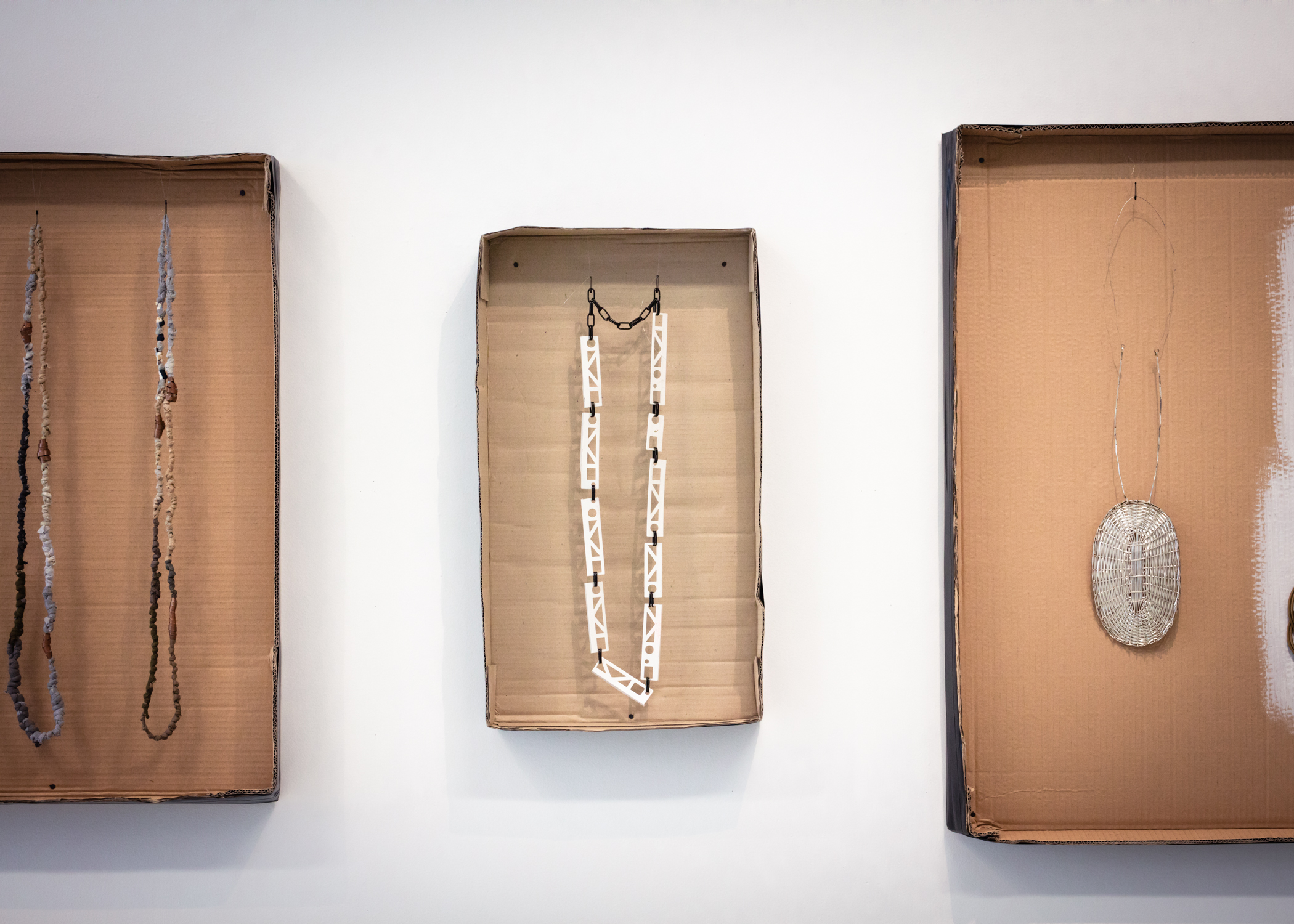
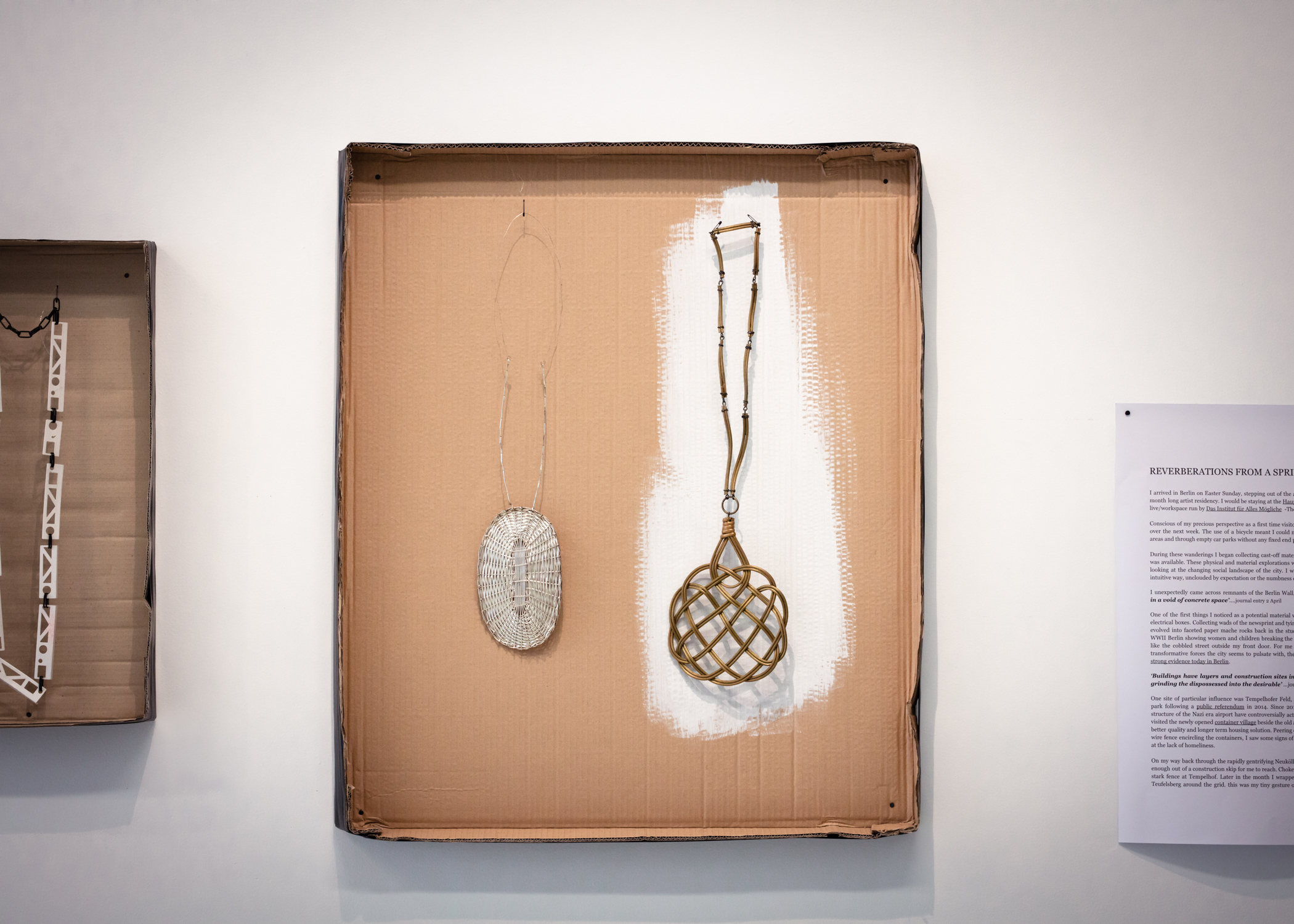
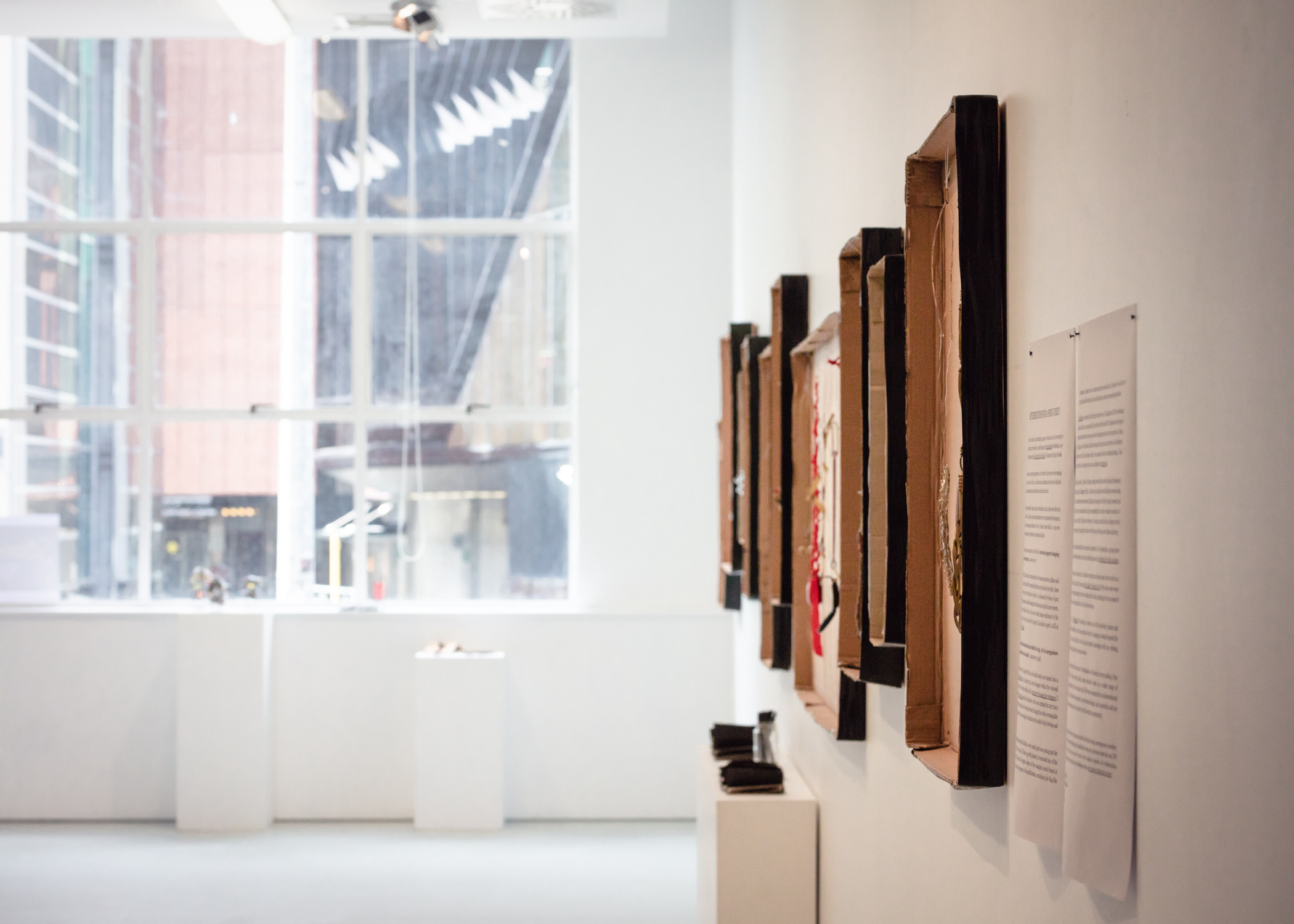
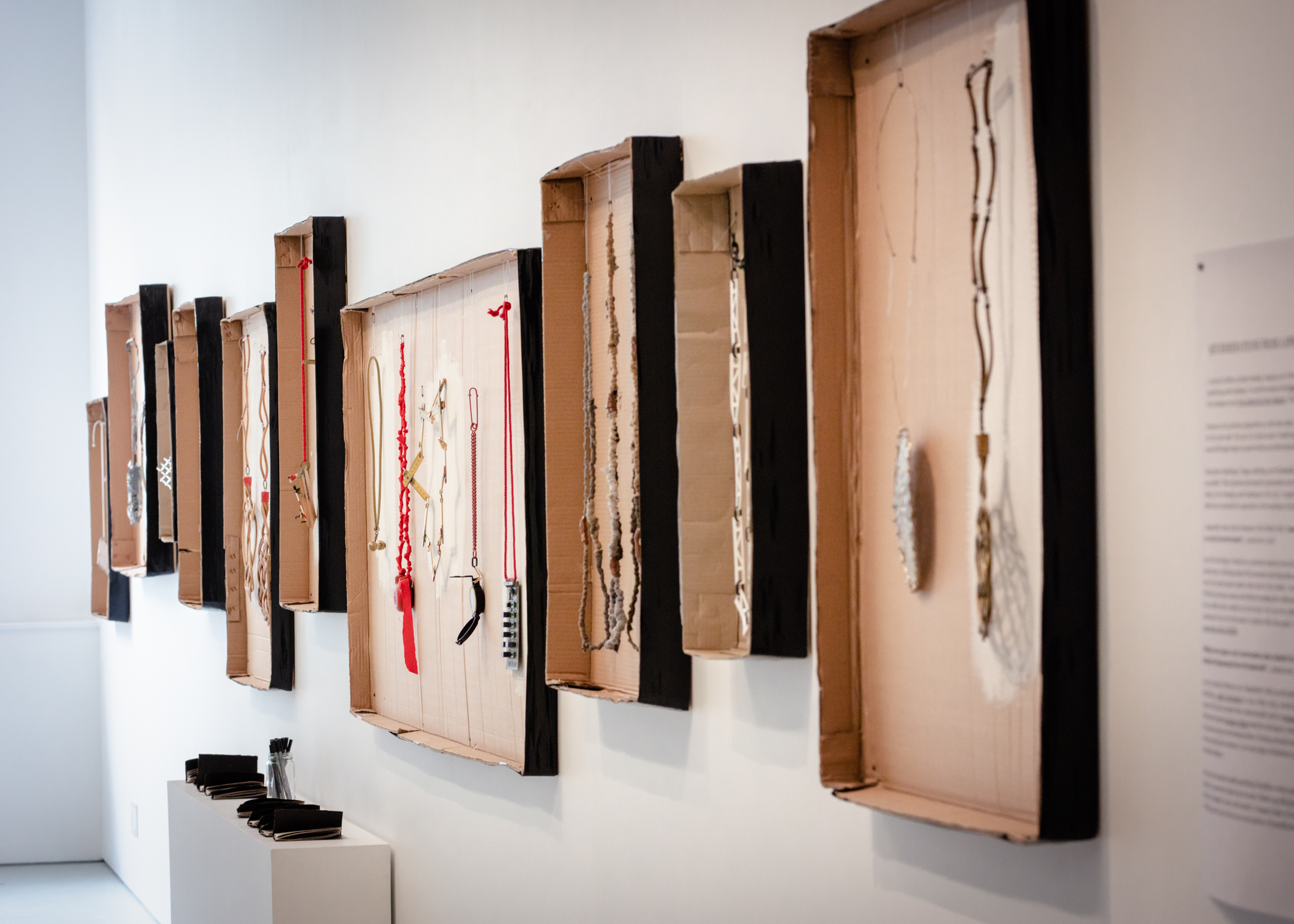
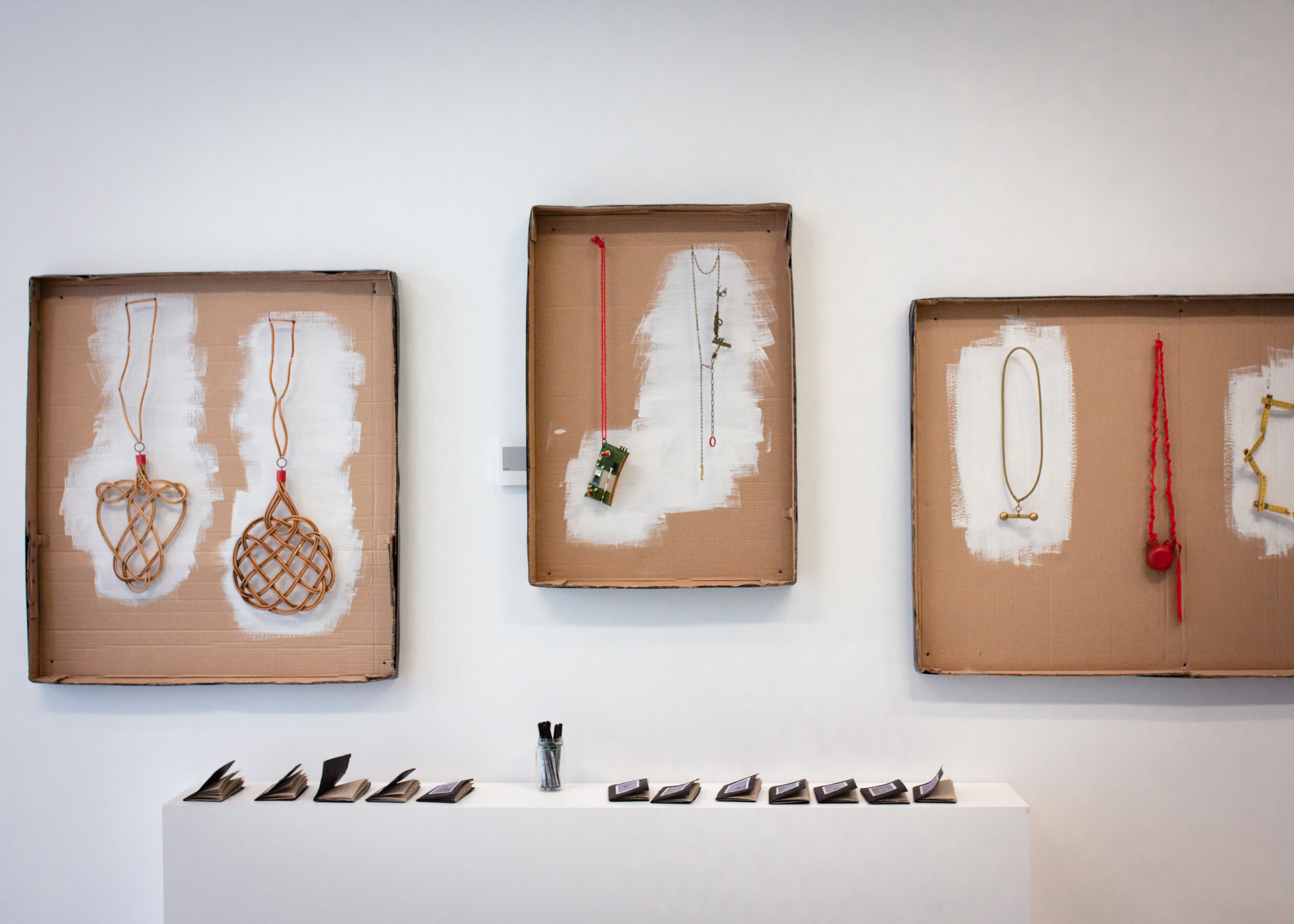
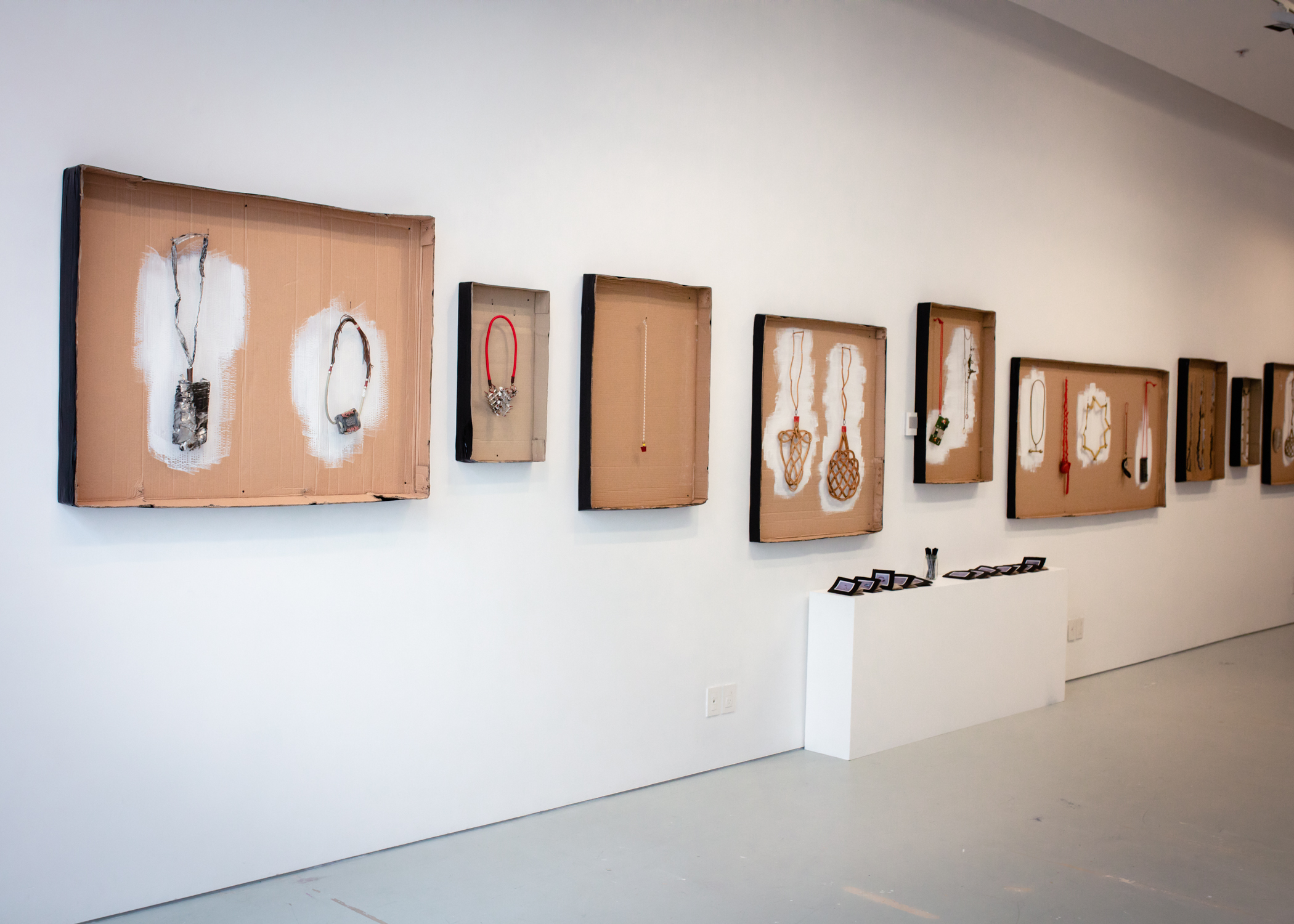
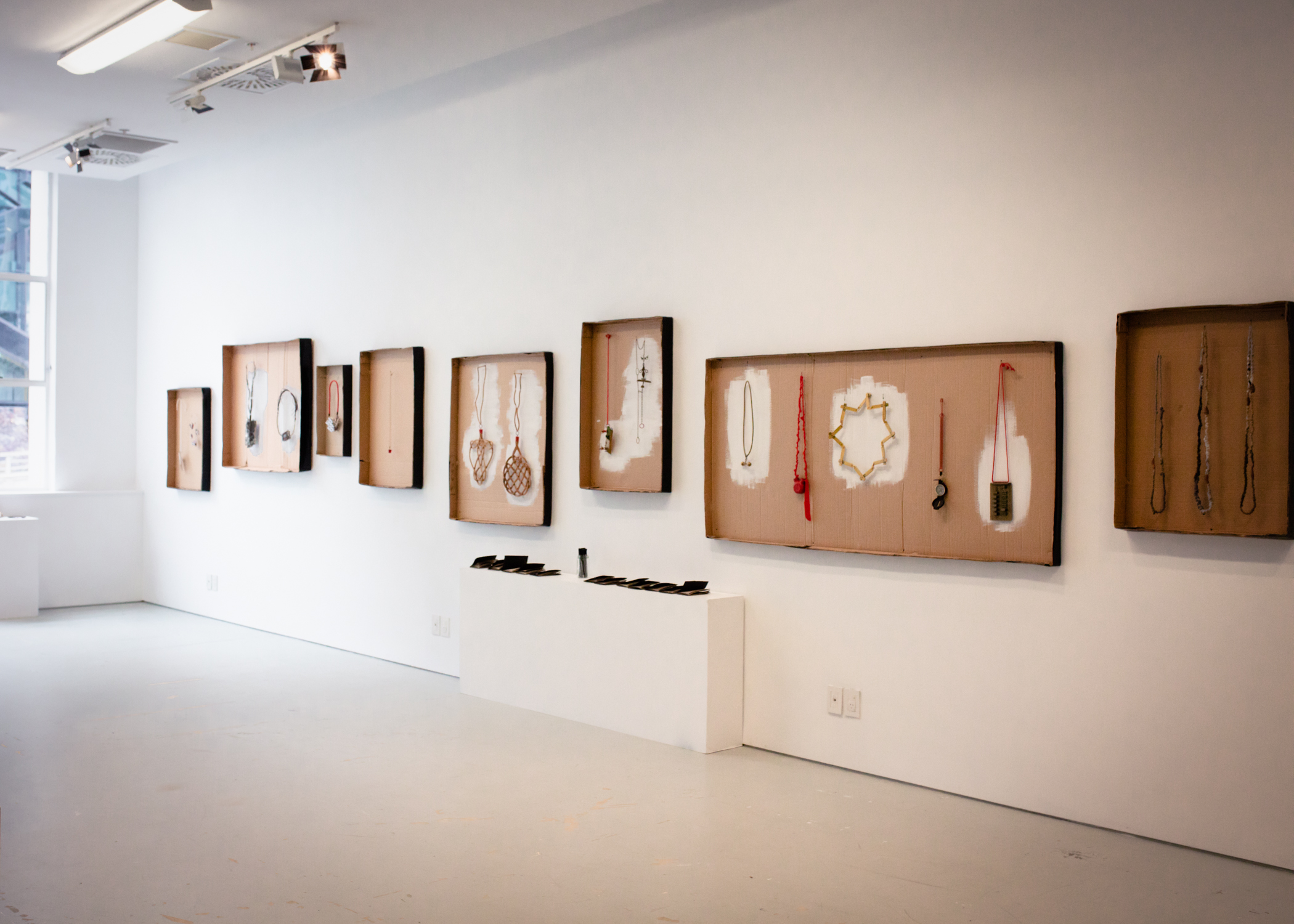
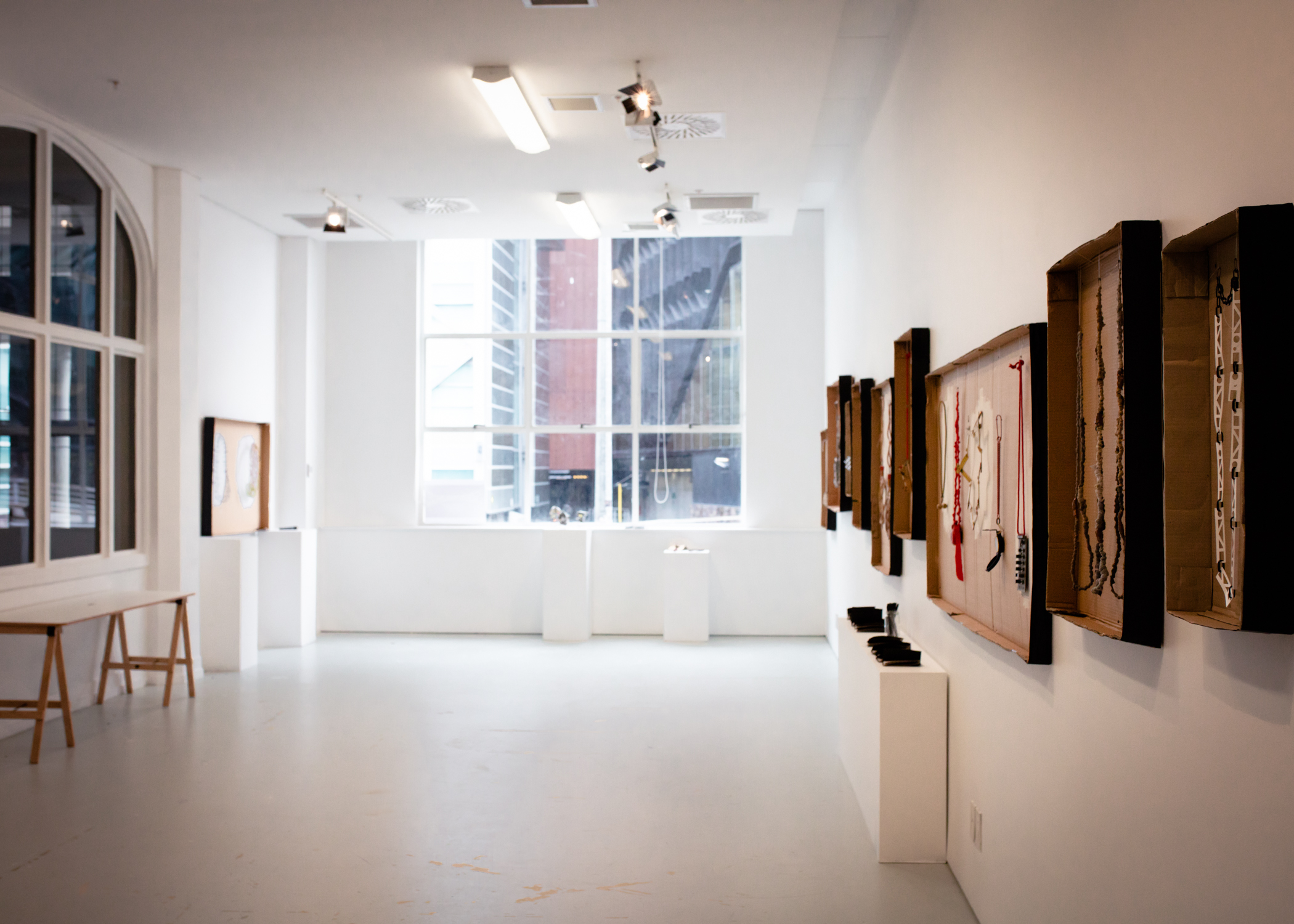
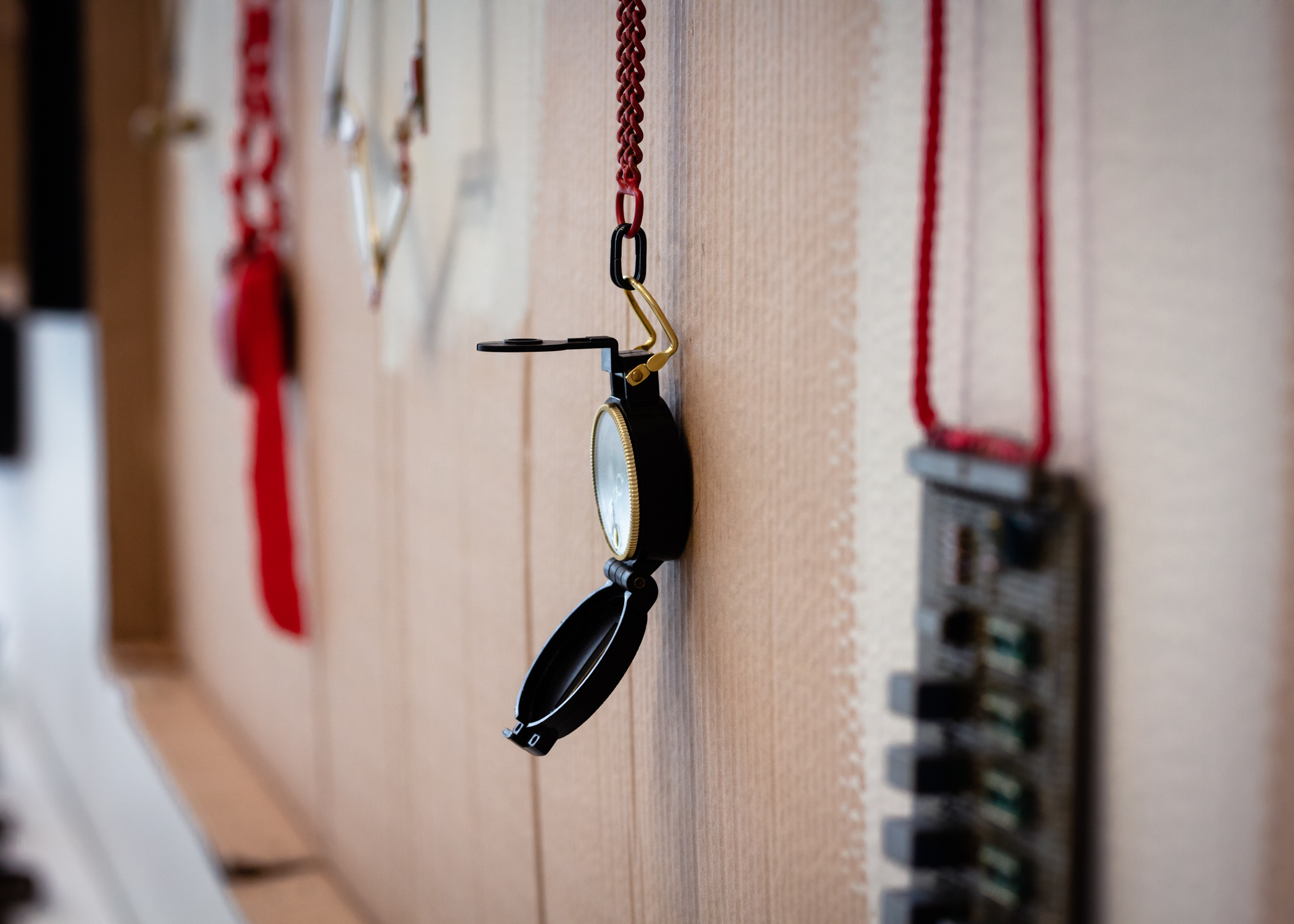
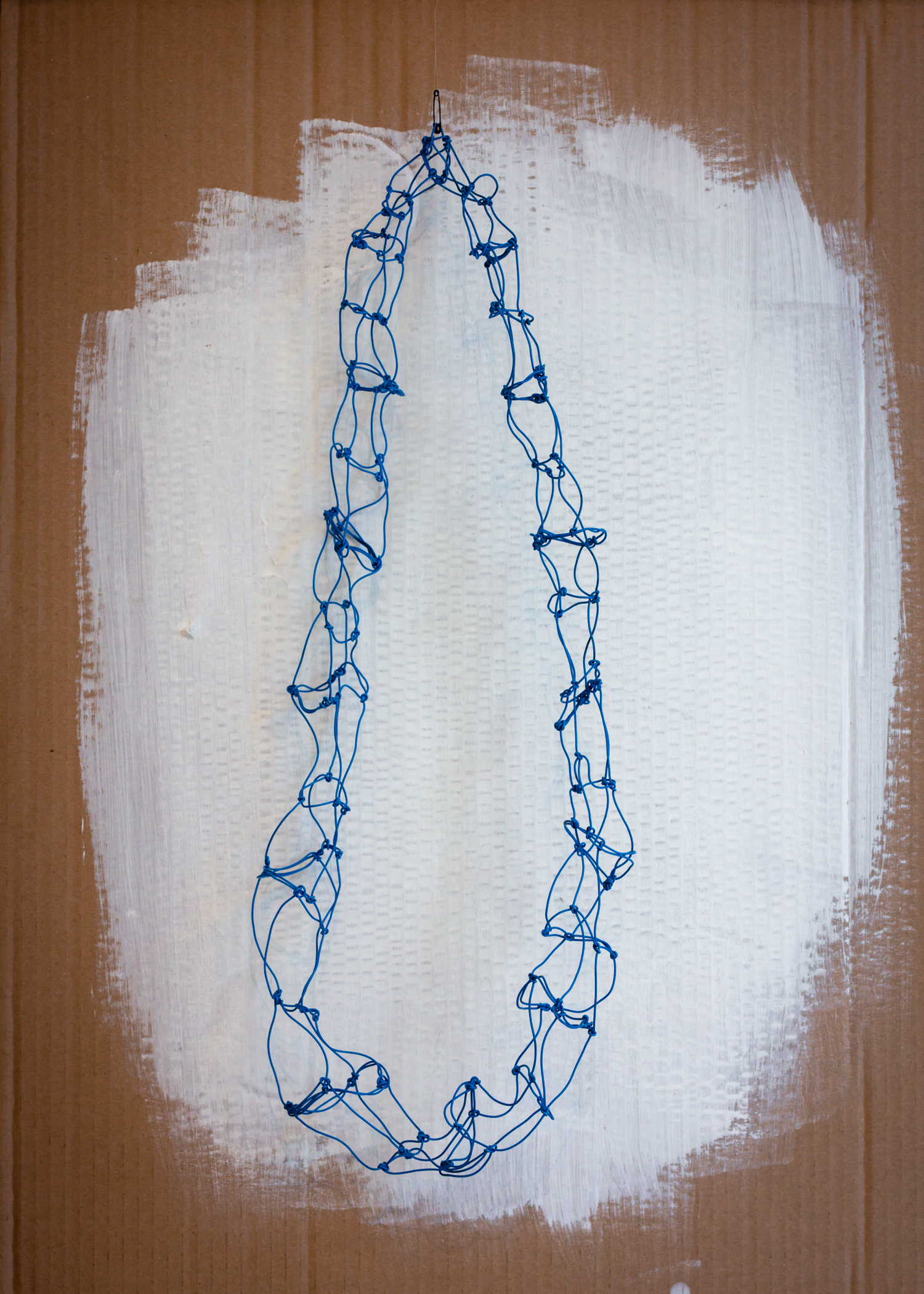
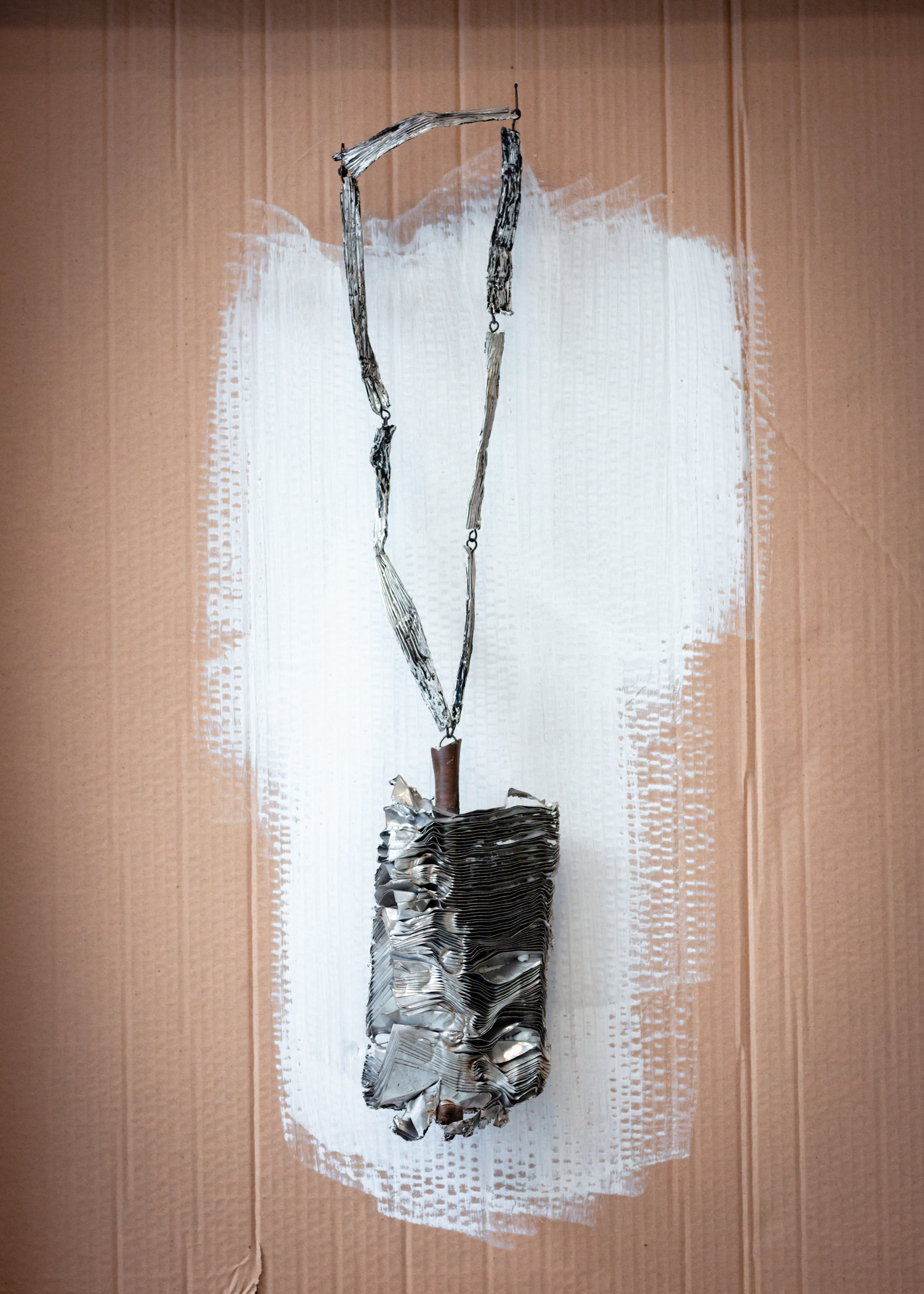
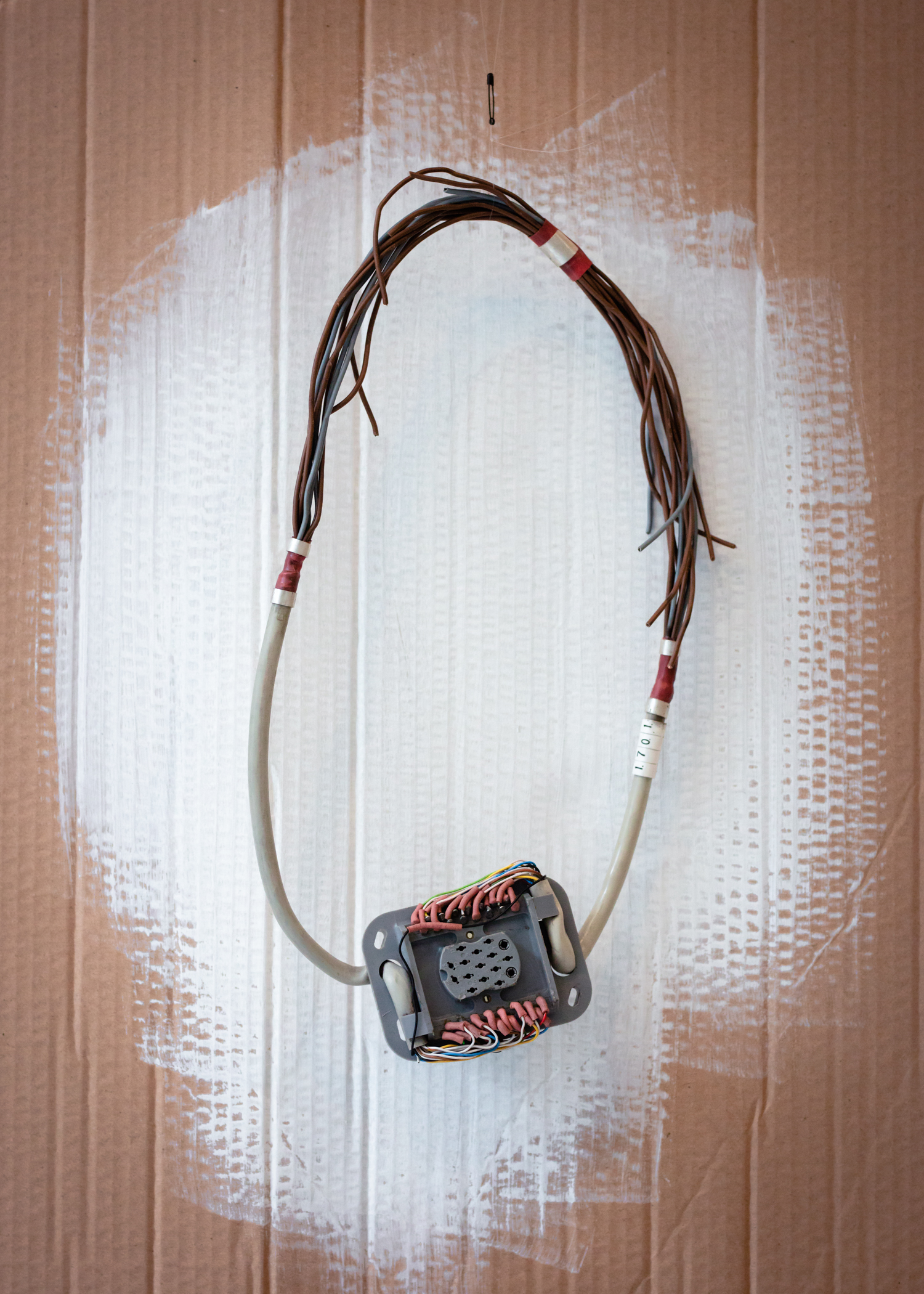
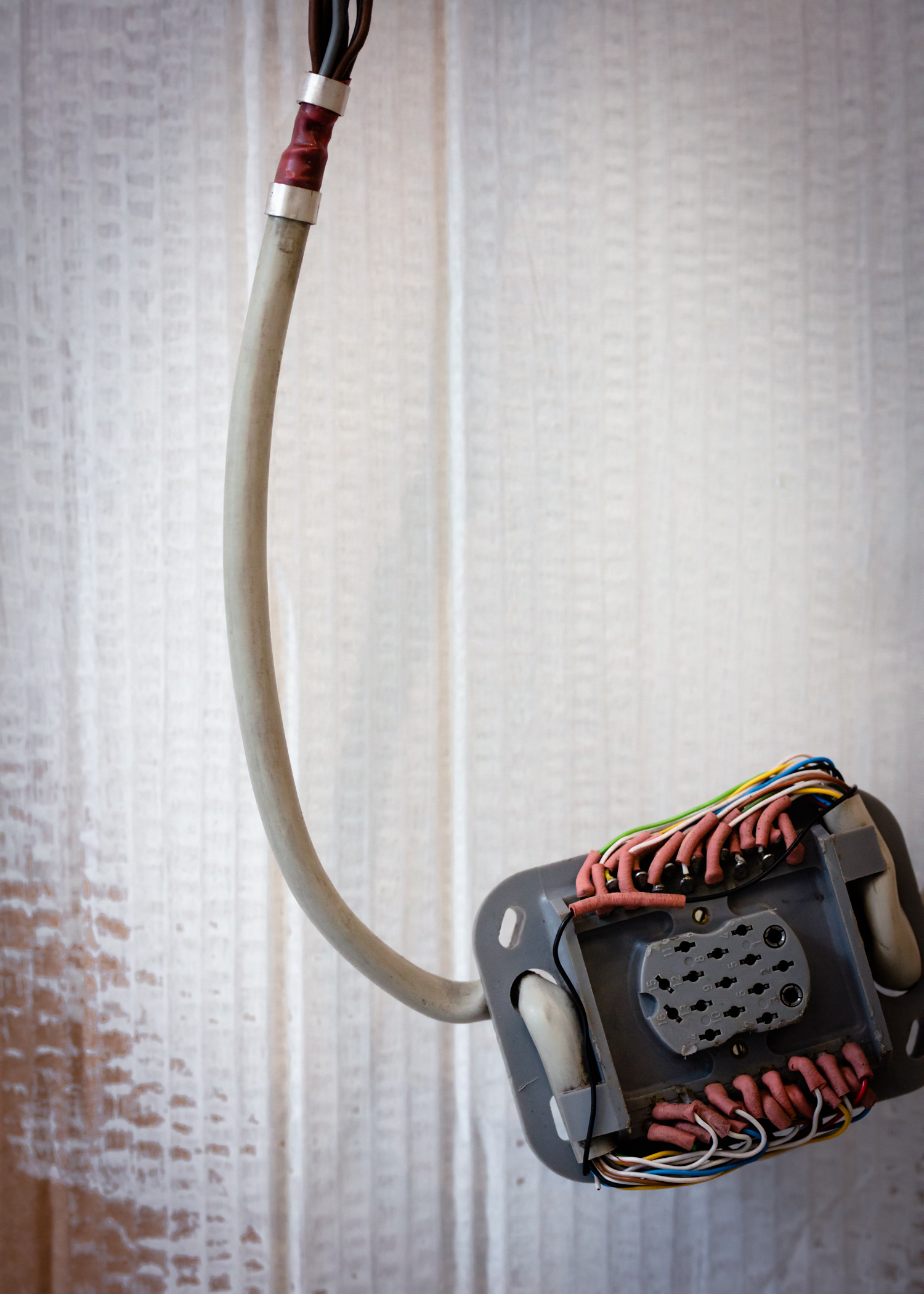
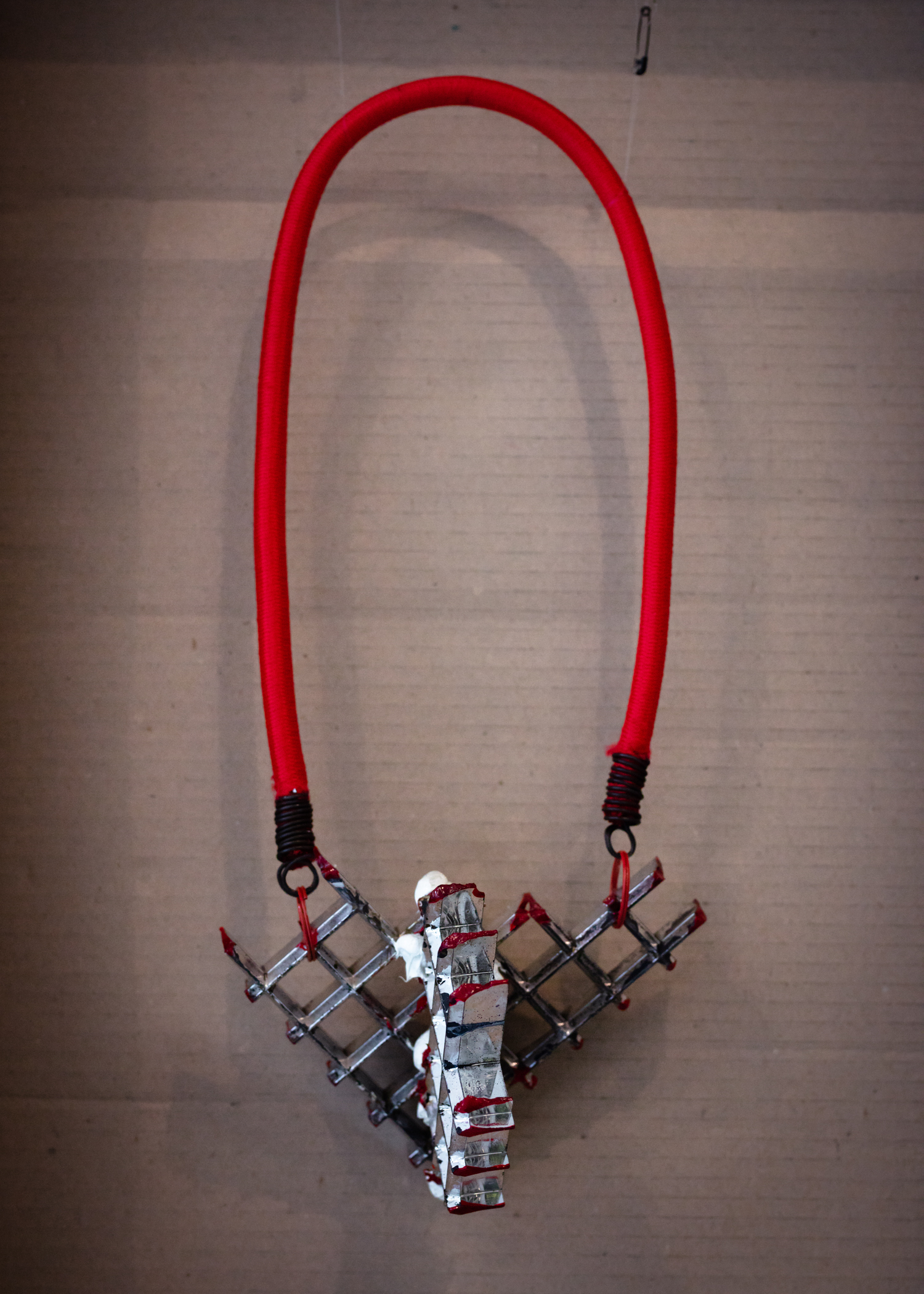
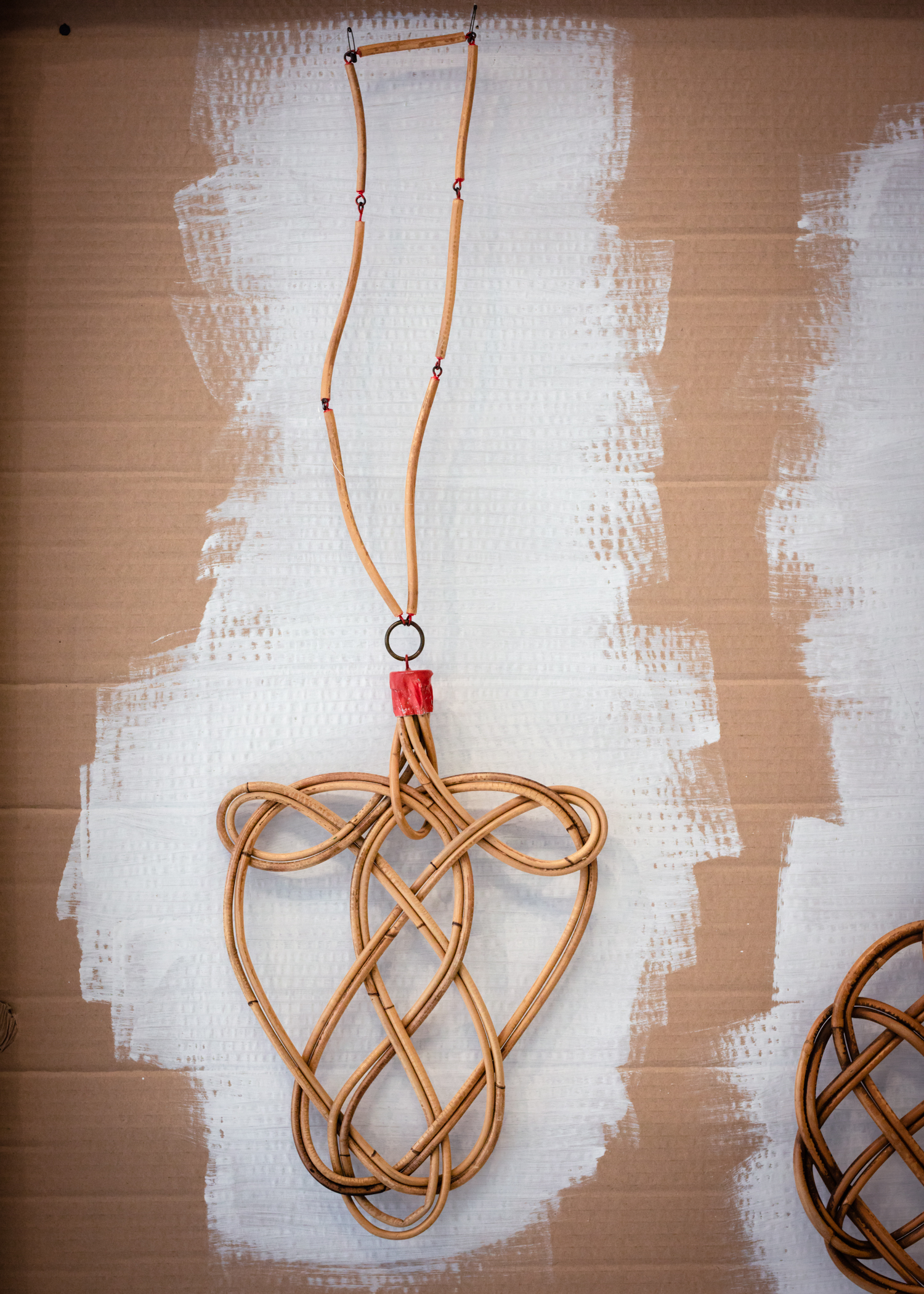
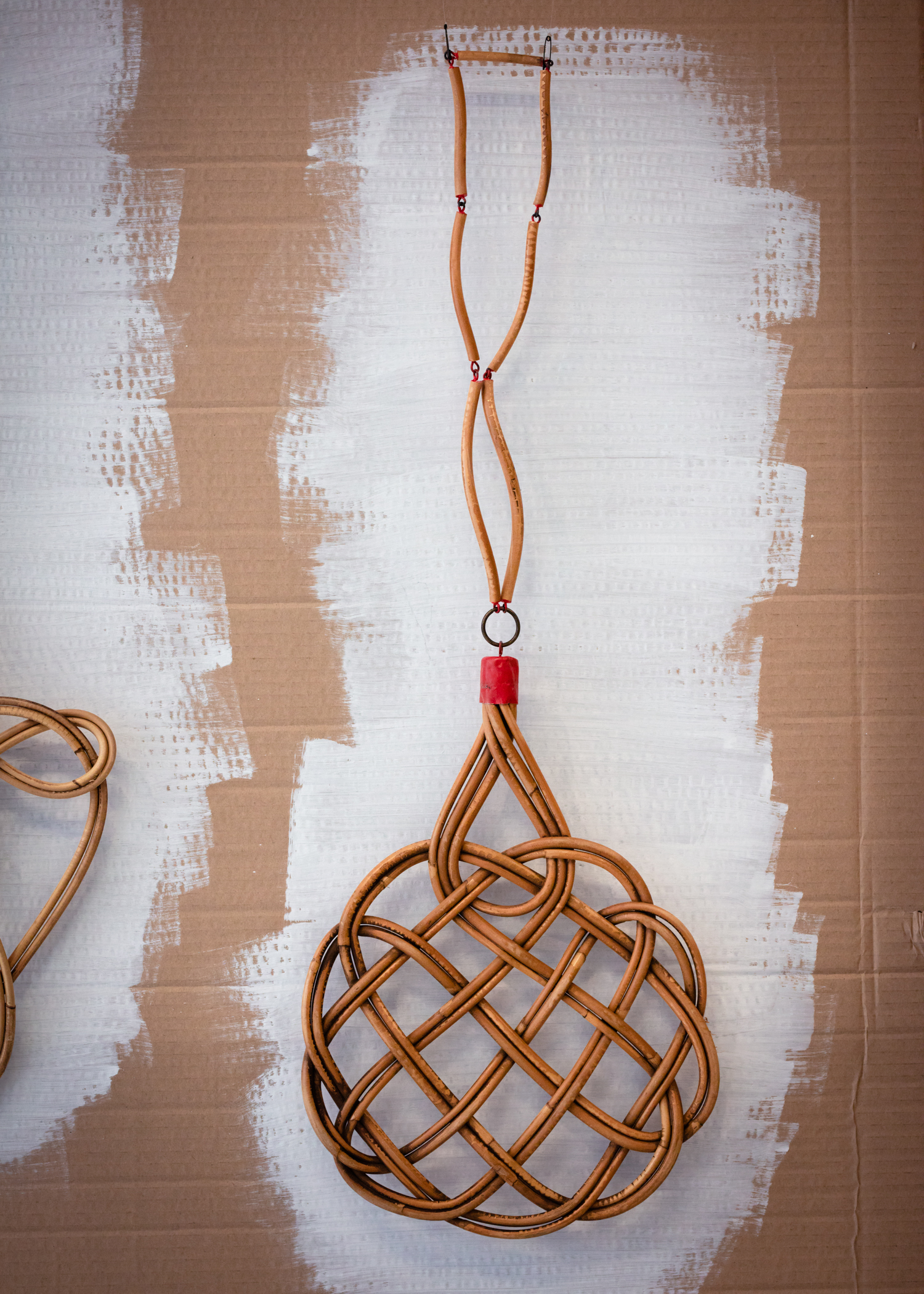
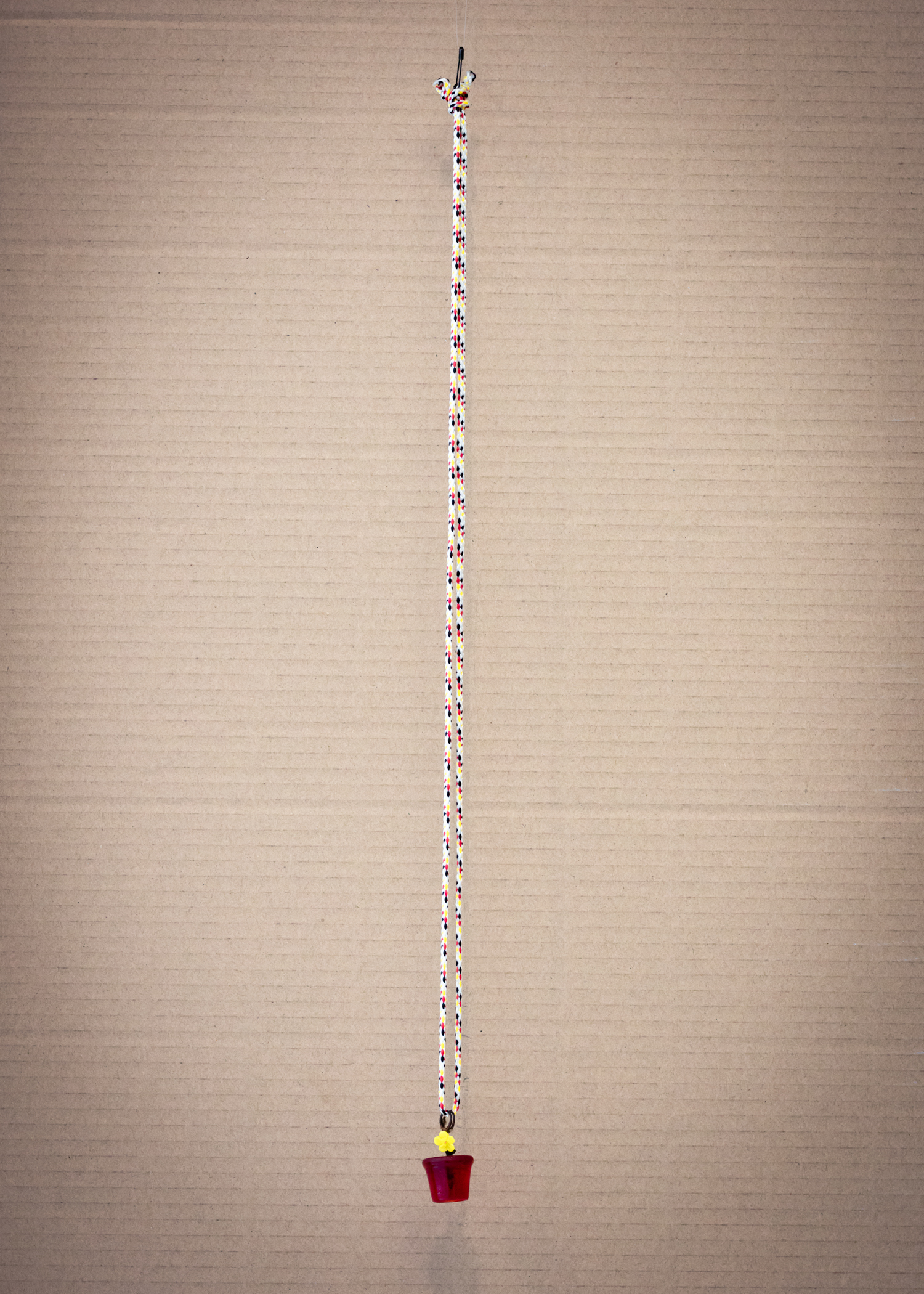
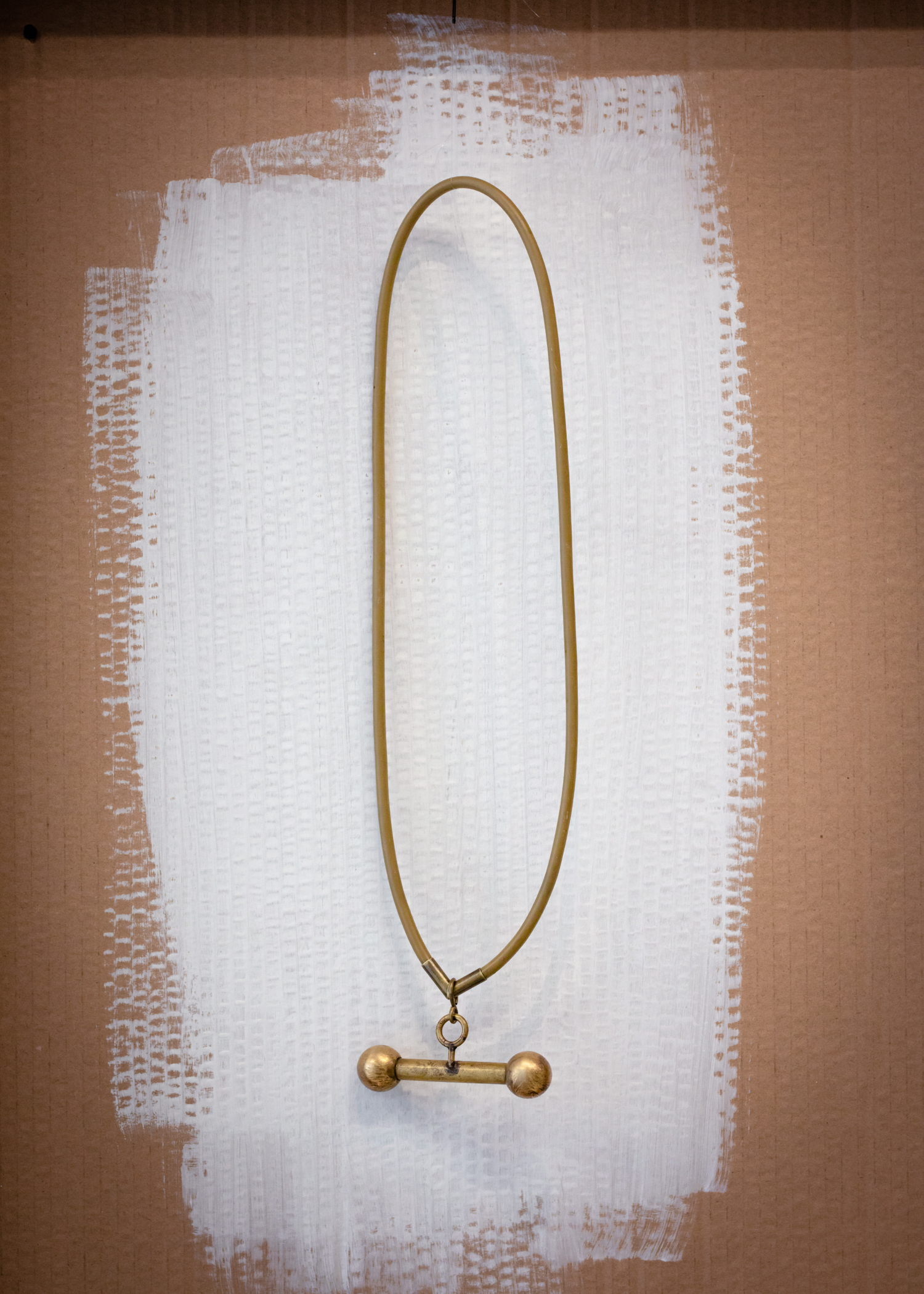
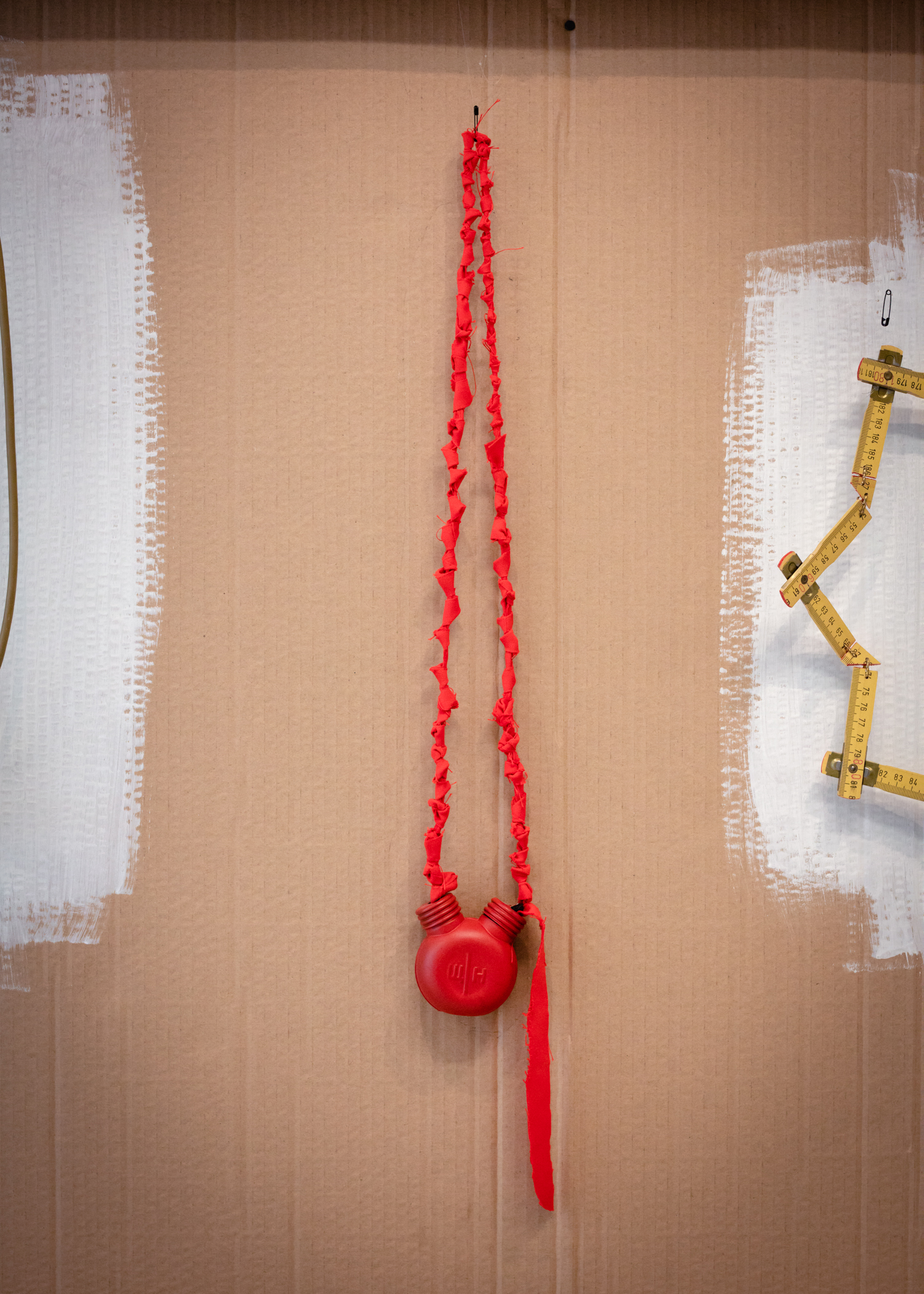
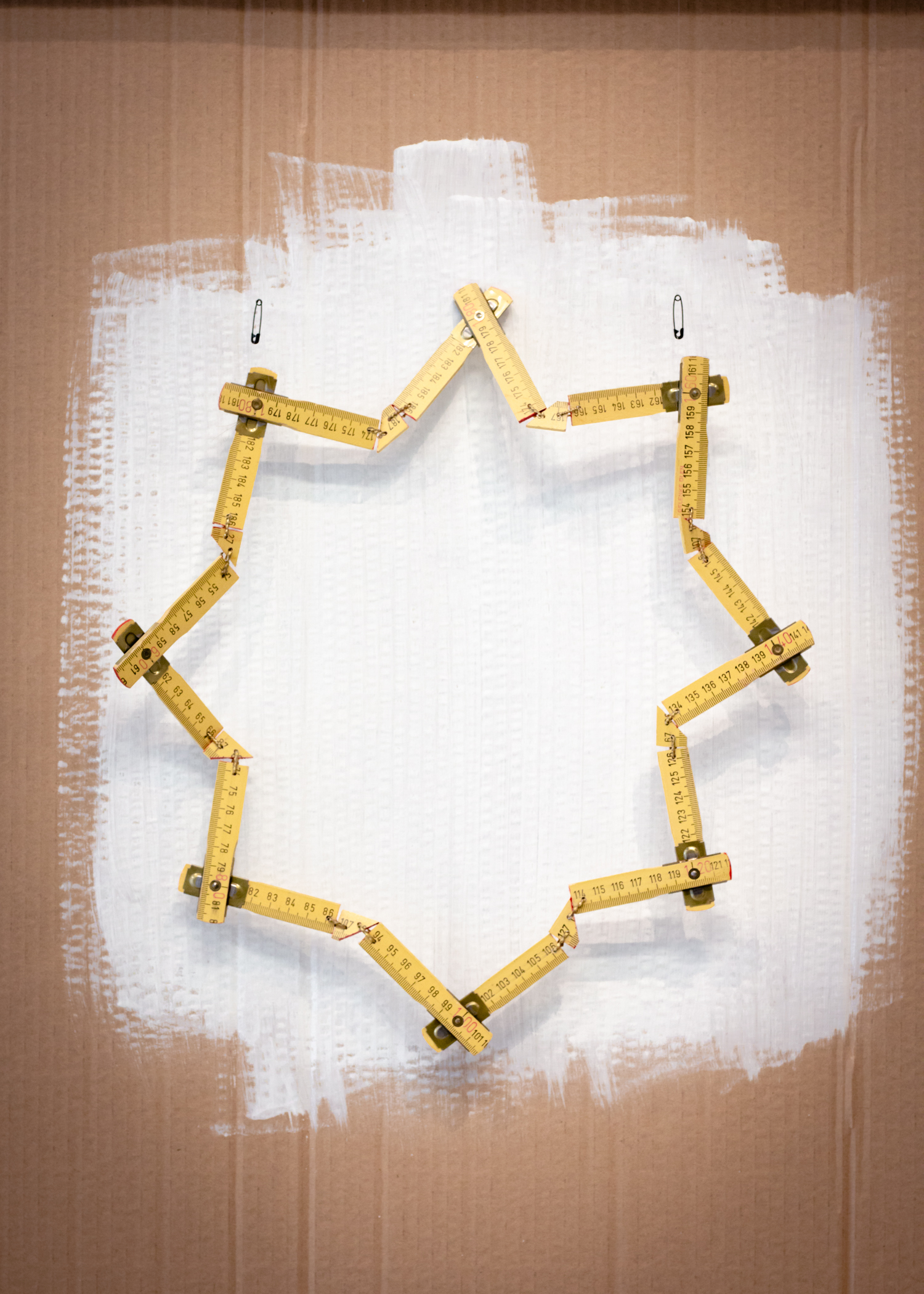
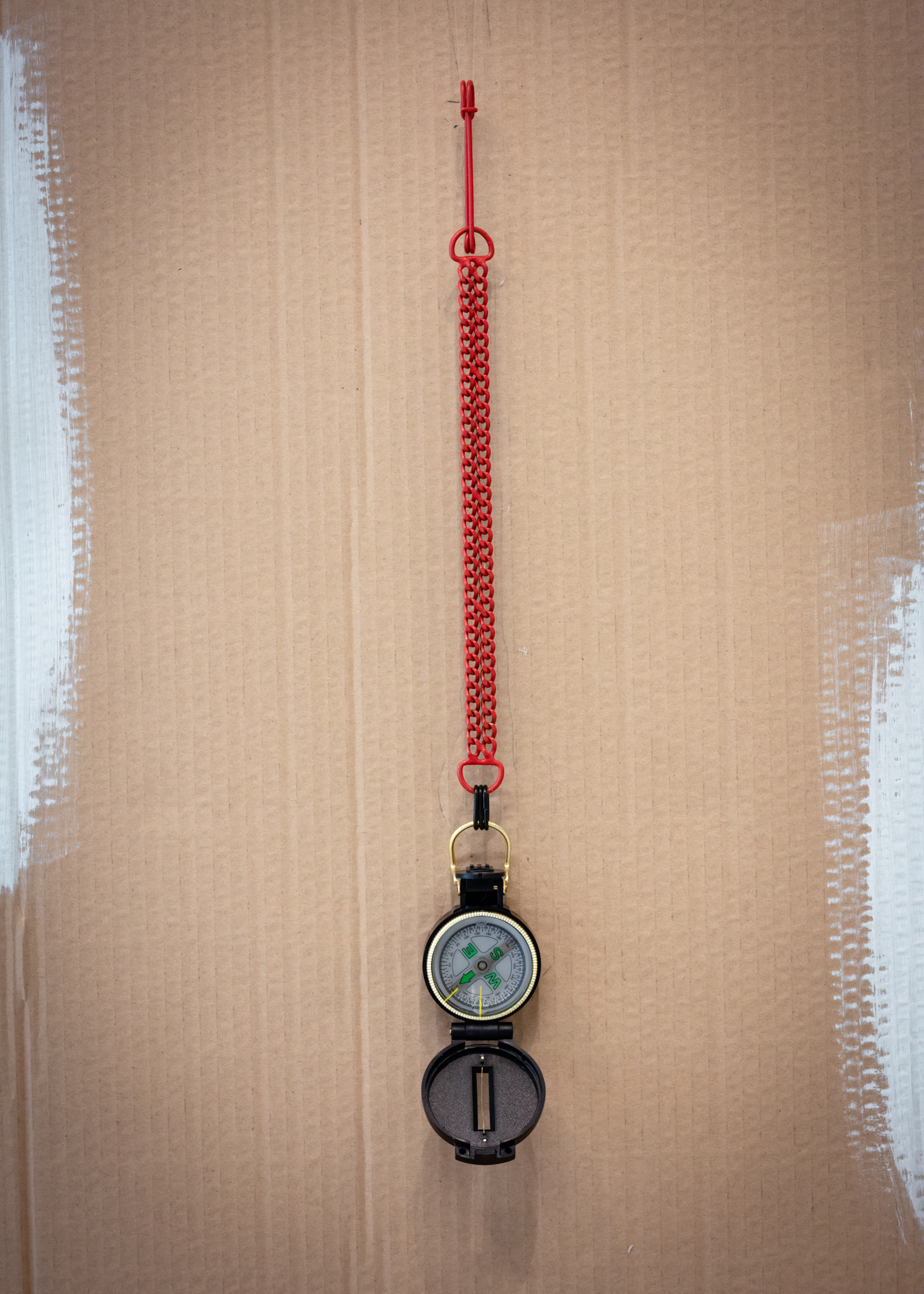
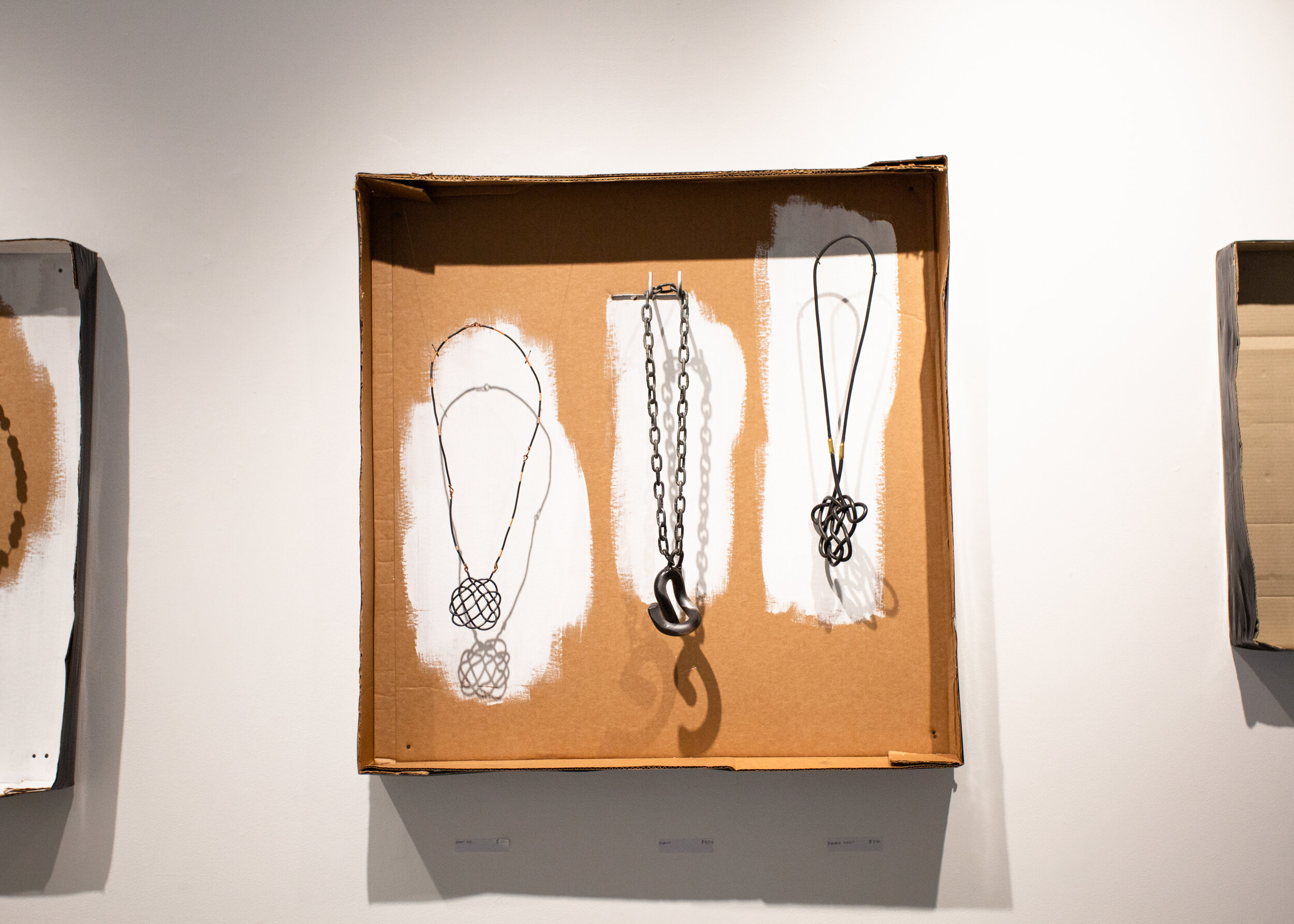
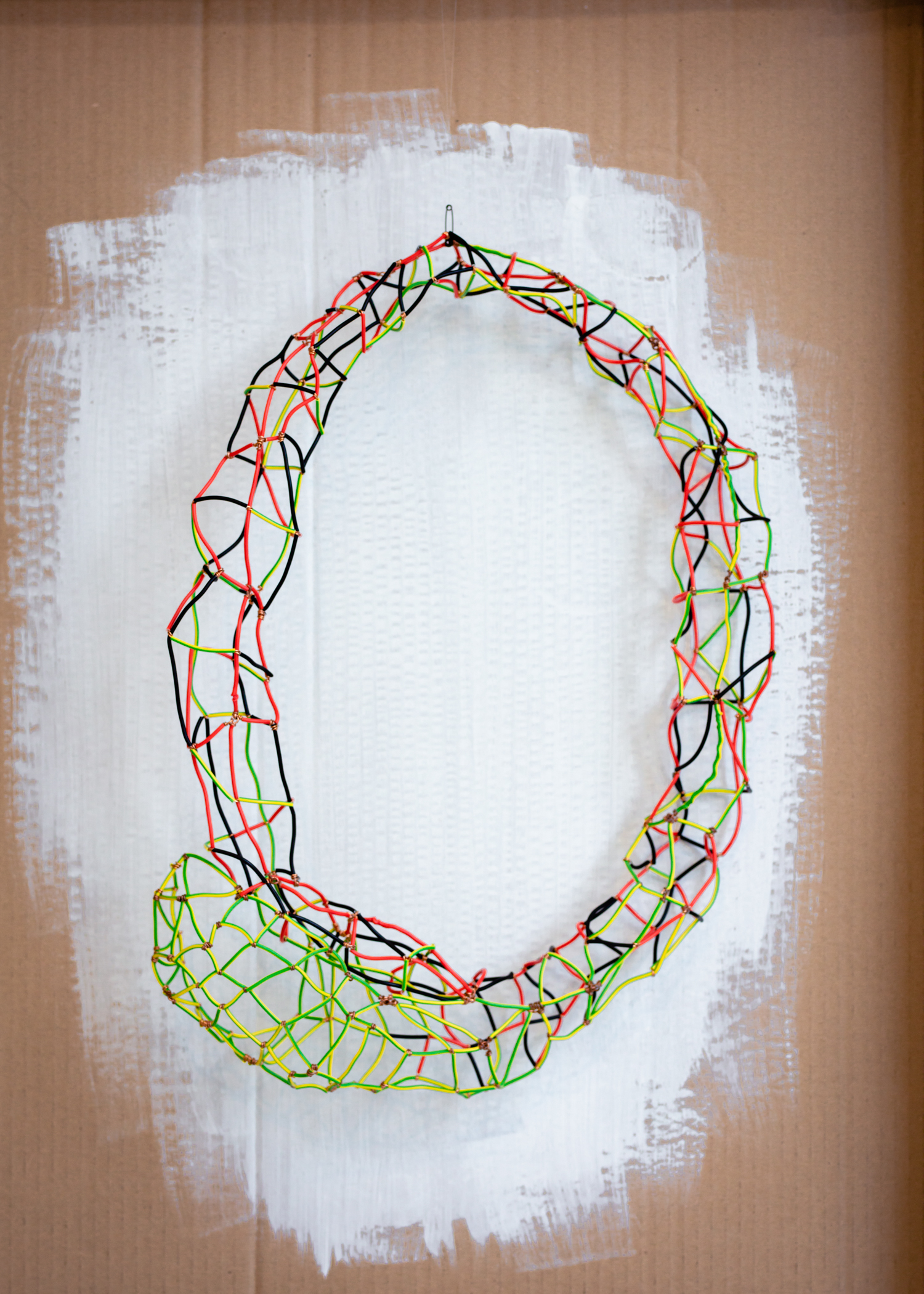
This exhibition was a chance for me to show the new work in NZ in a beautiful space I hadn’t exhibited in before, seeing how it might be translated and received here. St Paul St Gallery 3 is spacious and light filled with windows to the street and entrance foyer. Having full control of the installation in a relatively large space with no fixed display systems was both exciting and nerve wracking. Each piece is hung on safety pins in cardboard box ‘frames’ customised with black packing tape and white paint, carrying through the sustainable use of materials and allowing easy interaction with the works. The informal and makeshift installation echoes concerns of transformation, transience, mobility and accessibility. Reactions from a diverse audience including AUT staff, jewellery and art industry associates, family members and friends, and a passing homeless gentleman, were positive and engaged.

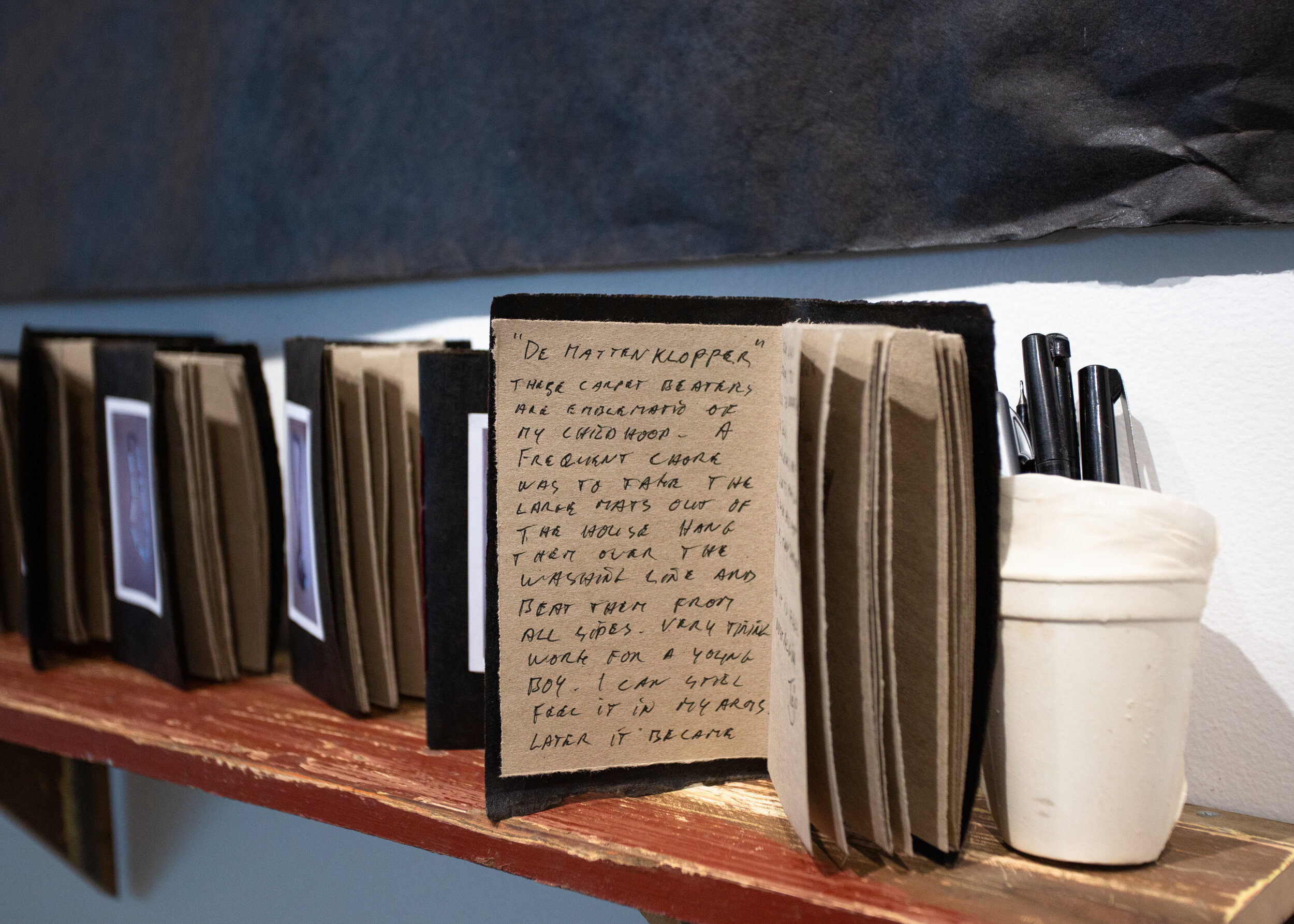
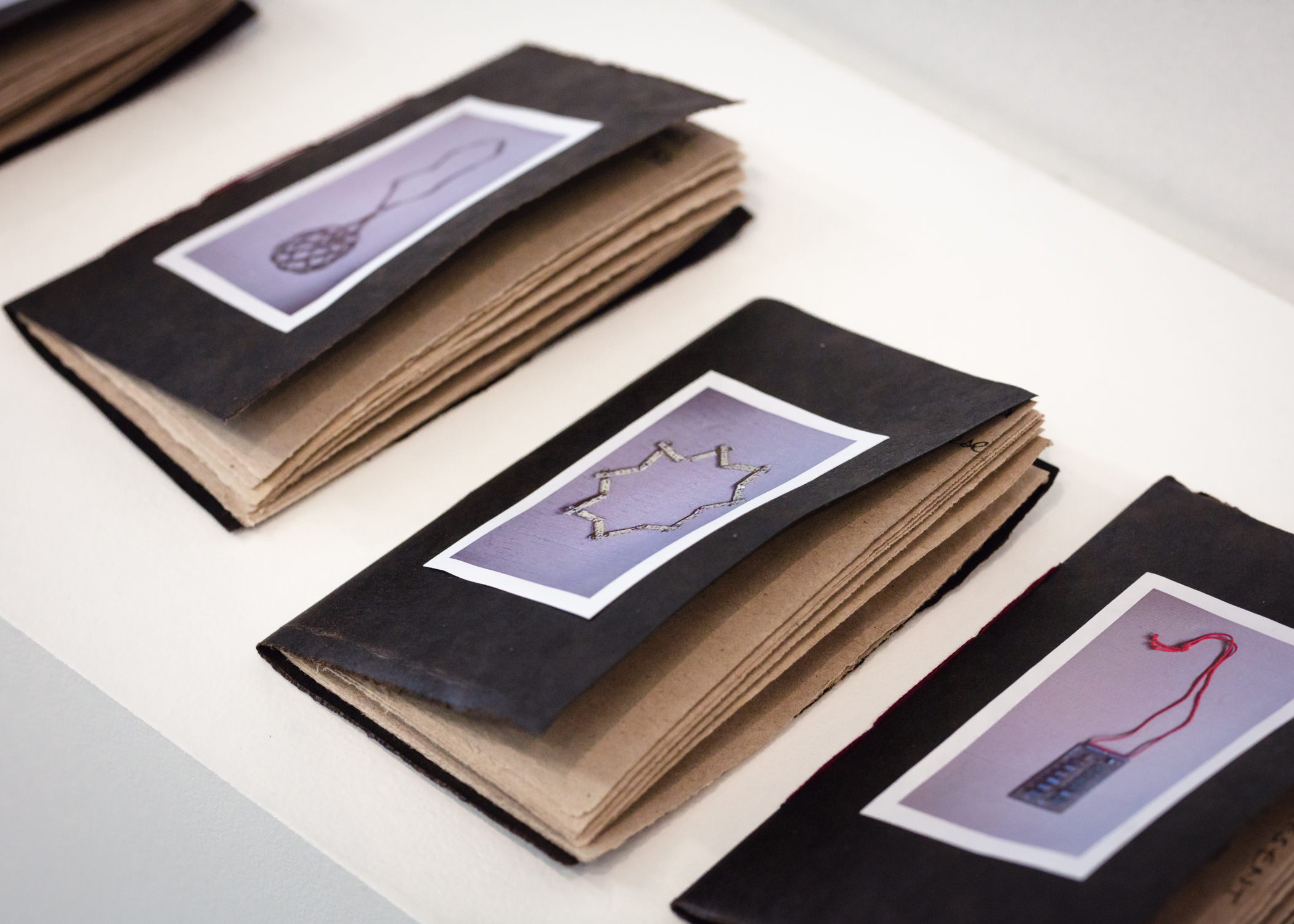
Being on site to ‘man’ the space, I was able to facilitate try ons with enthusiastic participants and photograph them wearing the works around the space. Handmade journals were displayed below each work for visitors to write their response to specific works. Notations and questions written sporadically in the pages asked for imagined histories, current reactions, or perceived functions and rituals the works may have been a part of. On later inspection I was excited to find people’s reactions and creative responses to the works and these now form part of the exhibition.

For more on the residency period see:

http://mia-straka.squarespace.com/blog/2017/10/jewellery-shaped-pieces-of-berlin

https://www.goethe.de/ins/nz/en/kul/mag/21436850.html


FACE TO FACE - Arthaus Orakei

by Mia Straka in


YVONNE SHAW + MIA STRAKA + TRISH CAMPBELL + NAT TOZER

curated by Claire Ulenberg - exhibition 26 August - 9 September

'Face to Face' is an exhibition of 4 women artists and their reimagining of the portrait genre. How women see themselves and others is crucial at this time when identity politics are rife and the shrine of the selfie seems a never ending disposable roll of daily imagery on social media. 

As we navigate our way through our individual identity we slide between the blurred boundaries of privacy and the public social arena. 'Face to Face' brings us back to the essence of close interactions between people, the artist, photographer, viewer and participant.

http://artsdiary.co.nz/117/2883.html

Jewellery Shaped Pieces of Berlin

by Mia Straka in ,


Made during a one month residency in April 2018, hosted by the Institut für Alles Mögliche at the Hauptstadtstudio in Friedrichshain, Berlin. 
Arriving with the onset of Spring at the Hauptstadtstudio, I started exploring my surroundings by biking around the streets of Friedrichshain, taking a vaguely triangular route which was intuitively aimless. Following a March of intensive 'seeing', first working at Frame during Schmuck as part of the IWA team, then visiting Reyjkavik in Iceland for some amazing natural wonders and a peek into the art scene, followed by an intense schedule of cultural institutions in London; it was refreshing to not have a fixed destination in mind. My wanderings allowed me to 'happen' upon places, seeing with no pre-conceived impressions or even too much historical significance (yet), childlike wonder intact.
I was influenced by a film I had watched about the Icelandic concept of InnSæi, which can mean a multitude of things but revolves around intuition, empathy and feeling connected...being led by an inner compass.

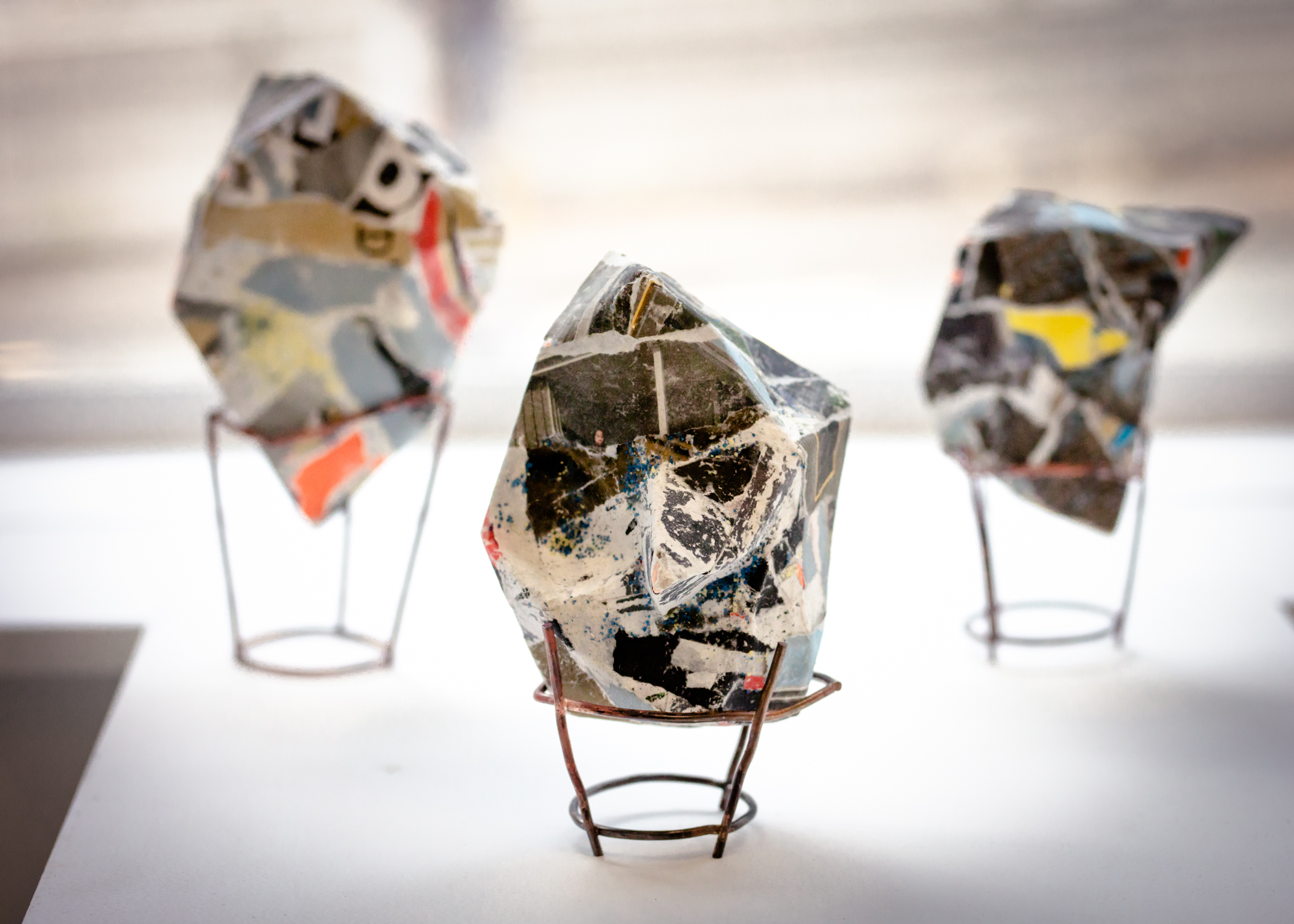
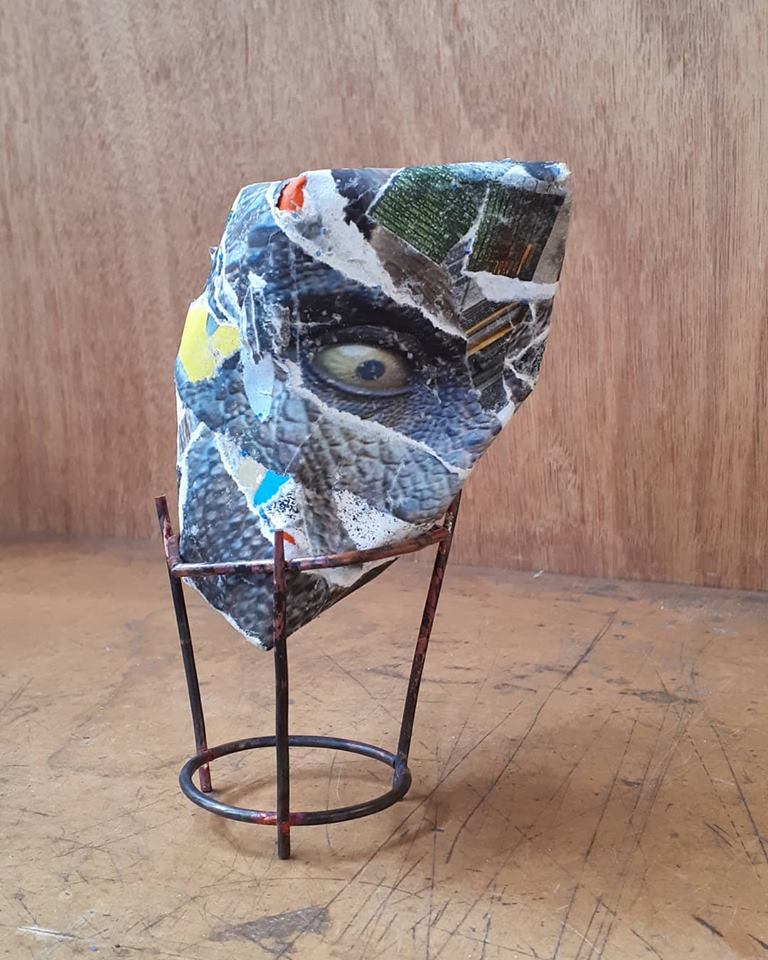
One of the first things I noticed and started collecting were the posters layered on pillars and electrical boxes, some clumped so thick they were peeling off like paper waterfalls onto the streets. Advertising all sorts of gigs and events they encapsulated a slice of Berlin at that particular time. Where I ripped the posters off their mountings showed white against the pale blue paper backs, like clouds, which I liked. These posters became the paper mache geometric 'rubble' pendants. 

On an overcast morning on day 5 I set off on a bike mission across the Spree river to visit an old airfield which was turned into a park called the 'Templehofer Feld', following a public referendum in 2014. Since 2015 several hangars within the massive structure of the Nazi era airport have controversially acted as temporary housing for refugees. I wanted to visit the newly opened container village beside the old airport, which was initiated in 2017 as a better quality and longer term housing solution. 

It was a strange day to visit the park, known for being a bustling gathering point for picnicking Berliners on a sunny day. The wind was sweeping up the long empty runway, solid looking clouds congealing heavily behind intimidating airport terminals. The air traffic control tower and stark white rows of containers contrasted with colourful unidentified circus-like tents.

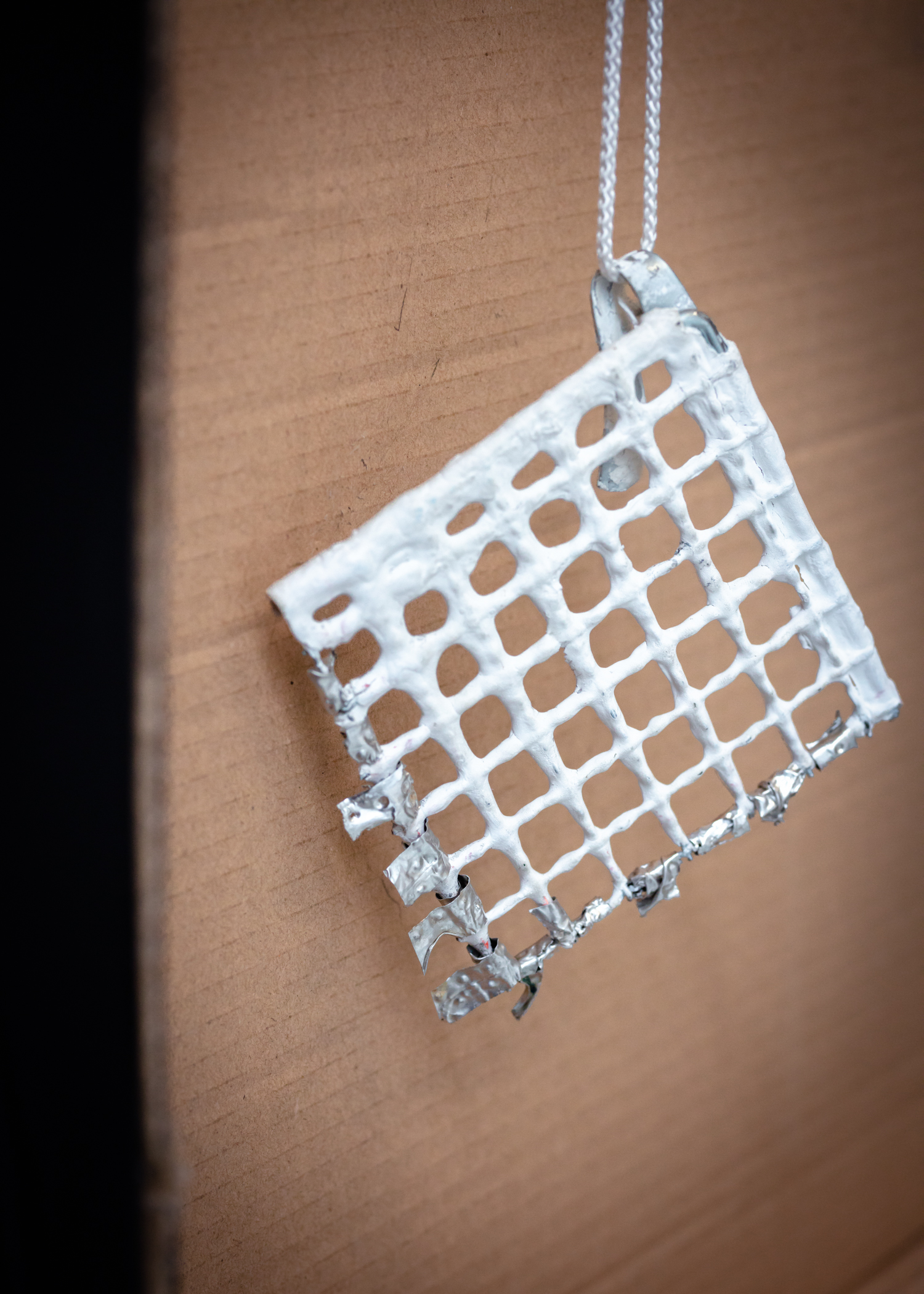
Peering curiously through the white rectangular gridded wire fence encircling the containers, I wonder if they are inhabited yet, targeted by a security vehicle while photographing the strange scene, I turn my green bike back down the pink centre line of the runway and cycle away, powered by a strong desire to weave some colour into the fence or something...to help make the environment more homely. Later I read that spontaneous efforts by the newcomers to add a little colour and personalise their living space in the hangars had been banned due to some offensive imagery and the historic status of the building. Perhaps here it will be a a different story? On a later trip to the 'feld' when I joined the picnicking Berliners on a sunny day, I wondered if the families being housed nearby were joining our grilling numbers.

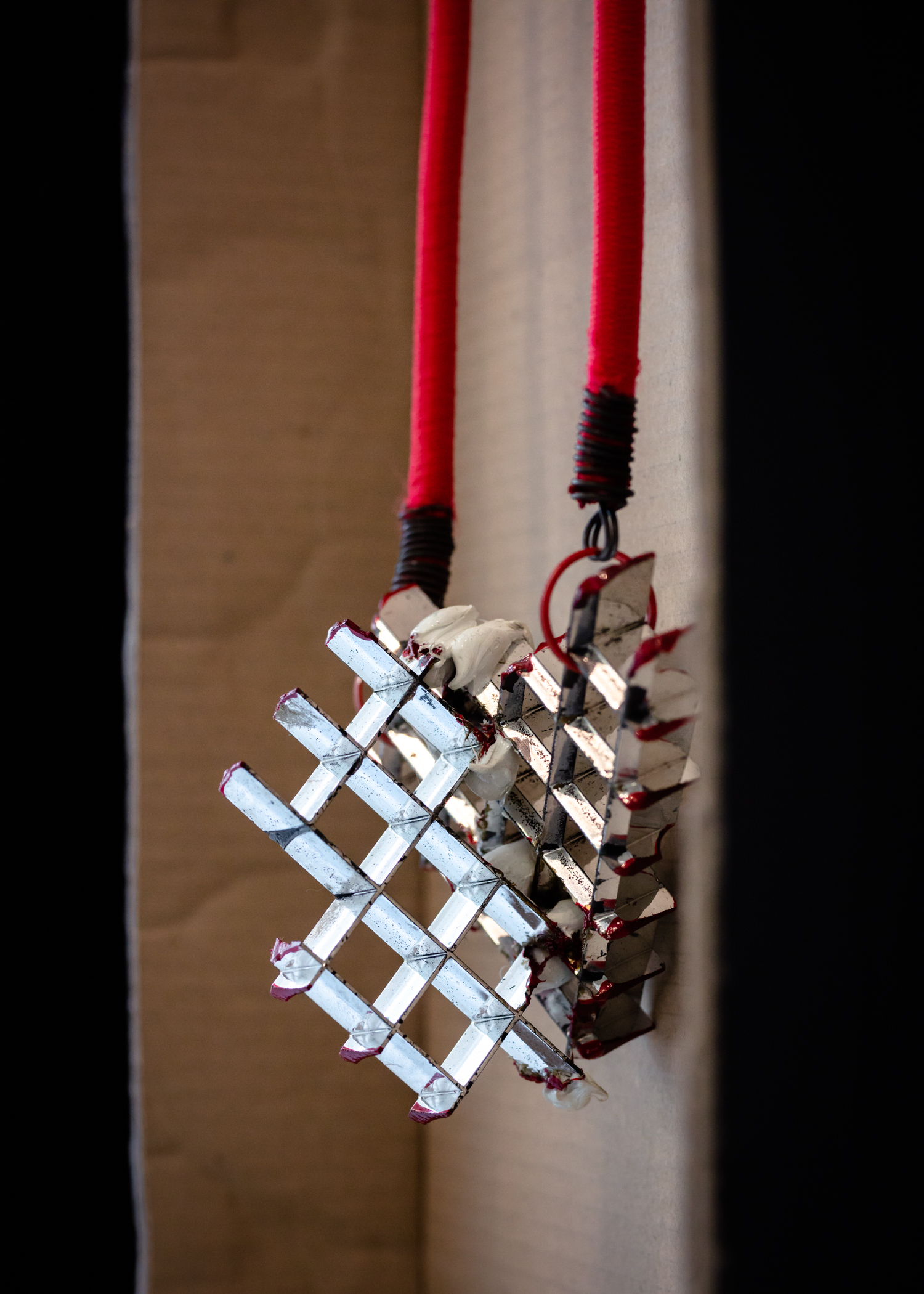
The same day on my way back through the rapidly gentrifying Neukölln I spied a white grid poking just far enough out of a construction skip for me to nab. Choked up with plaster, it reminds me of the fence at Templehof. Later in the month I wrap some of the mangled metal found at Teufelsberg around the grid, emulating the flag-like  remnants of posters seen on construction fences around the city as a small gesture of beautification, dreaming of offering the same to those who have lost their homes and countries. 

The previous evening I had joined in with an English language conversation group for refugees and migrants run by Give Something Back to Berlin organisation, and was glad to talk with a group of three students originating from Syria and Iraq, led by a teacher from Poland. All had good German and English language skills as well as their native tongue and were either employed or studying, having being settled in Berlin for a few years at least.

Another site which was hugely influential for me during the residency was Teufelsberg.  My excellent hosts Das Institut für Alles Mögliche -The Department of Anything is Possible, had recently secured a space at the dilapidated Cold War era listening station, which is built on top of a hill made of the rubble of Berlin from WWII. The rubble, said to be the detritus of 400,000 destroyed homes of Berlin, covers a never finished Nazi era military college, too solid to demolish. The geodesic dome-topped spy station structures I was lucky to wander freely around, are now a open air street art gallery, privately owned but open to the public. During my explorations I collected plastic and metal remnants from the structures, some old electrical parts and wires, as well as managing to whisper into my own ear thanks to the circular echo in the still-complete top dome.

My first impressions of Berlin were idealistic but enduring, of a place reborn and still in a state of flux... built up by it's inhabitants from the rubble of war and cruel politics. There is a fierce creative energy which is a magnet to artists, unlike anywhere I have been before this seems to be embraced by the governing elements of the city; so that collective action yields results, creating a city for communities of all varieties to thrive. 

I tried to select materials that would help to express this sense of being part of a collective creative movement, illustrating the many layers of the city and it's past, present and future. I wanted to use materials that no longer had a function, were obsolete, no longer relevant or found languishing unwanted in a dusty corner. As well as the materials found in the skip in Neukölln and at Teufelsberg, I found some fabric and embroidery work in a clothing bin overflow and a few electrical bits/boxes off the street and in my apartment's nicely ordered rubbish room.

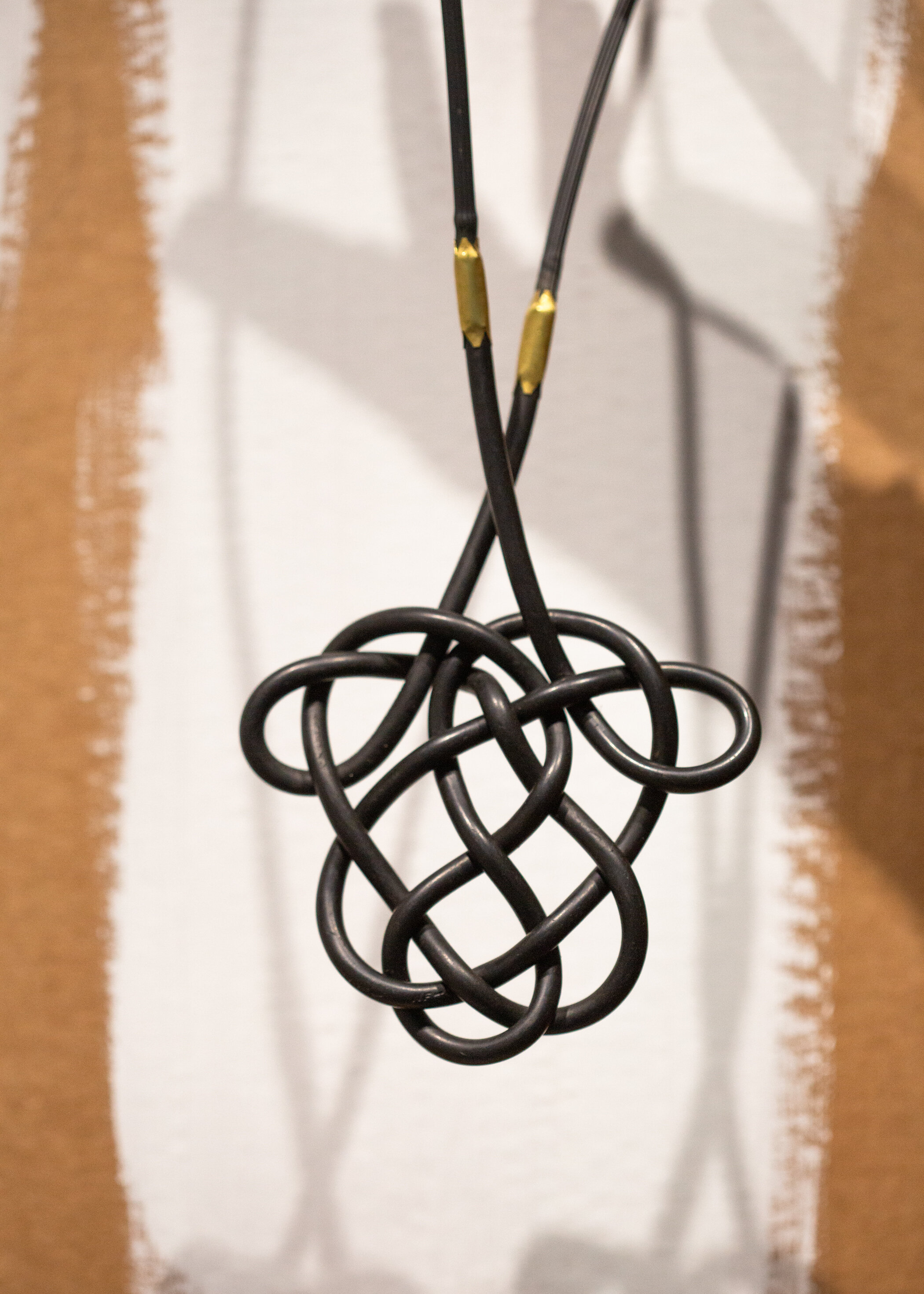
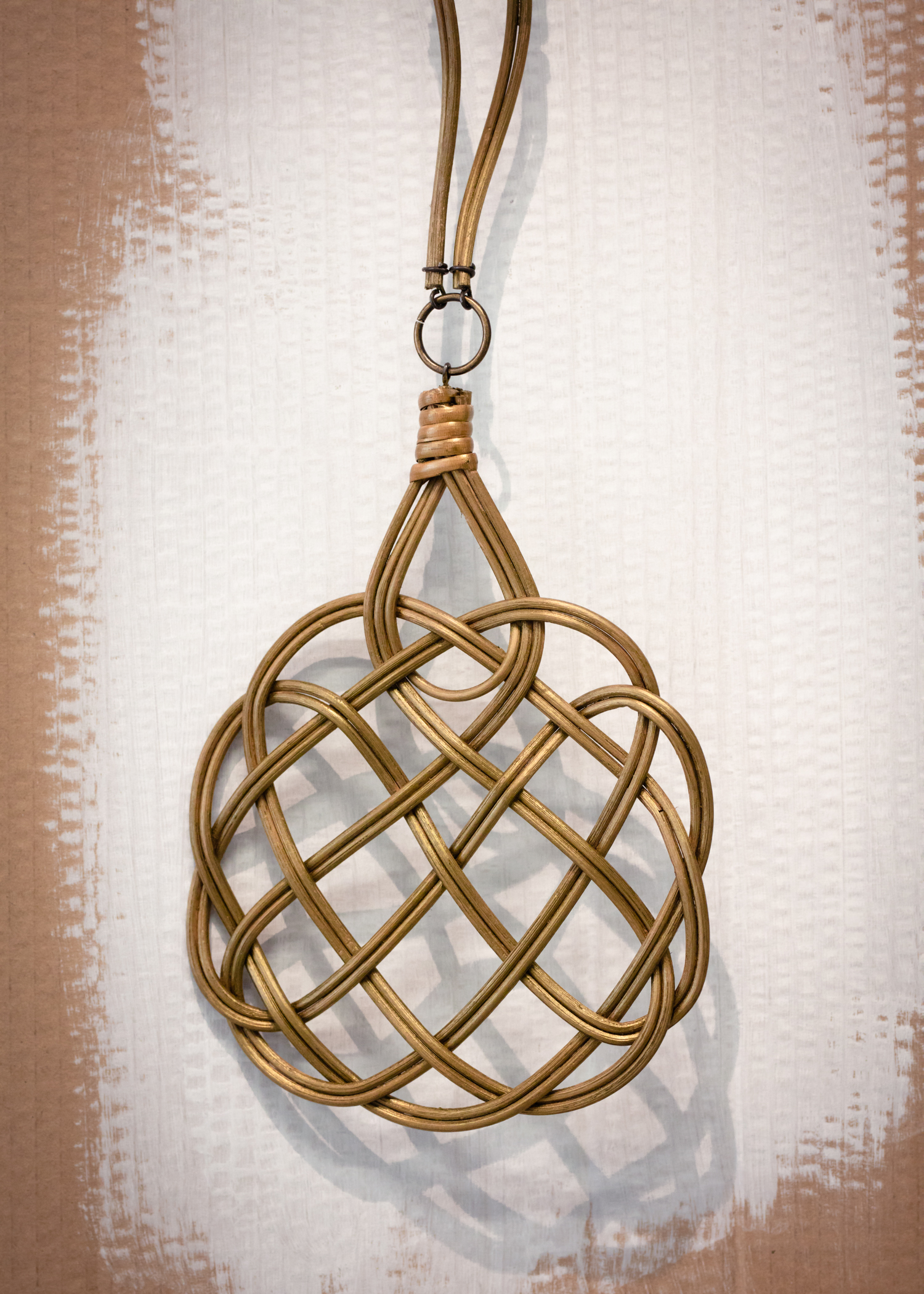
Visiting Sunday fleamarkets including Mauerpark, Arkonaplatz and Boxhagener Platz ... I collected materials that stood out to me as particularly 'of the place' or time, somehow representative or stereotypical of a bygone era of Berlin/Germany. Conscious of my fresh gaze as a first time visitor to Berlin, these would become my own constructed souvenirs, using bits and pieces rather than fully intact objects. A couple of antique shops in Friedrichshain yielded the old woven carpet beaters which were crying out to me to be revamped as necklaces, and a few other kitschy objects to add to the mix.

There were some logistical parameters to my methodology as I had a basic workshop set up not geared to jewellery making. A power drill borrowed from the Institut, some hand tools and my sawframe from NZ, plus some good thick industrial glue and a shiny new vice were my tools for the month. It was important to me that my constructions were able to be worn, even if pushing the boundaries of wearability. I didn't want anything to exist without some connection to at least one of the other pieces to be created. Each one had to express something of my experience in Berlin, and be generated from the found materials.

I had an intense month of discovery, collecting, making and experimenting, ending up with over 20 individual works plus a few materials to bring home. My last night culminated in a collaborative group show with fellow residents of the Institut für Alles Mögliche at the special exhibition space of the Abteilung für Alles Andere. This was a great chance to come together and celebrate with my crew of co-creatives from Chile, America, Sweden, Russia, Poland and Germany... all of whom wore my works throughout the opening evening, also part of the annual city-wide Berlin gallery weekend for 2018. 

Now back in NZ at Workshop6 I'm continuing to resolve some of the jewellery pieces conceived in Berlin as well as starting to make a second generation of work leading on from the first. My purpose in this is extend beyond the found materials, linking the new forms, techniques, ideas and material knowledge with my existing practice and creating more easily wearable works. I'm viewing these derivative works as stepping stones. It's important to me that the residency project doesn't exist in a vacuum and continues to inform my work. Through this residency I've regained a huge amount of enthusiasm and freedom in my making as well as expanding my visual vocabulary and connecting to an international creative community. Thanks for having me at the wonderful Institut für Alles Mögliche.